
If you talk loudly or move close to a deer, chances are, they’ll hear you. But if you keep your voice soft and low, it usually won’t carry far enough to spook them.
Deer have sharp hearing and will pick up clear human voices at a distance, especially in quiet, open areas.

Try to keep your voice down and move slowly if you want to avoid being noticed. In the next sections, I’ll break down how deer ears work, how far different sounds travel, and what makes deer extra alert.
How Well Can Deer Hear Human Voices?
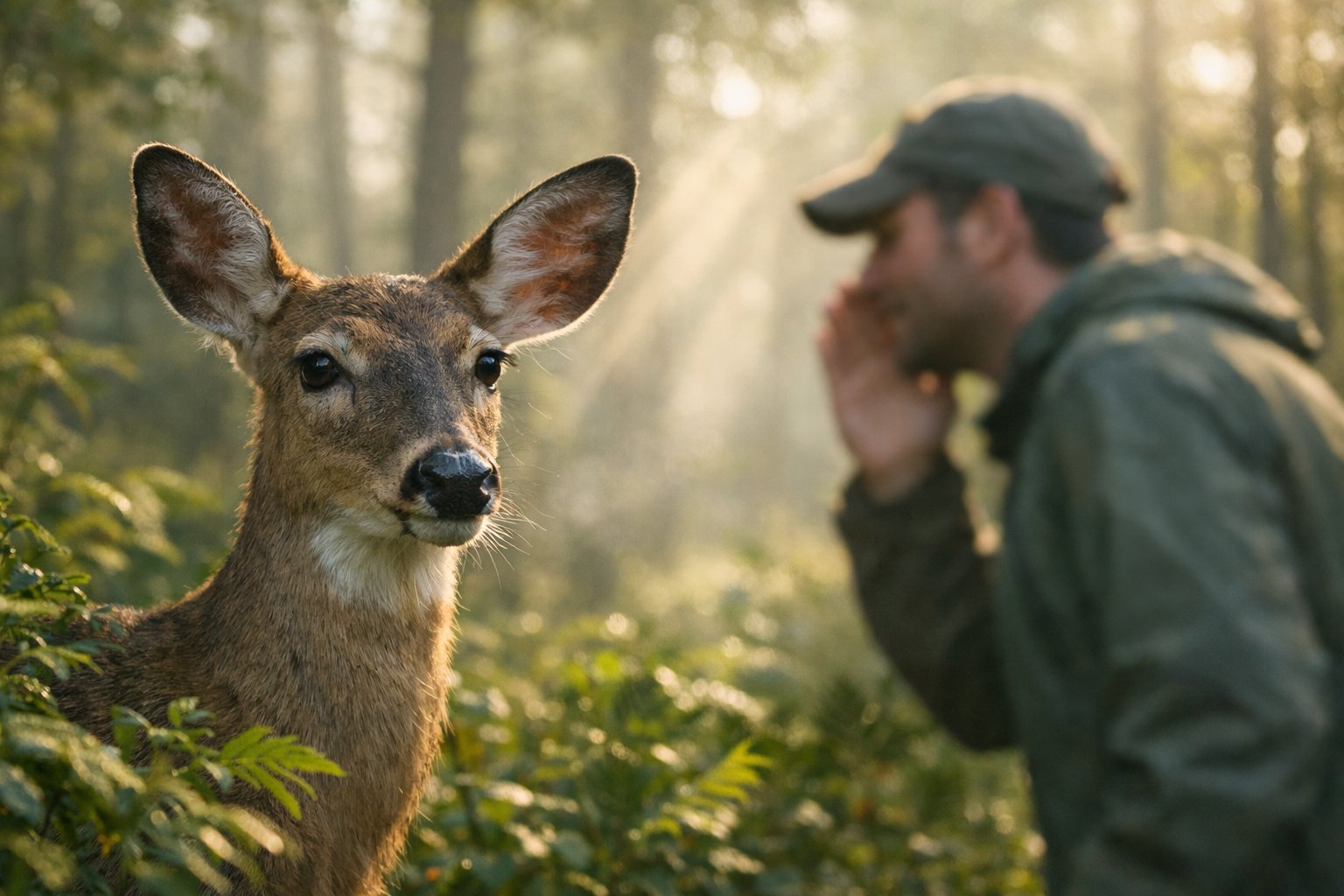
Deer pick up human voices pretty well, especially when you talk in that typical mid-range pitch. Their ears snap to the direction and tone of a sound, so it really pays to stay quiet.
Let’s look at some facts about how sensitive they are, how far they can hear, and which sounds stand out most.
Deer Sensitivity to Human Speech
Deer hear best in the mid-frequency range, which is right where most human voices fall. Studies show they pick up sounds most easily between 4–8 kHz. So, if you talk at a normal volume, whisper, or blurt out something loud, a nearby deer will probably notice.
Those big, swiveling ears let them zero in on exactly where a sound comes from. Deer seem to separate natural noises from anything “off,” so a human voice stands out. Wildlife researchers have noticed that deer often react more to voices than to predator calls, which is honestly kind of impressive.
If you have to talk, wait for the wind to carry your voice away from deer, or let other forest noises cover it up. Keep your words soft and low, and skip anything that clinks or clangs—metal noises just scream “human.”
How Far Can Deer Hear You Talking?
How far a deer can hear you depends on where you are, how loud you’re talking, and what the weather’s doing. In open, calm spots, a low but clear voice might travel hundreds of yards. Some sources even claim deer can pick up speech from half a mile away if conditions are perfect, but woods and brush usually cut that down a lot.
Trees, leaves, and hills block sound and keep it from traveling. If the wind blows toward the deer, your voice carries farther; if it’s at your back, you get a bit more leeway. Background noise—like a creek or wind—can help mask your voice and let you get closer.
Honestly, your footsteps often give you away more than your voice does. If you move quietly, control your scent, and time things right, you’ll have a better shot at going unnoticed.
Comparison of Deer Hearing Range to Humans
Deer hear higher frequencies than we do—roughly from 0.25 kHz up to 30 kHz. Most humans top out around 20 kHz. Researchers like Henry E. Heffner have mapped this out and found deer’s hearing curve is similar to ours but shifted higher.
That means deer catch high-pitched sounds that we might not even notice, like tiny snaps or rustles. On the other hand, we’re usually better at picking up really low, bassy sounds. The takeaway? Deer will hear the sharp, clear parts of your voice—especially consonants and higher notes—while you might notice low rumbles more.
Karl Miller and others have pointed out it’s tough to measure exactly, but everyone agrees deer and humans overlap in the most sensitive frequency bands. Your voice is a clear signal to a deer, so keep that in mind when you’re out there.
Deer Ears and Sound Detection

Deer use those big, swiveling ears and sharp hearing to spot danger, hear calls, and notice anything unusual. Their ears act like little radar dishes, letting them catch sounds we’d probably miss.
They can hear higher pitches than most people, and they’re quick to tell normal woods sounds from things that don’t belong.
Anatomy and Function of Deer Ears
Deer have these large pinnae—basically, the funnel-shaped part of the ear—that catch sound. Each ear swivels on its own, so a deer can point one ear behind it and the other forward. That way, it doesn’t even have to move its head to figure out where a noise came from.
Inside, sound vibrations travel through the middle ear and into the cochlea, which turns them into nerve signals. The big pinnae and precise ear movement help them pick up faint noises, like a distant footstep or a twig snapping.
If you’re hunting, remember: those rotating ears and big pinnae mean deer can catch even small, sudden sounds. Try not to let metal clink or gear scrape when you’re nearby.
Frequency Range and Vocalizations
Deer have a hearing range from about 0.25 kHz up to 30 kHz, with their sweet spot right between 4–8 kHz. That’s where most deer vocalizations—grunts, bleats, snorts—fall.
A buck’s grunt or a doe’s bleat lands right in the frequencies they notice best. Use that to your advantage: call softly and deliberately if you want to get their attention, but keep loud, high-pitched noises to a minimum.
It’s smart to avoid sounds at frequencies deer hear easily. Ringtones or metal clanging often have those high notes that deer just don’t like. When you’re calling, go for a low, controlled voice.
Distinguishing Natural vs. Unnatural Sounds
Deer can tell the difference between everyday forest noise and something weird. Leaves, branches, and squirrel chatter blend into the background. Human voices, gear rattles, and metal noises stick out and put deer on alert.
Researchers have found that deer are more likely to bolt from human voices than from predator calls. Even a whisper can make them uneasy. Deer use what they’ve learned to decide if a sound means danger.
If you need to move, try timing it with wind gusts or bursts of bird noise to cover your steps. When you blend your movements with the environment, you’re less likely to set off their alarm bells.
Impact of Environmental Conditions
Terrain, vegetation, and weather all change the way sound moves. Open fields let low-frequency noises travel much farther. Dense brush and thick leaves, though, eat up sound and toss it around.
Moist air and those weird temperature inversions? Sometimes they bend sound in strange ways, letting calls carry a lot farther than you’d guess.
Wind direction really plays a huge role with both scent and sound. If you stay upwind, you let the breeze take your noise away from deer. Sound just rides the wind more easily when it’s blowing away from you.
Rain and heavy foliage help hide small noises. Oddly, though, they can make sharp metal sounds stick out even more.
Try to move when it’s calm, or blend in with natural noises—like rustling leaves or a flock of birds. That way, you’re less likely to spook deer with something unnatural, like clanging gear or a dropped grunt tube.


