
Ever seen a coyote dart across a field and wondered just how fast they can move? Coyotes can hit speeds of 40 to 45 miles per hour in short bursts—pretty wild for an animal that looks so lean and scrappy.
That speed lets them snatch up prey or bolt away from danger before you even blink.
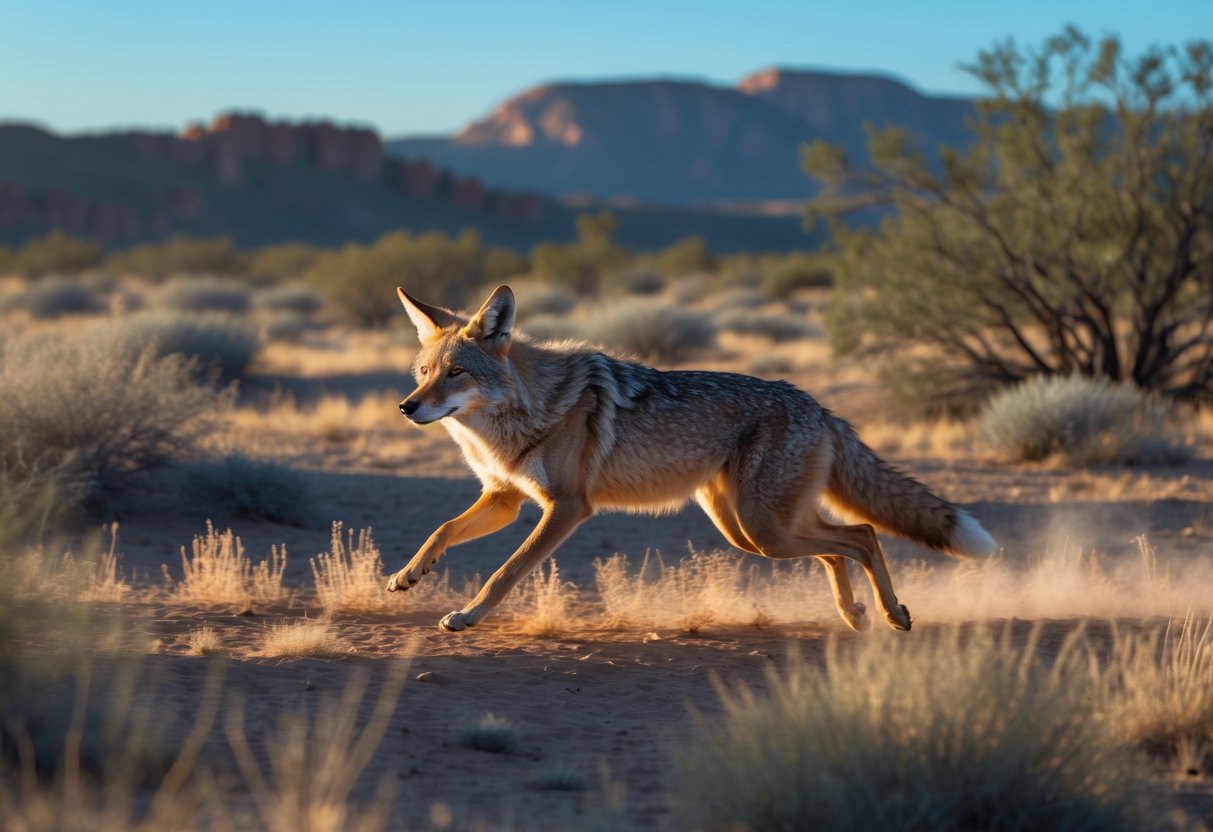
But honestly, they can’t keep that pace up for long. Coyotes usually drop down to a more relaxed jog if they need to run farther.
Getting a sense of how fast coyotes run gives you a better idea of how they survive out there—and maybe how you might spot one sneaking through your own neighborhood.
It’s kind of fascinating to watch how these smart animals juggle speed and stamina just to make it through the day.
How Fast Can Coyotes Run?

Coyotes have a reputation for being quick and agile. They can hit some impressive top speeds for short sprints, but they’re also built to keep going at a good pace over longer distances.
If you want to know how fast coyotes really run, you’ll need to look at their max speed, their endurance, and what changes their running ability.
Maximum Running Speed
Coyotes can sprint at 40 to 45 miles per hour (64 to 72 kilometers per hour) when they need to. That burst of speed lets them grab prey or get away from trouble in a hurry.
Their bodies just seem built for it—slim, long-legged, and made to move fast across open ground. Still, they can only keep that up for a few hundred yards before they have to slow down.
If a coyote’s old or hurt, it might only manage 30 to 32 miles per hour (48 to 52 kilometers per hour). Even then, that’s still quicker than most animals they run into.
Endurance and Sustained Speeds
Coyotes can hit those high speeds, but they don’t last long at full throttle. Over longer distances, they usually settle into a pace of 20 to 30 miles per hour (32 to 48 kilometers per hour).
That steady speed helps them chase down prey that can’t keep up a sprint. Coyotes mix quick bursts with solid endurance, wearing out their targets over time.
When they hunt together, they take turns sprinting and jogging, which gives them a better shot at catching something.
Factors Affecting Coyote Speed
A few things can change how fast you’ll see a coyote running:
- Terrain: On flat, open ground, coyotes can really fly. But thick brush or rocky ground slows them down.
- Weather: Cooler days let them run longer. Hot weather wears them out faster.
- Age and Health: Young, healthy coyotes move the fastest. Older or injured ones lag behind.
- Motivation: Hungry or scared coyotes push themselves to their top speed.
Where they live matters too. Coyotes on open plains usually run faster than those in dense woods or hills.
If you want more details about how their speed changes with their environment, check out how fast can coyotes run.
Physical and Evolutionary Adaptations for Speed
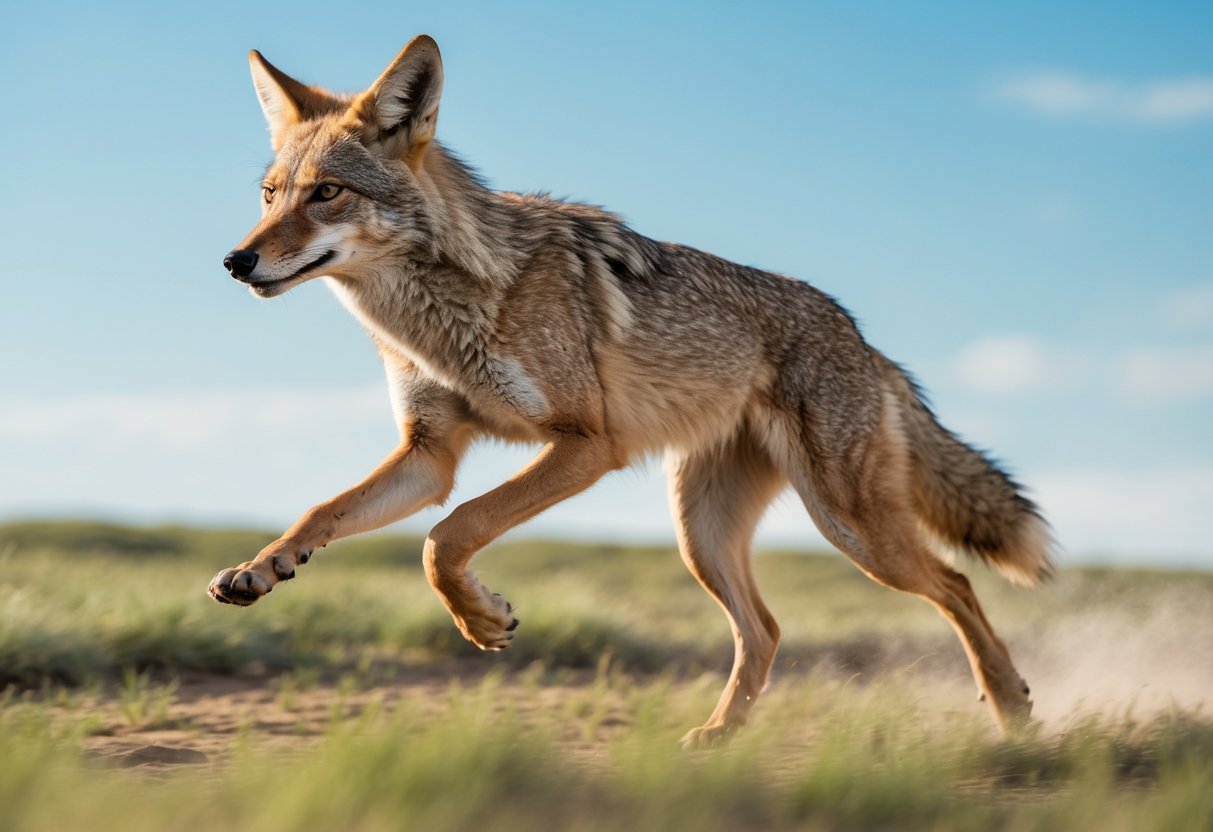
Coyotes have some cool physical traits and evolutionary tweaks that help them run fast and stay nimble. These features make them tough to catch and great at chasing down dinner.
Body Structure and Build
Coyotes have bodies made for speed. They’re lean and muscular, which means they stay light but pack plenty of power.
Their long legs give them a bigger stride, so every step covers more ground. You’ll see their strong hind legs act like springs, launching them forward.
Their spines can flex a lot, letting them stretch out and get even more speed. Big, padded paws grip all sorts of surfaces, and the dewclaw on their paw works almost like a brake for quick stops.
Some key features:
- Lean, muscular frame
- Long legs for longer strides
- Flexible spine for extra reach
- Padded paws and dewclaws for grip and braking
Agility and Maneuverability
Coyotes don’t just run in a straight line—they can turn on a dime. Their flexible spines help them twist and dodge without losing much speed.
Those big paws help them grip the ground, so they don’t slip when making sharp turns. Strong leg and shoulder muscles power those quick moves.
They’ve got great balance, too. Sensitive ears help them stay steady when they make fast changes in direction.
All this agility lets coyotes chase prey that zigzags or tries to escape, making them some of the most effective hunters around.
Comparisons to Other Members of the Canine Family
Coyotes are smaller and lighter than wolves or foxes. That lighter build lets them sprint faster since they don’t have as much weight to haul around, but they still pack some serious muscle.
Your coyote can outrun most wolves, though some foxes might beat it in a quick dash. Those long legs? They really help when you compare them to dogs of similar size.
Coyotes usually have better endurance, too. They can keep running at a steady pace longer than most domestic dogs.
Honestly, a coyote’s body just mixes speed, agility, and stamina in a way that gives it a real edge over a lot of its canine relatives.
If you’re curious about just how fast coyotes can go, check out this coyote running speed explanation.


