
Ever wondered if coyotes can break windows? Well, yeah—they can. Coyotes are surprisingly strong and clever. If they feel threatened or desperate to get inside, they might claw or even slam into windows and doors. Some families have even caught coyotes on camera, aggressively trying to get in.

It’s a little unsettling, honestly, especially if you live somewhere coyotes roam around. Usually, they avoid people, but if they spot food or a small pet inside, they can get bold fast.
Knowing what coyotes might do helps you take some basic steps to protect your home and pets from these curious animals.
If you understand how coyotes act and what they’re capable of, you’ll have a better chance to keep them out. You’ll find tips and real stories from folks who’ve dealt with this themselves. For a wild example, check out this story about coyotes slamming into a family’s door in Iowa.
Can Coyotes Actually Break Windows?

Sometimes coyotes damage windows while trying to get into homes. The way they behave, the kind of glass you have, and the situation all play a part in whether they’ll break through.
If you get the basics, you can do a lot more to protect your house and pets.
Documented Incidents of Coyotes Breaking Glass
People have actually seen coyotes break windows to get inside. John Osborne, for example, woke up to coyotes crashing through his basement window and shattering the glass. The noise was loud and sudden, and it really shows how destructive a coyote break-in can get.
Other stories mention packs of coyotes slamming into patio doors or windows. Usually, this happens if they’re chasing something or looking for food. It’s rare, but it does prove coyotes can break or badly damage glass.
How Coyotes Behave Around Residential Windows
Most of the time, coyotes steer clear of homes. But if they’re curious or desperate, things change. If they spot a small pet or smell food inside, they might try to get in.
Coyotes often claw at screens and sometimes hit windows or doors hard. When there’s more than one, they get even louder and more aggressive.
You might hear howling, barking, or scratching near your windows when this happens.
Usually, a coyote breaks a window out of panic or because it feels cornered, not because it’s a regular thing.
What Happens During a Coyote Break-In
When a coyote breaks a window, glass scatters inside your place. That’s dangerous for you and your pets. The coyote might rush in, either trying to escape something or searching for food.
In John Osborne’s story, the first coyote broke through and a second followed almost immediately. That just made things more chaotic. If you ever face something like this, get somewhere safe and call animal control right away.
Coyotes trapped inside get scared and can act aggressively.
Factors Affecting Window Vulnerability
Some things make your windows easier—or harder—for coyotes to break.
- Type of glass: Old, single-pane glass breaks much easier than modern double-pane or tempered glass.
- Window location: Basement windows close to the ground are more at risk because coyotes can reach them.
- Surrounding barriers: If you’ve got plants or outdoor furniture near your windows, coyotes can get closer without much trouble.
- Noise and lighting: Quiet, dark spots might attract coyotes because they feel safer sneaking around.
If you know what makes your home vulnerable, you can focus on those spots to boost your safety.
For more details, check out John Osborne’s basement window break-in and other stories about coyote behavior near homes.
Aftermath and Prevention of Coyote Window Break-Ins
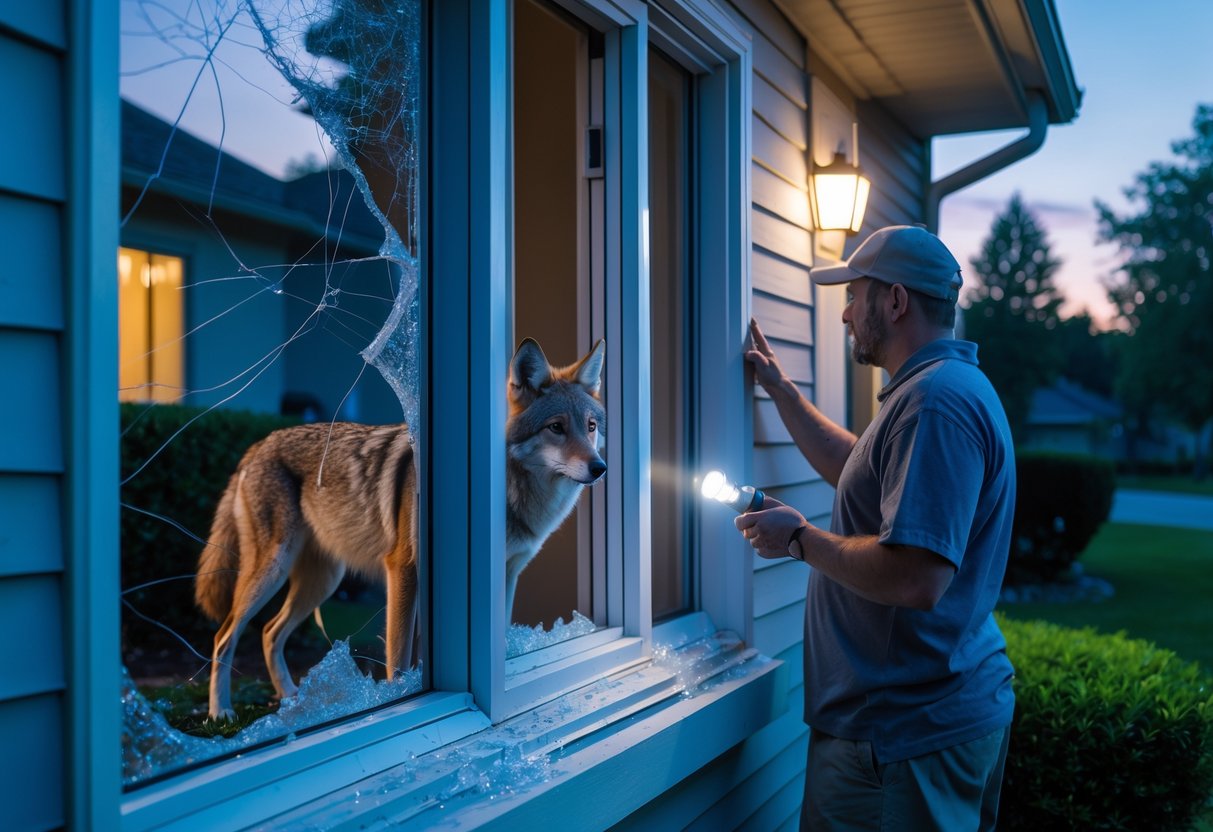
When a coyote breaks a window, the damage can get expensive and pretty stressful. You’ll want to fix things fast and make sure coyotes don’t come back.
If you pay attention to vulnerable spots and take action, you can avoid a repeat.
Role of Animal Control in Coyote Incidents
If a coyote breaks in or acts aggressive, call animal control. They’ll safely remove the animal and check if there’s a bigger problem in your neighborhood.
Animal control officers also share advice on how to keep coyotes away. They know the local rules and can tell you if things like hazing—using noise or lights—are okay.
Don’t try to handle a wild coyote yourself. Animal control pros have the training and gear to deal with it safely for everyone.
Protecting Your Home From Coyotes
Start by securing every entry point. Sturdy screens on basement and regular windows help a lot.
If you like to leave windows open, try installing heavy-duty mesh that coyotes can’t claw through or break.
Get rid of food sources like pet food or trash near your house. Coyotes have a great sense of smell.
Motion-activated lights or alarms can scare them away at night.
Here’s a quick checklist:
- Secure basement and ground-level windows with tough screens
- Remove outdoor pet food and trash often
- Use motion-activated lights or noise devices
- Keep pets indoors, especially at dawn and dusk
The Importance of Monitoring Vulnerable Areas
Basement windows and sliding glass doors? Coyotes love those. If you live somewhere coyotes roam, check these spots every day.
Keep an eye out for scratched screens, torn fabric, or weird footprints near your windows. It’s honestly surprising how much you can miss if you don’t look closely.
Set up security cameras if you can. They’ll show you if coyotes are sneaking around your property at night. Cameras might even give you a heads-up before anything gets damaged.
Don’t brush off those little clues. If you catch issues early, you’ve got a much better shot at keeping your home and family safe.


