
Before you set up hives, the key question is not just whether bees fit your plot, it is whether your allotment rules, local ordinances, and shared-space responsibilities allow them. You can keep bees on an allotment only when the site owner or governing body permits it and your local beekeeping regulations, zoning rules, and neighbor-safety duties all line up.
That is why backyard beekeeping and urban beekeeping rules are rarely identical from one site to another. A parcel that looks perfect for bees can still be off-limits if the allotment association bans hives, if permits are required, or if site layout creates a nuisance risk.
When Allotment Beekeeping Is Allowed

You usually get the green light when the allotment manager, council, or association allows bees in writing and your setup fits local beekeeping laws. In practice, that means you need both permission for the plot and compliance with public rules that cover land use, safety, and nuisance.
Who Grants Permission On An Allotment
Permission often comes from the allotment committee, local council, or landowner, and it may be tied to a bee agreement. Some sites also want proof of experience or membership in a beekeeping group, similar to the way a town council beekeeping agreement sets conditions before hives are approved.
How Local Beekeeping Laws Affect Shared Growing Spaces
Local beekeeping laws can limit hive placement, registration, or the number of colonies allowed on one plot. Shared spaces raise extra issues because your bees pass over neighbors’ beds, paths, and entrances, so local zoning laws and zoning restrictions may matter even when the allotment itself is supportive.
Why Allotment Approval Is Different From Residential Hives
Allotment approval is usually stricter than residential approval because the site is communal. Unlike a single-yard setup, your bees affect people who never agreed to have a hive next door, which is why some sites require extra screening, training, or written consent rather than a casual okay.
Rules That Usually Decide The Outcome

The rules that most often decide your answer are the ones that control risk, distance, and disease. If you miss those details, even a polite site manager may say no.
Hive Limits, Setbacks, And Siting Expectations
Many allotment sites cap the number of hives, require setbacks from paths or neighboring plots, and limit placement near entrances. Local zoning laws may also influence where a hive can sit relative to property lines or public areas, especially where a permit is needed.
Water, Flight Paths, And Neighbor Safety
You need a stable water source so bees do not head for shared taps or neighbors’ birdbaths. Good siting also means thinking about flight paths, because a poorly placed hive can create conflict if bees are forced to cross busy walkways at head height.
Registration, Inspections, And Disease Control
Some places require beekeeping permits, hive registration, or periodic inspections. Disease control matters too, especially with threats like american foulbrood, and good integrated pest management (ipm) practices help you spot trouble early and keep your colony from becoming a site-wide problem.
How To Assess Whether Your Plot Is Suitable
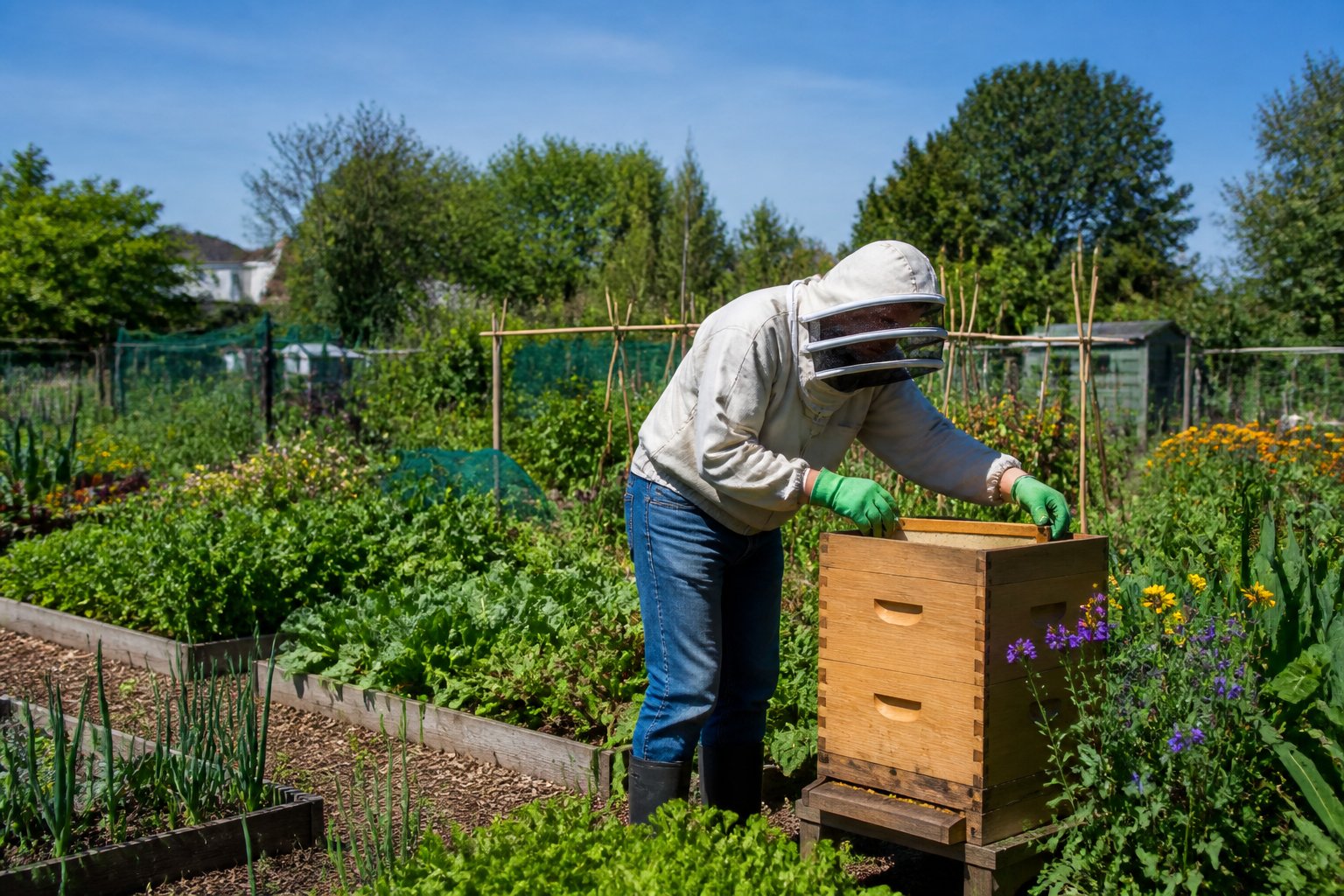
A good plot is easy to reach, easy to work, and unlikely to annoy nearby gardeners. Before you commit, think like a beekeeper and like a neighbor at the same time.
Space, Access, And Day-To-Day Management
You need enough room to work safely around the hive, carry equipment, and use a smoker without crowding a path. If your plot is awkward to reach, routine tasks like inspections, feeding, and emergency checks become harder than they should be.
Forage Sources And Nearby Planting
Strong forage makes a big difference, and allotments with fruit, herbs, and flowers often help. I have seen lavender borders and mixed planting keep bees busy close to home, which can reduce pressure on nearby gardens and improve colony steadiness.
Choosing Bees And Equipment For A Shared Site
Not every type of bees suits a shared site equally well, so temper and manageability matter. Keep your beeswax cleanup, hive tools, and smoker use tidy and controlled, because a shared garden works best when your equipment stays organized and your bees stay calm.
Benefits And Trade-Offs Before You Commit

Allotment bees can help your crops, yet they also add responsibilities that do not fit every gardener’s routine. If you want the upside without the work, the trade-off may disappoint you.
Pollination Value For The Allotment
Bees can improve fruit set and support nearby crops through pollination services, especially when the allotment already grows berries, squash, beans, or tree fruit. A council policy for allotment beekeeping notes that bees can be a strong addition to a productive site.
What To Expect From Honey And Hive Products
Honey production varies by season, weather, and forage, so do not plan around a guaranteed harvest. A typical hive may yield usable honey and some beeswax, yet the real reward can be the colony’s health and the pollination value rather than the jar count.
When An Allotment Is The Wrong Location
An allotment is a poor fit if you cannot inspect regularly, if neighbors are already uneasy, or if the site has tight access and heavy foot traffic. The same caution applies if local rules are unsettled, because urban beekeeping and backyard beekeeping only work well when your layout and your responsibilities match the space.


