
When you spot bees swarming around your house, they’re usually searching for a new place to settle. A bee colony swarms when things get too crowded or when the queen decides it’s time to move, so thousands of bees take off together to find somewhere better. This is just part of how bees expand and keep their species going.
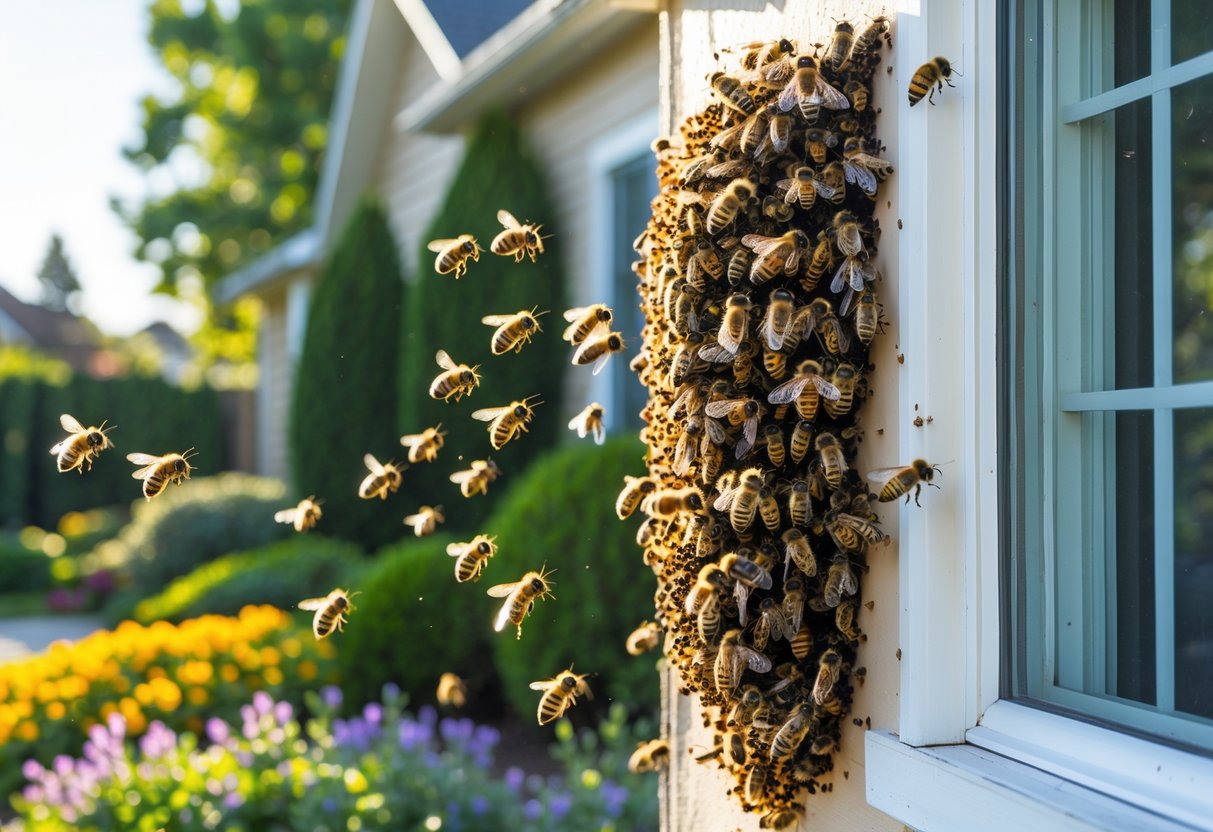
Seeing a big cloud of bees can feel a bit alarming—maybe even scary. But honestly, swarming bees are usually just passing by.
They often gather near houses, especially if they spot safe places like tree hollows or open chimneys. If you know why bees swarm, you can keep your cool and figure out your next steps.
Learning about their reasons for swarming also helps you know when to call in a pro and how to keep everyone safe. Curious about what a swarm means for your home? Let’s dig in.
Why Do Bees Swarm Around Houses?

Bees swarm for their own natural reasons. They’re looking for safe, cozy spots to start over.
Certain things about your property can attract them, too. If you get why this happens, you’ll understand their behavior and what you should do.
Natural Reasons for Bee Swarming
Bees swarm so they can grow their colonies. When the hive gets too crowded or the queen gets older, the colony splits.
A group of bees, along with the queen, heads out to find a fresh spot. This usually happens in warmer months when flowers are blooming.
Swarming also helps bees dodge diseases like varroa mites by letting them start somewhere new. The swarm sticks together around the queen for safety while scout bees look for a home.
This process keeps them going and helps them thrive.
How Bee Colonies Choose New Locations
Scout bees head out and look for the best new homes. They check out dry, sheltered places—tree branches, wall cracks, old wood holes—anything that’ll keep the colony safe.
After checking their options, scouts come back and “vote” by dancing to show which spot they like best. The most popular spot wins.
Once the scouts agree, the whole swarm moves in together. Sometimes, that new spot could be close to or even inside your house if it fits what they need.
Environmental and Human Factors That Attract Bees
Bees like houses with wood cracks, old nests, or open chimneys, since those look like natural shelters to them. Gardens full of blooming flowers nearby draw them in, too, because they need pollen and nectar close by.
If you leave out water or forget to seal up openings, you make your house even more appealing. You’ll probably notice more swarming if you live in a green, warm area with lots of flowers.
Blocking entry points can help keep bees from moving in.
For more details, check out What Does It Mean When Bees Swarm Around Your House?
What To Do When Bees Swarm Around Your Home
If bees swarm near your home, staying calm and acting carefully really helps. You’ll want to know how to manage things safely, when to call in the pros, and why it matters to remove bees the right way.
Safe Actions to Take If Bees Are Nearby
If you see a swarm close to your house, keep your distance. Try not to make sudden moves or loud noises, since that could rile them up.
Bring kids and pets inside or keep a close eye on them. Close windows and doors so the bees can’t get in.
Don’t try to spray, hit, or trap the bees yourself—it’ll just make them more aggressive. Instead, wait calmly for them to move on or get help from someone who knows what they’re doing.
Skip lighting fires or using harsh chemicals near the bees. You can admire their work from a distance, but it’s best to give them space for everyone’s safety.
When to Call Beekeepers or Beekeeping Associations
If the swarm hangs around or starts building a hive, reach out to local beekeepers or a beekeeping association. They’ve got the tools and know-how to remove and relocate bees safely.
Professional beekeepers can often rescue the bees and maybe even add them to a healthy colony. It’s a good move if the bees are causing problems or just won’t leave.
Most places have clubs or organizations that handle bee removal. You can find local contacts online or ask your city’s pest control for suggestions.
Risks of Handling Bee Swarms Yourself
Trying to handle bees on your own can get dangerous, especially if you don’t have experience or protective gear. Bees might sting if they feel threatened, and several stings can cause serious allergic reactions.
If you try to remove a swarm without help, you might hurt the bees or make things worse by driving them inside your house. That could mean bigger problems and higher costs later.
Some bee species are even protected by law. Messing with them could lead to legal trouble, so it’s best to let the experts handle it.
How Swarm Removal Benefits Bee Conservation
When you relocate swarms, you’re actually protecting bees and backing up their crucial role in pollination. Instead of just wiping them out, rescuing bees lets colonies stay healthy and start fresh somewhere new.
If you call a beekeeper for swarm removal, you’re pitching in to help conserve bees. Usually, these experts move swarms to safe hives, where the bees can keep making honey and pollinating plants.
Saving swarms helps keep local ecosystems balanced. Our food supply really depends on pollinators like bees, doesn’t it?
Even small, careful actions can have a real impact on the environment.
For more info on safe bee removal, check out advice from local beekeepers or see tips on how to stop bees from swarming your house.


