
When welcoming a new baby into your home, you may have questions about your family pet, especially if you have a Boxer. These dogs are known for their playful and affectionate nature, which often makes them great companions for families. With proper training and supervision, Boxers can be safe and even loving around infants and young children.
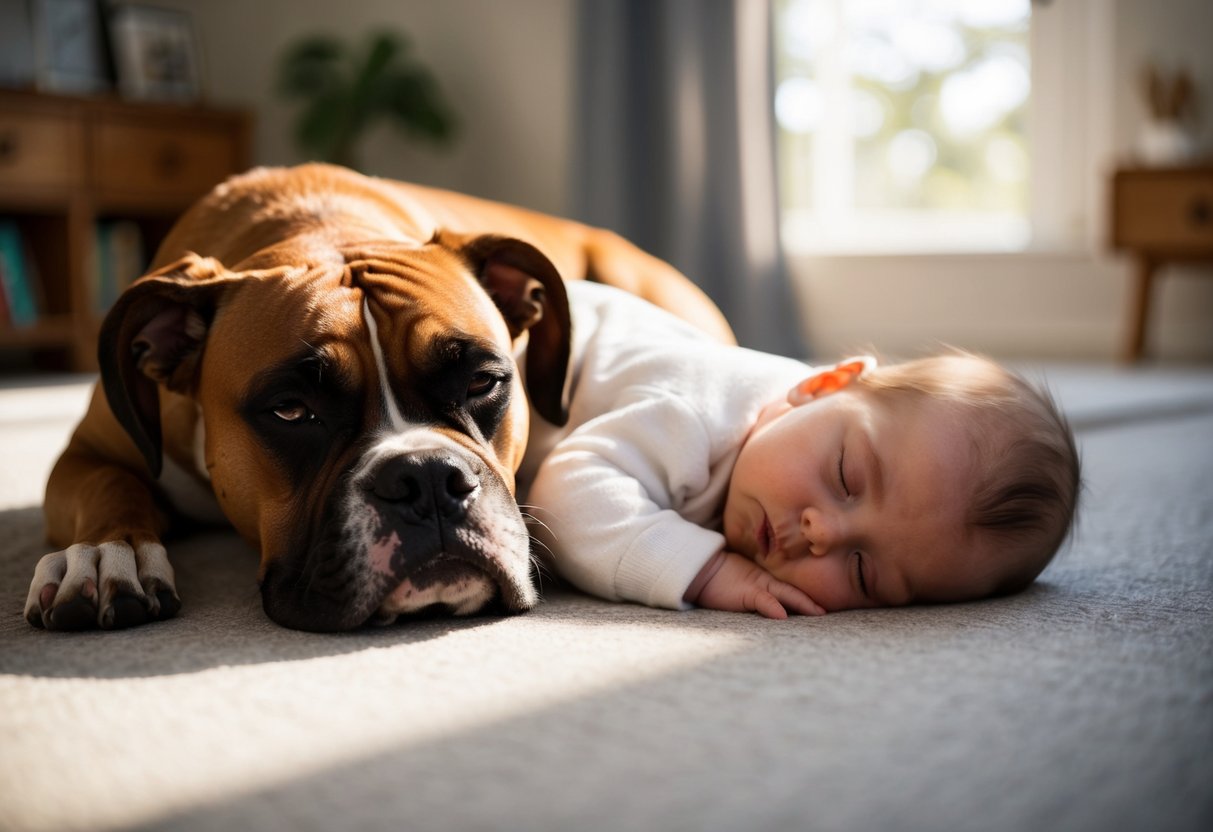
Boxers are energetic and protective, making them a popular choice for families. They enjoy being around kids and can form strong bonds with them. It’s important to socialize your Boxer early and ensure they are well-trained to help them adjust to a new family member. This groundwork can create a positive environment for both your dog and your baby.
While Boxers are generally good with children, always remember to monitor their interactions. They should never be left alone together until you are fully confident in their behavior. This approach ensures that your Boxer remains a beloved part of your family while keeping your little one safe.
Understanding Boxer Dogs’ Characteristics
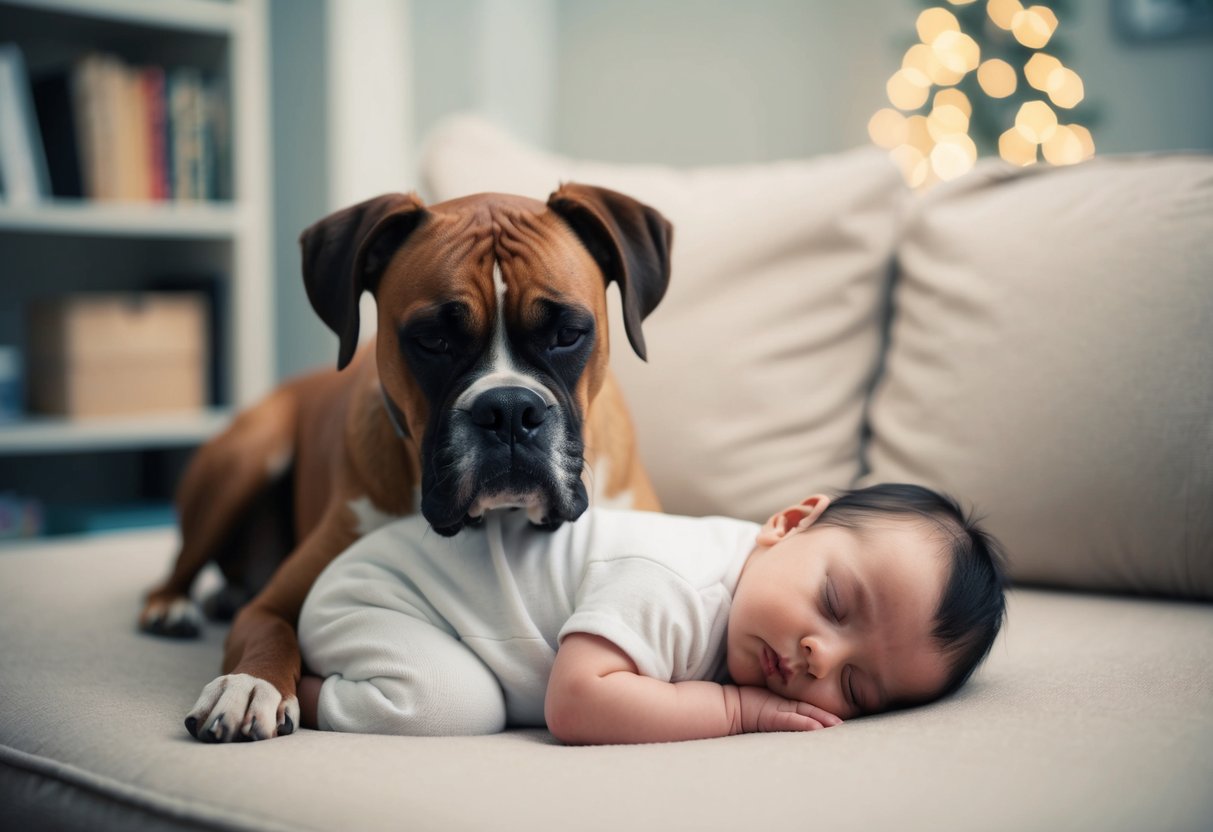
Boxer dogs are known for their friendly nature and strong protective instincts. Their unique combination of playfulness and patience can make them great companions for families, including those with babies. Here’s a closer look at their key characteristics.
Temperament and Behavioral Traits
Boxers are energetic and lively. They have a zest for life that is contagious. Their playful nature means they love to engage with people, especially children. Boxers tend to be very affectionate, forming close bonds with their families.
While they are friendly, they can also be quite protective. They often become alert when they sense a potential threat. With proper training and socialization, Boxers can learn to differentiate between real dangers and everyday situations, making them well-suited for family life.
The Protective Instinct of Boxers
The protective instinct of Boxers is one of their most notable traits. They have a natural tendency to guard their family and home. This can be a wonderful quality, especially for families with children.
Boxers are known to be wary of strangers. When properly socialized from a young age, they can learn to be welcoming while still being protective. This balance helps them feel secure, which can also impart a sense of safety for your little ones. Teaching your Boxer appropriate behavior around babies is key to harnessing this protective quality.
Exercise and Playfulness
Boxers require regular exercise to stay healthy and happy. They thrive on play and enjoy activities like fetch or running in the yard. Their playful nature makes them a joy to be around.
It’s important to provide daily physical and mental stimulation. A lack of exercise can lead to boredom and unwanted behaviors. Engaging your Boxer through structured playtime can help manage their energy levels and reinforce their bond with your family, creating a loving environment for everyone.
Training and Socialization
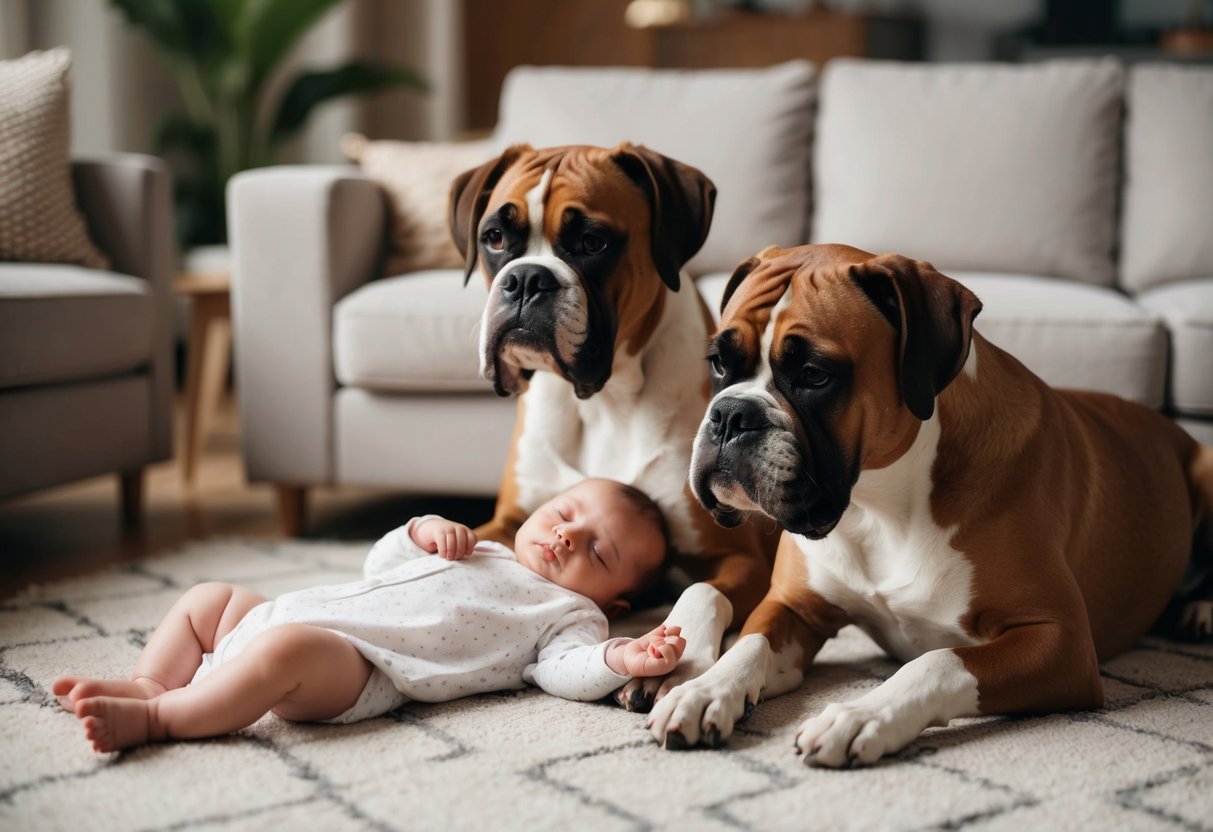
Training and socialization are vital to ensure that your Boxer is safe and well-behaved around babies. These processes help your dog learn how to interact gently and confidently with children. You can build a strong bond between your Boxer and your family by focusing on these key areas.
Importance of Early Socialization
Early socialization is essential for Boxers, especially if they will be around babies. It helps them understand how to behave in different situations. Socializing your Boxer with various people, environments, and other pets will help them become more comfortable.
To start, introduce your Boxer to a variety of sounds, sights, and smells. Arrange playdates with children under supervision. This experience teaches your dog to enjoy being around kids. A Boxer that is well-socialized is less likely to feel anxious or fearful, which makes them safer around your little ones.
Training Techniques for Boxers
Training should start early and be consistent. Boxers respond well to clear commands and positive reinforcement. Use treats, praise, or favorite toys to reward good behavior. Simple commands like “sit,” “stay,” and “gentle” can help establish boundaries.
Consider enrolling your Boxer in a training class with a professional trainer. This can provide structured socialization experiences. Group sessions with other dogs and people will boost your Boxer’s comfort level when interacting with kids and provide valuable skills. Remember, patience and consistency are key.
Benefits of Positive Reinforcement
Positive reinforcement is a crucial part of training your Boxer. This method encourages your dog to repeat good behaviors. Instead of punishing unwanted actions, focus on rewarding the behaviors you want.
For example, when your Boxer shows gentle behavior around babies, provide a treat or praise immediately. This reinforces that being calm and friendly is desirable. Additionally, using positive reinforcement creates a stronger bond between you and your dog. Boxers are eager to please, and they thrive on encouragement.
Safety Around Babies

Keeping babies safe around boxer dogs involves several important steps. By taking precautions, creating a safe environment, and understanding how boxers interact with young children, you can ensure a positive experience for everyone involved.
Precautions and Supervision
Always supervise interactions between your boxer and baby. It’s crucial never to leave them alone together, regardless of the dog’s temperament. Boxers can be loyal and protective, but their size and strength mean they can unintentionally hurt a baby during play.
Teach your child proper ways to interact with the dog. Explain that sudden movements or loud noises might startle the dog. Be consistent about boundaries, like no pulling on ears or tails. This teaches respect for the dog and promotes a safe environment.
Creating a Safe Environment
Set up a safe space for both your baby and boxer. Create areas where the dog can retreat if feeling overwhelmed. This helps your dog relax while keeping your baby safe. Use baby gates to separate rooms if needed.
Secure any small items within reach. Dogs often explore by chewing. Make sure toys and other items do not pose a risk. You can even teach your dog to stay away from the baby’s play area. Consistent training helps reinforce this behavior and fosters a trusting relationship.
Boxer Dogs with Young Children
Boxers can be great companions for children when properly socialized. Their patience and playful nature often make them good friends for young ones. They are generally known to be good with kids, but always remember there are unique factors to consider.
Every dog has its personality. Spend time observing how your boxer reacts to your baby. Some may be more cautious than others. Loyal behavior can develop into a protective instinct, which might be beneficial, but ensure it remains healthy and safe. Recognize that every interaction is an opportunity for your dog to learn and grow alongside your child.
Consulting Professionals

When raising a Boxer in a home with babies, it’s essential to get the right guidance. Consulting professionals can help ensure safe interactions and effective training for your dog. Knowing when and how to seek help is key to a happy household.
When to Seek a Professional Trainer
You should consider contacting a professional trainer if your Boxer displays any concerning behaviors. Signs like excessive barking or anxiety around babies can be red flags. A trainer can help teach your dog commands and proper behavior, ensuring they understand their role in the family.
It’s especially important to seek help if your dog has protective tendencies. They need to learn boundaries and how to behave around infants. A trainer will use positive reinforcement techniques to encourage good behavior, making the training process engaging for your dog.
Role of Behaviorists in Training
Behaviorists specialize in understanding animal behavior and can address specific issues your Boxer may face. A behaviorist can provide tailored strategies if your dog shows signs of aggression or extreme fear. They will assess your dog’s behavior and work with you to create a customized training plan.
Working with a behaviorist is particularly beneficial if your Boxer tends to guard spaces or objects. With proper techniques, you can teach your dog to feel more secure and less threatened. This promotes a safer environment for your baby, allowing both to grow in a harmonious setting.


