
Boxer dogs are known for their playful energy and loving nature, but many owners wonder if they can handle being left alone at home. Most boxers can be left alone for about 4 to 5 hours without too much trouble, but keep in mind that they thrive on social interaction.
Understanding how long your boxer can stay alone is crucial to keeping them happy and healthy.
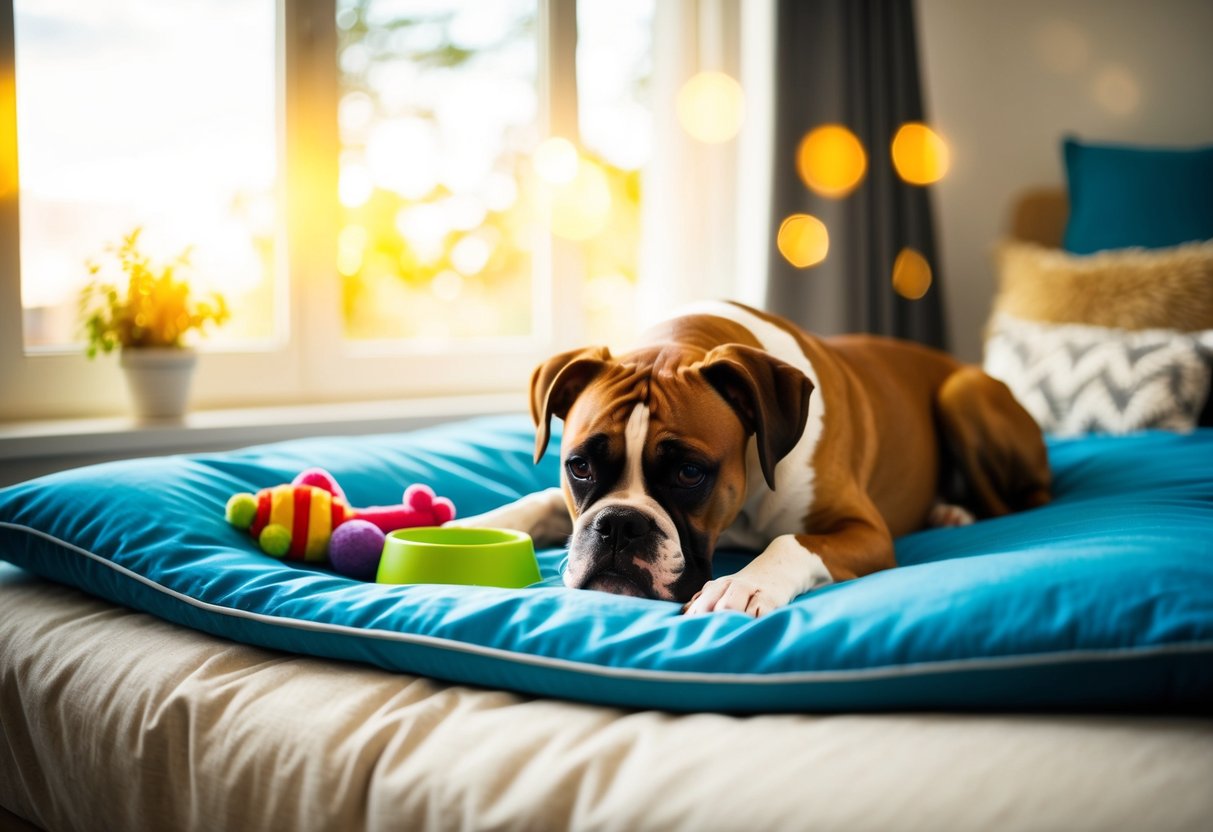
Leaving your boxer home alone for short periods is usually fine, but longer absences can lead to separation anxiety. Boxers are social animals and enjoy spending time with their families.
Finding ways to help them adjust can make a big difference in their well-being.
In this article, you will learn tips to ensure your boxer stays content when you are away and how to ease any anxiety they might feel. Knowing how to prepare your boxer for your absence can help both of you feel more at ease.
Understanding Boxer Dogs

Boxers are known for their unique traits and behaviors. Understanding these characteristics can help you better care for your dog and manage their needs.
Characteristics of the Boxer Breed
Boxers are medium to large dogs with a strong build and a playful demeanor. They have short, smooth coats that come in various colors, including brindle and fawn. Boxers are known for their distinct square-shaped faces and strong jaws.
They are energetic and require regular exercise to stay healthy. Boxers are also known for their loyalty and affection towards their families. This breed tends to bond closely with their owners, making them excellent companions.
Due to their high intelligence, they are quick learners but can also exhibit stubbornness at times.
Common Behavioral Traits
Boxers are affectionate and social dogs. They thrive on companionship, and their friendly nature makes them great with children.
However, boxers can experience anxiety if left alone for long periods. Signs of anxiety in boxers can include barking, chewing, or scratching.
These behavioral traits make it important to keep your boxer engaged and active. Regular exercise and mental stimulation can help alleviate anxiety and prevent destructive behaviors.
Providing toys or arranging playdates with other dogs can also ease their loneliness. Understanding these traits ensures you provide the best environment for your boxer.
Managing Separation Anxiety
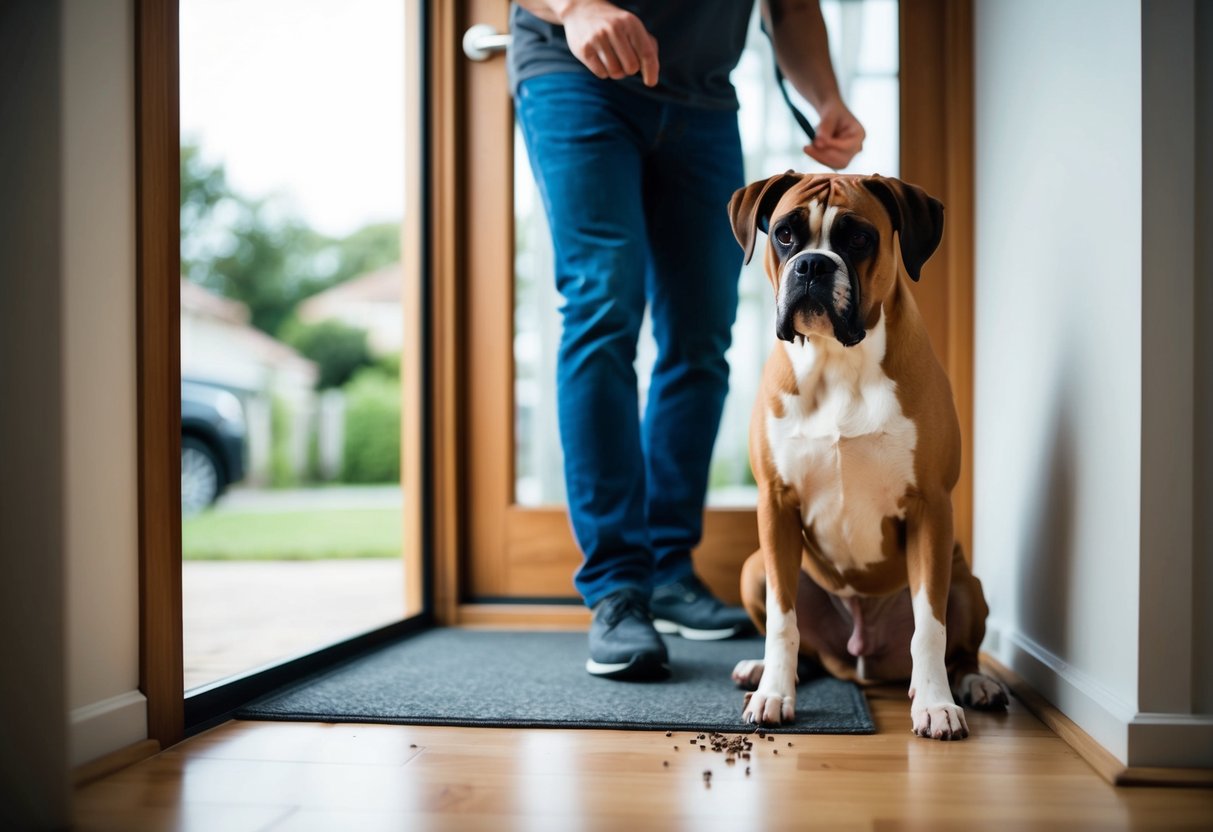
If your Boxer experiences separation anxiety, it’s important to recognize the signs and use effective techniques to help them feel more comfortable when alone. Addressing this issue can lead to a happier, healthier dog.
Identifying Signs of Separation Anxiety
Knowing the signs of separation anxiety in Boxers can help you act fast. Common behaviors include:
- Excessive barking or howling when you leave.
- Destructive chewing on furniture or shoes.
- Pacing around the house, showing restlessness.
- House soiling, even if they are house-trained.
- Clinginess when you are home, wanting to be near you all the time.
Pay attention to these signs. If they get worse when you leave, your Boxer may suffer from this condition.
Techniques to Alleviate Anxiety
There are various techniques you can try to help ease your Boxer’s anxiety. Some effective methods include:
- Gradual departures: Start by leaving your dog alone for short periods and slowly increase the time.
- Calming aids: Consider using calming aids like pheromone sprays or anxiety wraps to help soothe your dog.
- Interactive toys: Provide engaging toys that can keep your Boxer occupied when you’re away.
- Create a safe space: Designate a comfortable area with their bed and some toys where they feel secure.
If your efforts do not improve your Boxer’s anxiety, it may be wise to consult your veterinarian for additional support.
Training and Stimulation Strategies
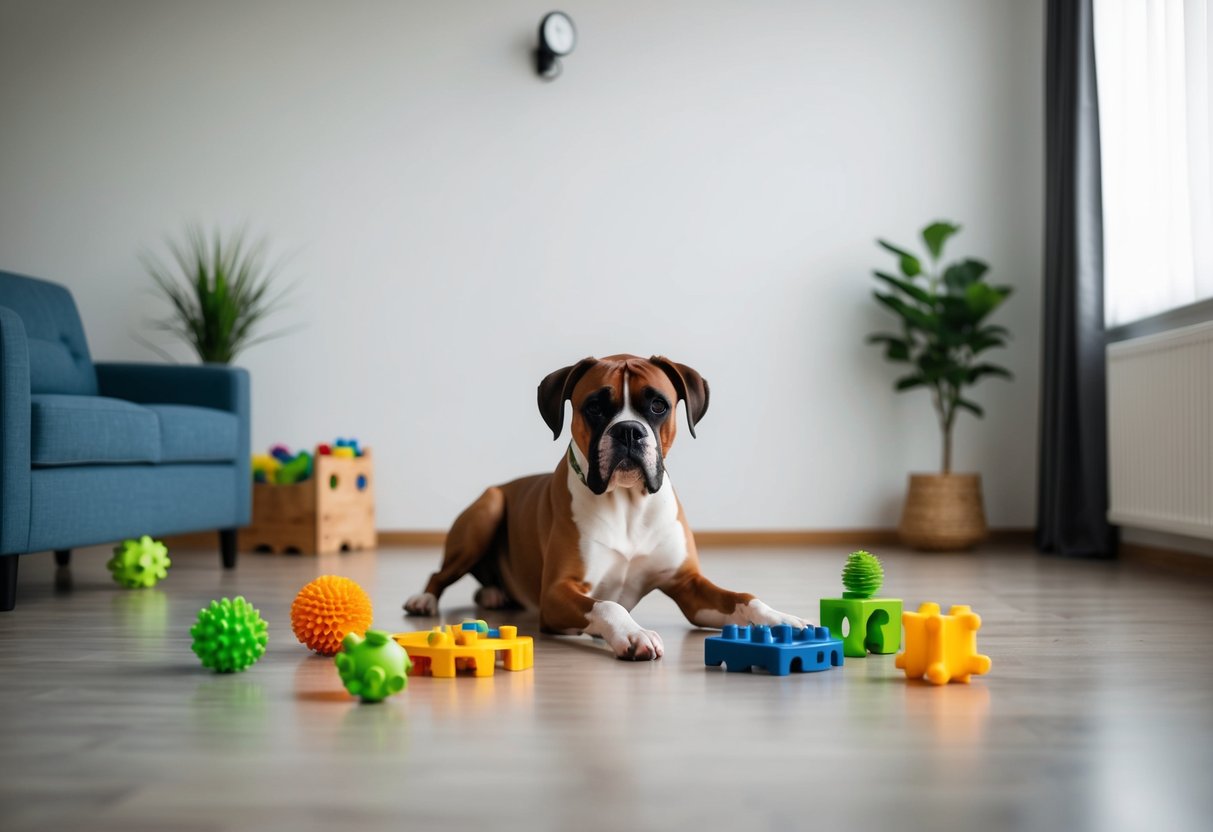
To help your Boxer feel comfortable when left alone, focus on effective training methods and providing proper stimulation. This ensures they stay happy and reduces anxiety. Here are key strategies you can use.
Exercise and Mental Stimulation
Daily exercise is vital for your Boxer’s well-being. Aim for at least 60 minutes of vigorous activity each day. Activities like running, playing fetch, or agility training work wonders.
Mental stimulation is equally important. Engage your dog in learning new tricks or commands. This not only tires them out physically but also keeps their minds active.
Consider using interactive games that challenge them, such as puzzle toys that hide treats.
Combining physical and mental activities helps keep your Boxer calm and reduces their anxiety when alone.
Crate Training and Alone Time
Crate training can create a safe space for your Boxer. Start by introducing the crate gradually. Make it a positive experience with treats and toys.
Once they feel comfortable, use the crate for short periods to help them adjust to being alone. Gradually increase the time spent inside.
Make sure their crate is cozy with blankets and their favorite toys. This ensures that your Boxer views it as a safe haven rather than a punishment.
With the right approach, crate training aids in developing good habits and reduces your dog’s stress during alone times.
Interactive Toys and Activities
Interactive toys can keep your Boxer engaged and entertained. Look for toys that require them to think, such as treat-dispensing balls or puzzle feeders.
These toys encourage natural problem-solving skills and allow your dog to enjoy some independent playtime.
You can also try rotating their toys to keep things fresh and exciting.
Additionally, consider activities like hide and seek with treats around your home. This stimulates their sense of smell and keeps them busy.
Incorporating these interactive options can make alone time less lonely for your Boxer and can help curb any destructive behaviors.
Considerations for Leaving Boxers Alone
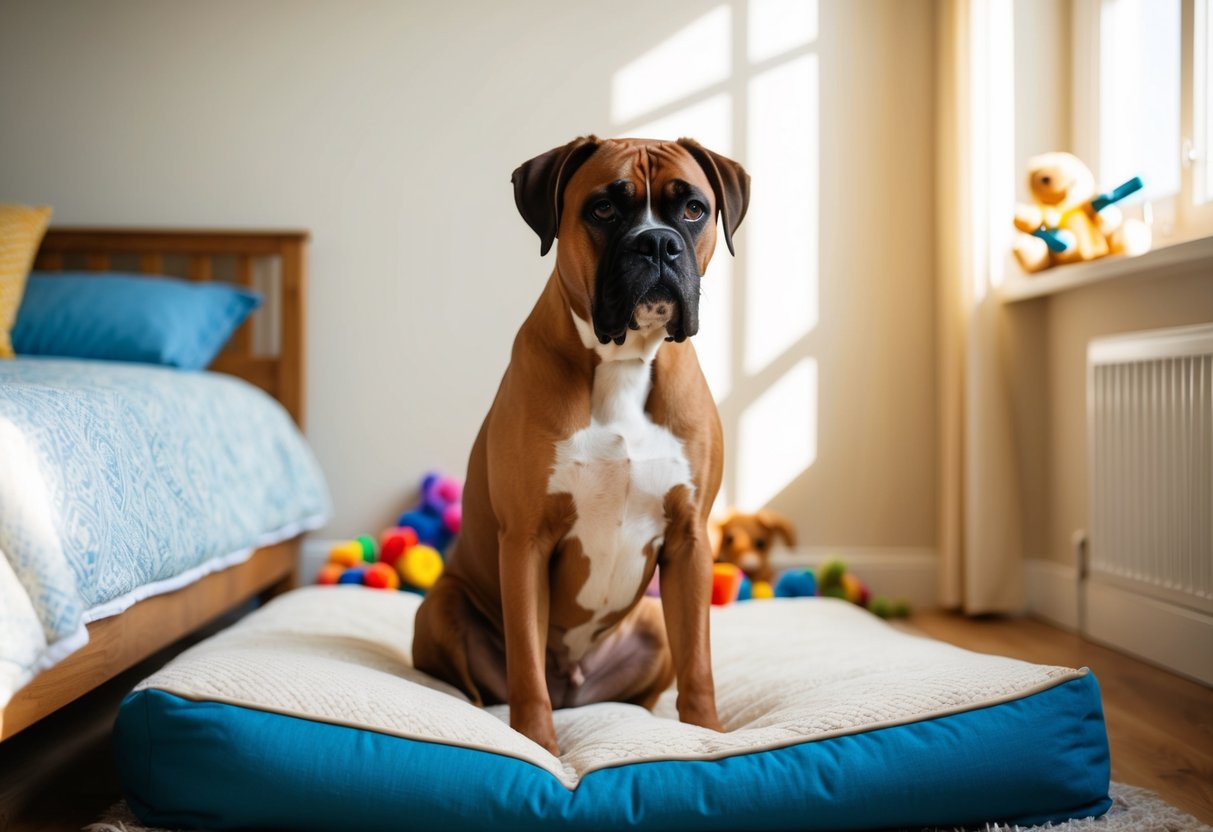
Leaving your boxer alone requires careful thought. You need to consider their age, behavior, and ways to keep them engaged while you are away.
Age-Related Strategies
When it comes to puppies, they require more attention and social interaction than adult boxers. Puppies can’t hold their bladders for long. Ideally, they should not be left alone for more than 1-2 hours.
For adult boxers, they can tolerate being alone for about 4-5 hours. Beyond that, they may experience separation anxiety.
Make sure your boxer has had enough exercise before you leave. A good walk can help them relax while you’re gone.
Older boxers may need special considerations. They might prefer a quiet space and might struggle with being alone for too long. Monitor their behavior and adjust accordingly.
Preventing Destructive Behavior
Boxers can become bored and exhibit destructive behaviors if left alone too long. To prevent this, provide engaging toys. Puzzle toys and chew toys can keep them occupied and reduce anxiety.
You can also try rotating toys to keep things fresh. Before leaving, create a safe space where your boxer feels comfortable. Remove any items they could chew or break.
Establish a routine so your boxer knows what to expect. This predictability can help ease their anxiety.
Consider interactive pet cameras which allow you to monitor and even interact with your boxer while you’re away.
Alternative Care Options
If you need to be away for longer periods, consider alternative care options. Doggy daycare can be a great choice for social interaction. It allows your boxer to play with other dogs and receive attention from caregivers.
You can also hire a dog sitter. A sitter can come to your home to spend time with your boxer, providing companionship and exercise. This solution is less stressful for your pet because they stay in their familiar environment.
Consider scheduling visits from a pet sitter during the day. This care can break up their time alone and keep them happy and engaged.


