
Ever wondered if wolves will breed with coyotes? The answer might surprise you. Wolves and coyotes actually can interbreed, but it mostly happens where their territories overlap—mainly in parts of North America. This mixing creates hybrids that share features from both parents.
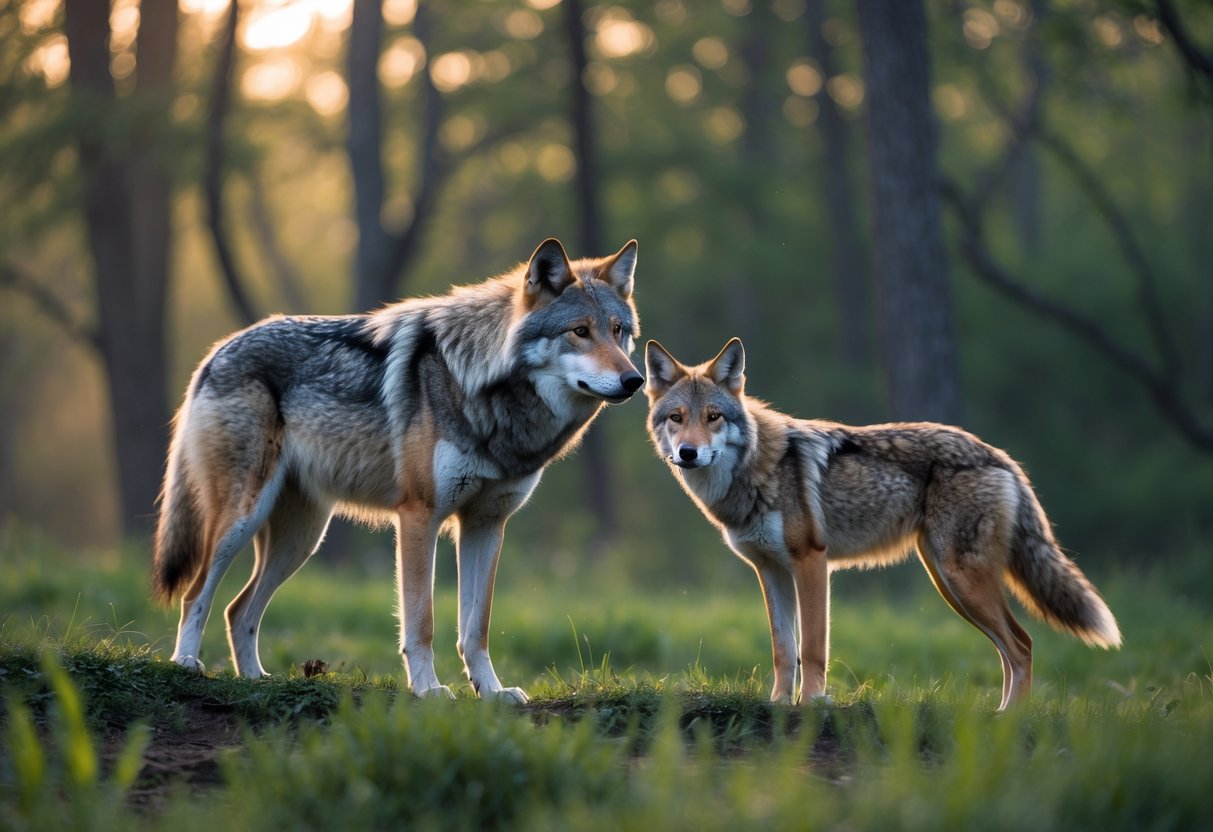
You might expect these animals to avoid each other, but nature doesn’t always play by the rules. When one population drops or their habitats start to blend, they sometimes end up mating.
If you’re curious about how often this happens and what it means for wolves and coyotes, you’re in the right place. Let’s dig into the science behind these fascinating hybrids.
Hybridization Between Wolves and Coyotes

Wolves and coyotes do sometimes breed, creating hybrids known as coywolves or eastern coyotes. These animals show a blend of traits from both parents.
They play a big part in wildlife genetics, especially in North America.
How and Where Wolves and Coyotes Interbreed
Hybridization usually happens where their ranges meet. Places like Ontario, Quebec, and parts of the U.S. Northeast and Midwest see the most mixing.
Eastern wolves or red wolves often share land with coyotes in these spots. When wolf numbers drop or hunters reduce their populations, wolves may turn to coyotes as mates.
This kind of hybridization rarely happens between western gray wolves and coyotes. Wolves in the west are bigger and act differently, so they don’t usually mate with coyotes.
But in eastern North America, interbreeding happens often enough that hybrid populations have become stable.
The Genetics and Fertility of Hybrids
Wolves (Canis lupus), coyotes (Canis latrans), and some other canids all have 78 chromosomes. That’s why they can interbreed and produce viable offspring.
Hybrid pups usually end up larger than coyotes but smaller than wolves. They’re often fertile, so they can mate with either parent species or with other hybrids.
This means hybrids don’t just disappear—they actually add their genes back into wild populations.
Genetic studies show these hybrids carry both wolf and coyote DNA. They also develop unique behaviors, mixing wolf-like social habits with coyote-style vocalizations.
The Role of Grey Wolves, Red Wolves, and Eastern Wolves
Different wolf types play different roles in hybridization. Eastern wolves and red wolves are much more likely to breed with coyotes than gray wolves from the west.
Red wolves and eastern wolves might actually be hybrid species themselves, made up of coyote and wolf genes from older crossbreeding events.
Western gray wolves rarely mate with coyotes in the wild. They’re bigger, more aggressive, and sometimes even kill coyotes instead of breeding with them.
However, scientists have managed to create hybrids in captivity, showing it’s possible if you control the environment.
Recognizing Coywolves and Hybrid Species
Coywolves or eastern coyotes aren’t just coyotes or wolves—they’re something in between. Their body size falls between the two, and their appearance can be a mix.
You can spot hybrids by their size, coat color, and the way they act. They often hunt in more cooperative groups than coyotes and make a wider range of sounds.
Ontario and Quebec have lots of these hybrids. City-dwelling hybrids usually have more coyote and dog genes, while rural hybrids carry more wolf DNA.
Learning about these hybrids helps us understand and manage wildlife better. They fill different ecological roles than pure wolves or coyotes.
If you want to dig deeper, check out Can a Wolf and a Coyote Breed? Hybridization in North America.
Ecological and Conservation Implications of Wolf-Coyote Breeding

When wolves and coyotes breed, it creates some real challenges for wildlife in eastern North America. Hybrid animals can throw off the balance of local ecosystems.
Managing these wildlife populations gets complicated. The genetic makeup of endangered species like the red wolf is at risk, especially in places like North Carolina.
Ecological Impact and Wildlife Management Challenges
Hybrids can shift how ecosystems work. Coyotes usually stick to areas where wolves aren’t found, but hybrids might move into new areas and compete with other wildlife.
This can shake up food chains and animal behaviors in ways that are hard to predict.
Wildlife managers at the US Fish and Wildlife Service (USFWS) try to keep hybrids from spreading. They monitor hybrid populations and sometimes remove hybrids to protect native red wolves.
This work takes time, effort, and lots of resources.
Hybrids often act differently than pure wolves or coyotes. They’re more adaptable, which makes controlling their numbers tricky.
That means wildlife managers face ongoing problems trying to keep things stable.
Genetic Diversity and Endangered Species Concerns
Hybrid breeding threatens the genetic diversity that red wolves need to survive. When red wolves mate with coyotes, their unique genes get diluted.
This makes it harder to recover pure red wolves.
Most hybrid litters come from female red wolves mating with male coyotes. Young red wolves with some coyote ancestry are more likely to have hybrid pups.
This situation makes it tough to know how many real red wolves are left.
Conservationists use genetic testing to spot hybrids and try to limit coyote genes in the red wolf population.
Want more details? Check out the USFWS Red Wolf Recovery Team for deeper info on these genetics challenges.
Red Wolf Recovery and Conservation Strategies
Red wolf recovery really hinges on strong efforts to reduce hybridization with coyotes.
The USFWS actually runs a program in eastern North Carolina, where they monitor red wolves and actively remove hybrids. That’s kept red wolf numbers higher than they’d be otherwise.
Protecting stable red wolf breeding pairs is a big part of the plan. If a wolf from a pair dies, hybrids can form more easily.
Human-caused deaths—like gunshots—break up packs, so folks need to focus on lowering that risk.
If you support conservation, you can help keep these efforts going. Some programs try to expand red wolf territories and keep coyotes at bay.
This controlled recovery in places like the Albemarle Peninsula really depends on ongoing research and cooperation from the community. Want to dive deeper? Check out the North Carolina Wildlife Federation.


