
Ever wondered if coyotes will eat human remains? The answer is yes, they can. Coyotes act as scavengers and opportunistic eaters, so if a dead body’s easy to get to, they’ll feed on it. This happens more often in urban or suburban places where coyotes live close to people and sometimes slip into homes that aren’t locked up.
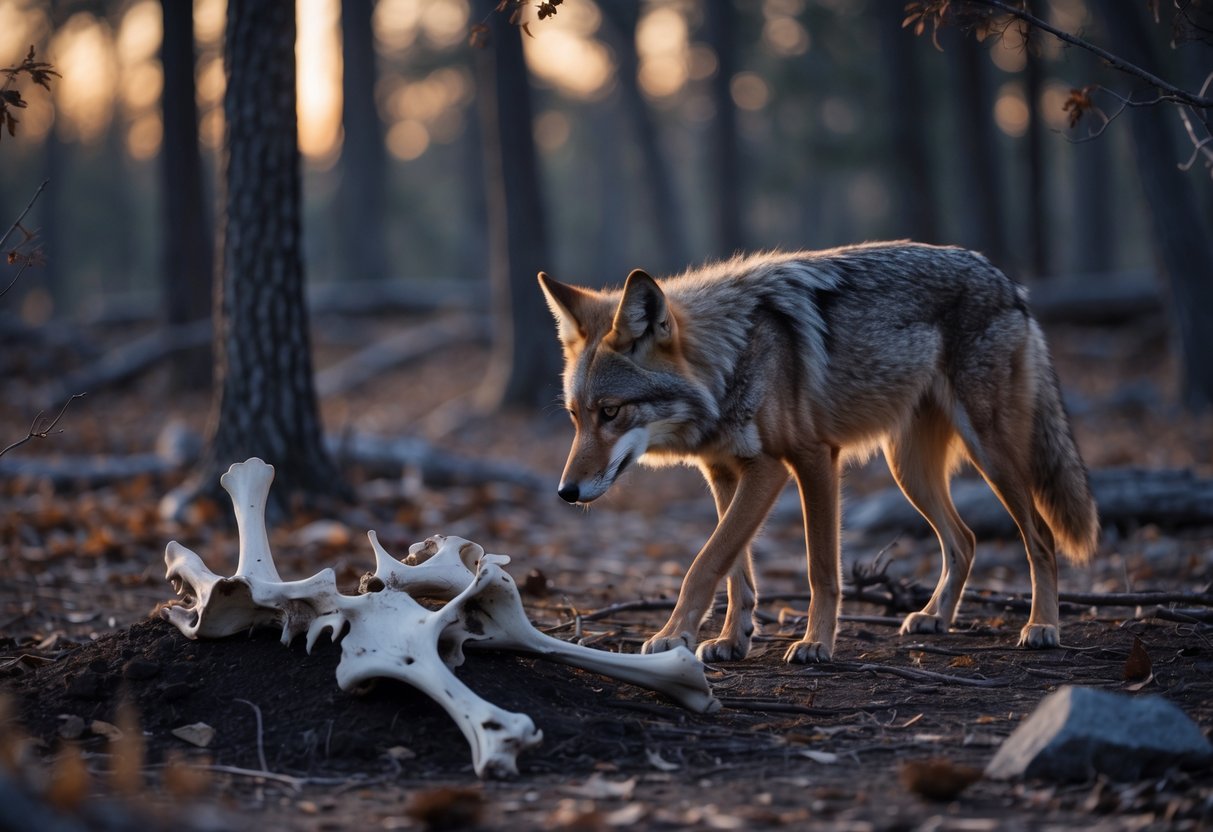
It might seem surprising, but coyotes have eaten parts of deceased people when they stumble across a body. They rely so much on their sense of smell that they often notice a body before anyone else does.
If a house isn’t secure, coyotes might wander in and feed on remains. This is just one more reason to keep your property locked up, especially if you live somewhere coyotes are common.
If you’re curious about how coyotes behave around humans and why they scavenge, let’s get into it.
Do Coyotes Eat Human Remains?
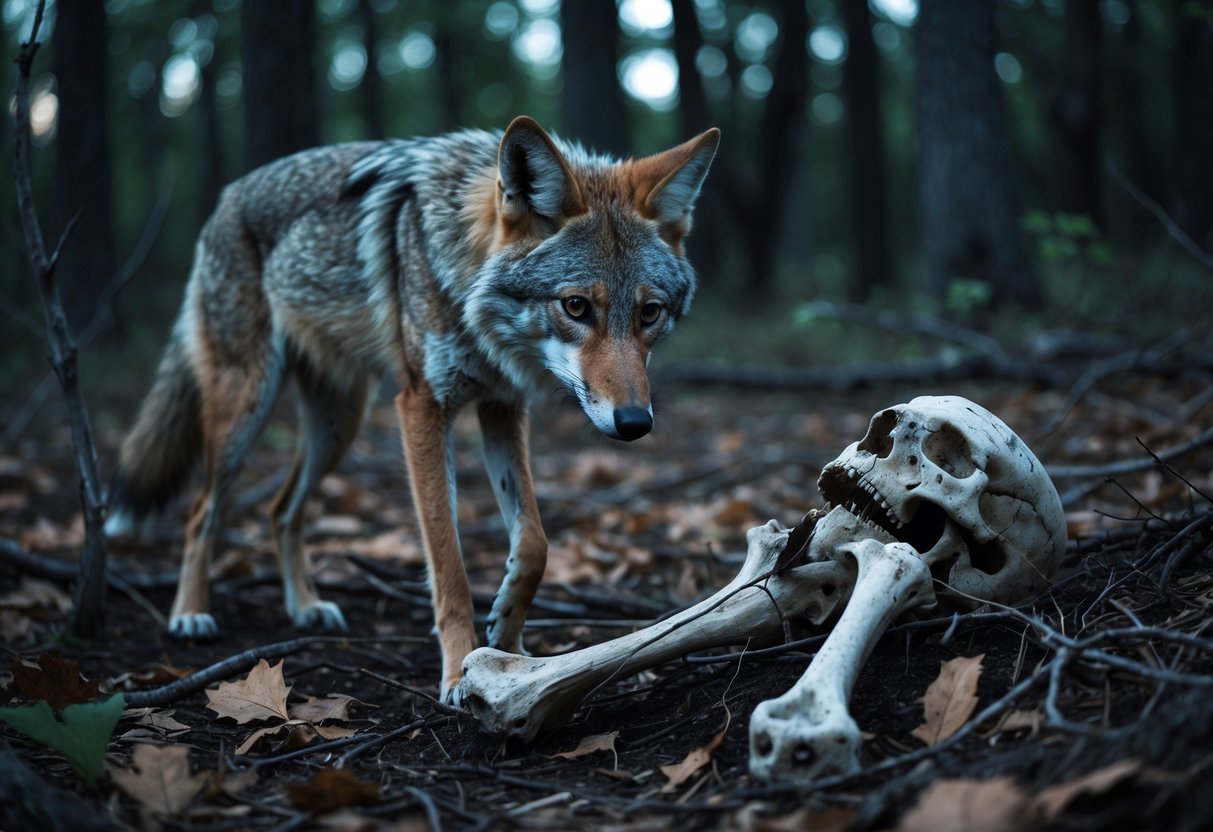
Coyotes eat whatever’s available, including animal carcasses. When a human body is left out and easy to reach, they might scavenge the remains.
Their choices depend on things like how much food is around and what the environment’s like.
Documented Cases of Coyotes Consuming Human Remains
People have reported cases where coyotes ate human remains. In Long Beach, California, for example, a man died in his home and coyotes probably got inside and ate part of the body.
The remains ended up scattered, and some bones disappeared—likely dragged off by coyotes, since they’re the main big predators in that area.
These things usually happen when homes aren’t secure, making it simple for coyotes to get in. It’s rare, but it does happen. You can check out more about that case at California Coyotes Suspected Of Eating Human Remains.
Coyote Scavenging Behavior and Carcasses
Coyotes (Canis latrans) regularly scavenge carcasses. They eat small animals, fruit, garbage, and dead animals to get by.
When they find a carcass that’s easy to reach, they’ll check it out and often eat it. Their sense of smell is wild—they can sniff out dead animals from over 100 feet away.
Coyotes jump fences and walls to get to food, including carcasses. They seem pretty comfortable in cities, where garbage or dead animals can become food.
Factors That Influence Coyote Scavenging on Human Remains
A few things make it more likely for coyotes to scavenge human remains:
- Accessibility: Unlocked doors or open spaces make it easy for coyotes to get in.
- Food Availability: If food’s hard to find, coyotes will look for anything—even unusual stuff.
- Coyote Population Density: More coyotes around means more chances they’ll scavenge.
- Human Activity: Coyotes avoid people but will come closer at night or if nobody’s around.
When you think about these factors, it’s easier to see why coyotes might eat human remains if the situation lines up. There’s more on this in coyote scavenging studies.
Coyote Diet and Urban Adaptation
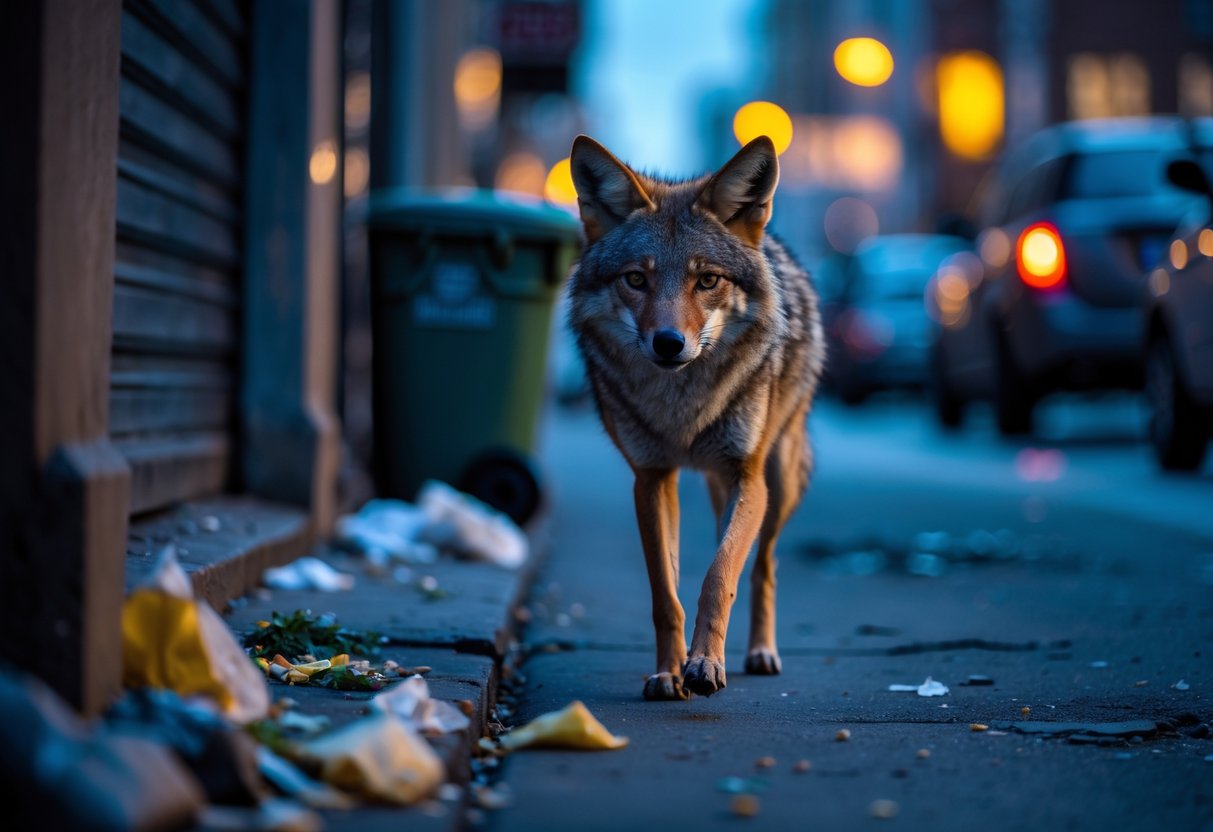
Coyotes eat all sorts of things, depending on where they live. Their food changes a lot once they move into cities.
You’ll notice how their usual prey compares to what they find in urban areas, and how the environment shapes what they eat.
Typical Prey and Food Sources
In rural or wild places, coyotes mostly hunt small mammals like rabbits, rodents, and mice. They’ll eat frogs and lizards if they find them.
Sometimes coyotes go after bigger prey, like deer or elk, but that’s not as common. They’re opportunistic, so they grab whatever food’s around.
When animal prey runs low, coyotes eat fruits or plants too. This variety helps them survive almost anywhere.
Urban Coyotes and Human Food Consumption
Coyotes living in cities shift their diet. They eat more human food leftovers, like trash, pet food, and food scraps people leave outside.
Studies say city coyotes can get about 38% of their diet from human sources. Urban coyotes also eat more rodents near restaurants, since rats and mice hang out there.
Some folks worry about coyotes eating pets like cats, but honestly, that’s pretty rare. They usually go for easier food—leftovers or small animals drawn to human places.
Impact of Environment and Food Availability on Diet
An urban coyote’s diet really depends on how much green space and what kinds of food are nearby. When you see big parks or open fields around, coyotes tend to go after more natural prey like gophers or voles instead of human food.
But when coyotes hang out near busy neighborhoods or clusters of restaurants, they end up eating more rodents and human scraps. The options they have shape what they eat, so some coyotes lean into scavenging urban leftovers, while others keep hunting the usual wild stuff.
It’s interesting—understanding this helps you see why coyotes adapt so differently even within the same city. If you’re curious, there’s more on how coyotes’ eating habits shift in urban settings at Urban Coyotes’ Human Food Consumption.


