
Ever wondered if coyotes actually avoid cats? You’re definitely not alone. Lots of pet owners worry about how these wild animals might interact with their beloved pets.
Here’s the thing: coyotes don’t always steer clear of cats—they sometimes see them as prey, depending on the situation.
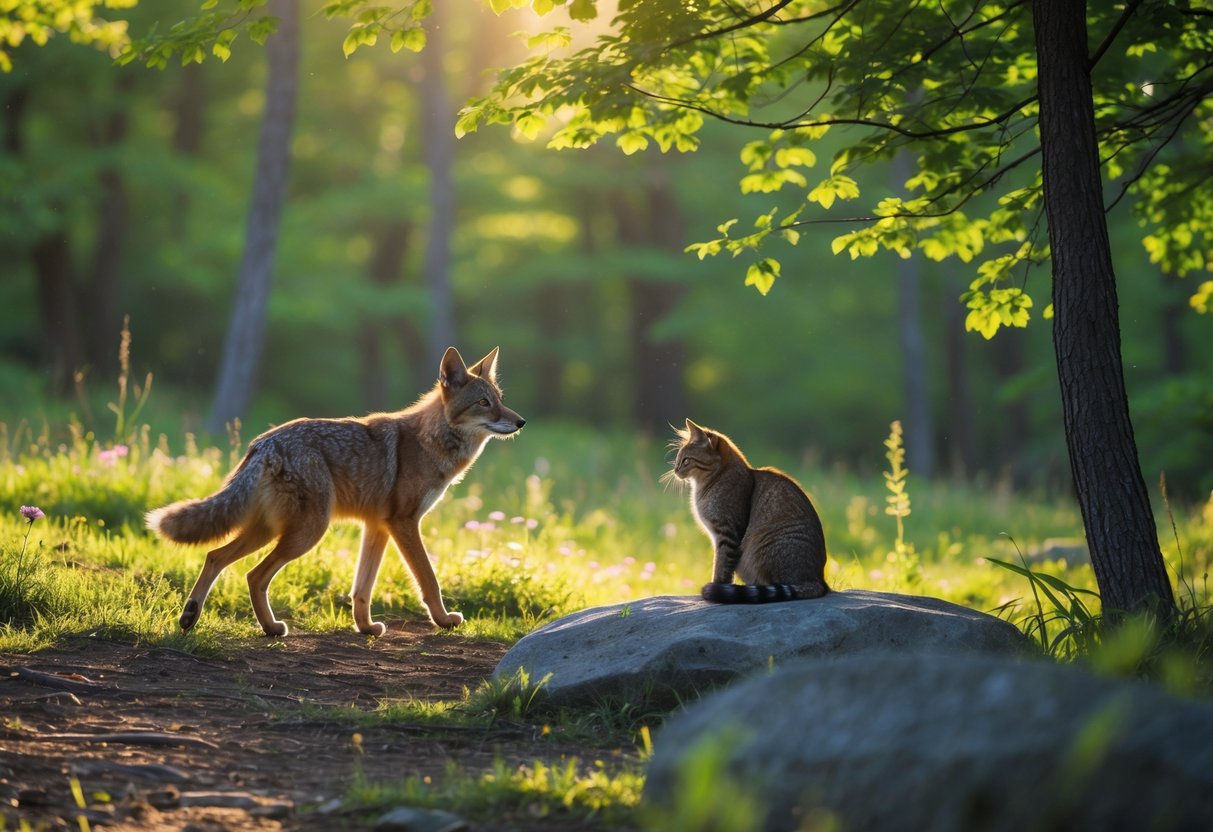
How coyotes act around cats depends on a few things. The coyote’s hunger, the cat’s size and attitude, and even the environment all play a part.
Some cats stand their ground, while others are more vulnerable. Knowing this stuff can help you make better choices to keep your cat safe.
Learning about how coyotes and cats interact can give you a bit more peace of mind. Plus, you’ll pick up tips to protect your pets.
Let’s dig into what shapes coyote behavior and how you can keep your cat out of trouble.
Do Coyotes Avoid Cats? The Truth About Coyote and Cat Interactions

Coyotes don’t always avoid cats, but the risk really depends on several factors. The way coyotes behave and the environment they live in play big roles in how they interact with your cat.
You’ll also notice that feral and domestic cats react differently to coyotes.
Coyote Threat Levels to Domestic and Feral Cats
Coyotes can be a real threat to both domestic and feral cats. Cats aren’t usually their main food, but coyotes will hunt them if other prey is hard to find.
Studies have shown that cats make up a small part of coyote diets—usually between 1% and 7%. This number changes based on where you live and how many coyotes are around.
Feral cats face higher risks since they’re outdoors more and often act less cautious. Your house cat faces danger mainly if left outside, especially at dawn, dusk, or night when coyotes are most active.
If you keep your cat inside or watch them closely, you can lower this risk quite a bit.
Factors That Influence Coyote Attacks on Cats
A few things can make it more likely that a coyote will go after your cat:
- Food availability: Coyotes hunt cats more if natural prey like rabbits is scarce.
- Urban vs. rural settings: In cities, coyotes sometimes eat more human-related food, but they might still hunt cats.
- Coyote habituation: Coyotes used to people and human food often act bolder around pets.
- Time of day: Coyotes mostly come out at night, so cats outside then are in more danger.
You can help prevent attacks by not feeding coyotes, keeping your cat supervised, and removing things like trash or pet food from outside.
How Cats React to Coyotes and Their Instincts
Cats have pretty good instincts when it comes to predators like coyotes. They usually avoid places where they sense danger.
If a cat thinks a coyote is nearby, it might hide or climb to get away. Most cats won’t try to fight a coyote—they’re just not big or strong enough.
Your cat’s natural caution helps, but honestly, it’s not a guarantee. That’s why keeping your cat indoors or limiting their outdoor time is so important, especially if you know coyotes are around.
Urban Coyotes Versus Rural Coyotes: Behavior Differences
Urban coyotes behave differently from rural ones. In cities, they’re often less afraid of humans and might eat garbage or even pets.
This makes it more likely they’ll approach or hunt cats. Rural coyotes usually stick to wild prey like rabbits and rodents.
They might avoid cats more since they have enough natural food and don’t run into people as much.
Figuring out which type of coyote lives near you can help you decide how to protect your cat. If you live in a city, you might need to keep your cat indoors or supervised more often.
For more advice, you can check out this guide on how to protect cats from coyotes.
What Coyotes Eat and Why They Target Cats

Coyotes mostly eat small animals like rodents and rabbits. Sometimes, though, they’ll hunt bigger prey if they need to.
Their diet changes based on what’s available nearby. If there aren’t many options, they might see cats as an easy target.
Coyote Diet: Rodents, Rabbits, and Other Prey
Coyotes eat a lot of small mammals—mice, rats, and rabbits are their favorites. These animals are easy to catch and make up most of a coyote’s meals.
Occasionally, coyotes will go after larger prey like deer, especially in rural areas where small animals are harder to find.
They’ll also eat fruit and insects, but small mammals give them the energy they need. If your neighborhood has lots of rodents or rabbits, coyotes will probably stick to those instead of pets.
When and Why Coyotes Hunt Cats
Coyotes usually hunt cats at night or early in the morning. That’s when cats are outside and less alert.
They like hunting during these hours because it’s easier to sneak up on their prey. While cats aren’t their first choice, coyotes will go after them if smaller animals aren’t around or if a cat wanders too far from home.
If your cat is outside during these risky times, it’s more likely to get attacked.
Coyotes as Opportunistic Feeders
Coyotes eat whatever is easiest to get. If they spot your cat roaming, they might see it as a quick meal.
They don’t always hunt cats, but they won’t pass up the chance if it’s there. This adaptability helps coyotes survive in cities and suburbs, where their usual prey might be less common.
They adjust fast to new foods and environments, which, unfortunately, can include your pet if you’re not careful.
Impact of Food Sources on Coyote Behavior
The food around your home really shapes how coyotes act. When there are plenty of rabbits and rodents nearby, coyotes usually ignore cats.
But if those wild food sources dry up, pets can suddenly look a lot more tempting to them.
In cities, coyotes sometimes munch on trash or leftover pet food. Still, they tend to stick with wild prey when they can.
If you cover your trash and avoid leaving pet food outside, you make it tougher for coyotes to hang around. That simple step might actually help keep your cat safer.
Try keeping your cat inside at dawn and dusk. Those are the hours when coyotes do most of their hunting.


