
Ever seen a video or heard someone swear that deer actually eat rabbits? Honestly, it does happen—just not often, and usually by accident or because the deer found a carcass. They don’t go hunting for rabbits. That one weird fact kind of flips our usual idea of how deer fit into the food chain.
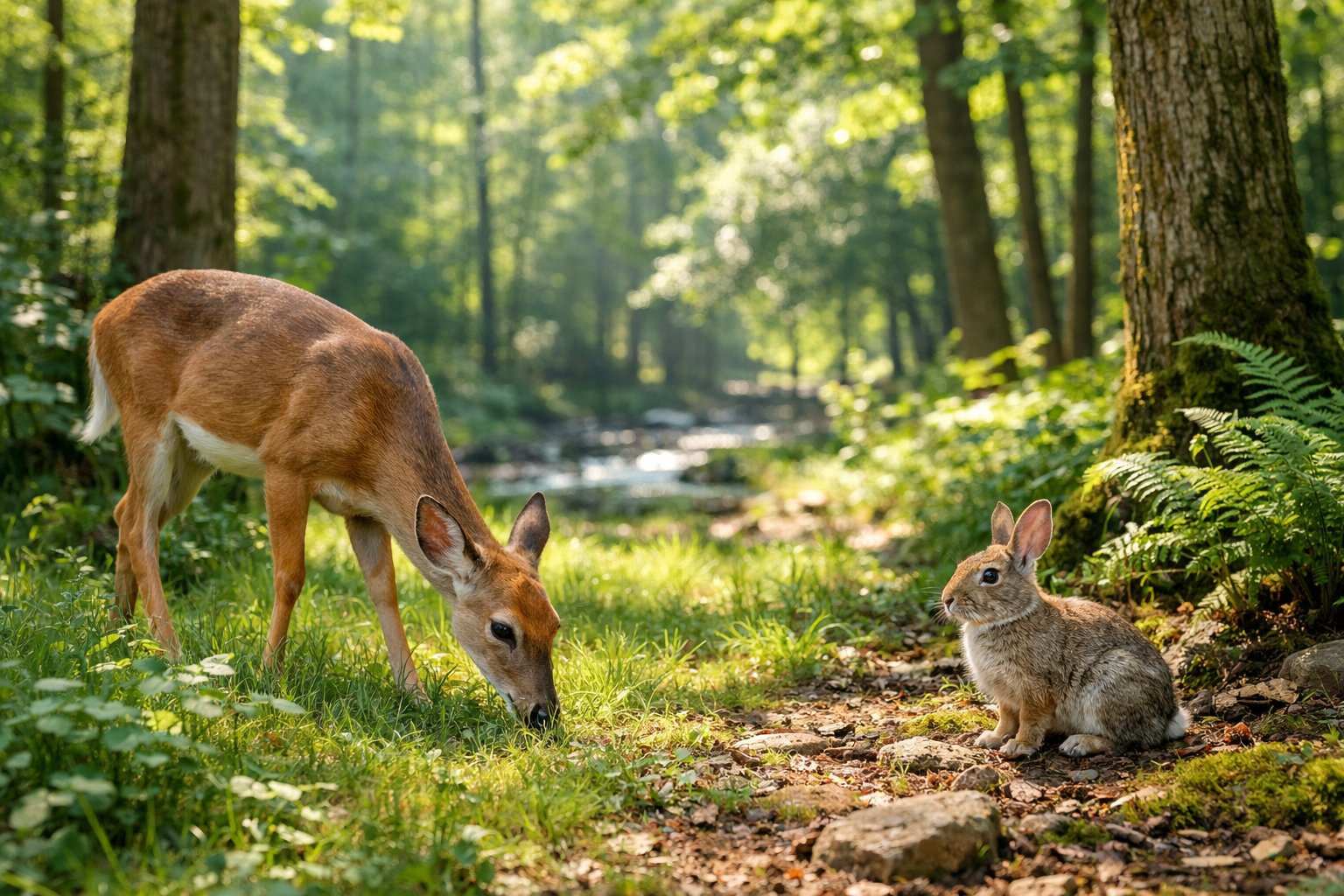
Let’s dig into why this happens at all, when it might, and how a deer’s plant-loving stomach plays a role in those rare moments. There are myths, some real stories, and a surprising amount of confusion—even among folks who watch wildlife for a living.
Do Deer Eat Rabbits: Myths, Facts, and Rare Events

Deer stick to plants almost all the time, and only rarely end up eating rabbits. Some stories are true, but people often misread what deer are doing—or why they might go for meat at all.
Documented Cases of Deer Eating Rabbits
Scientists and wildlife watchers have spotted a few cases where deer munched on rabbit carcasses. Most of the time, these involve white-tailed deer gnawing on dead rabbits or poking around animal remains near roads. People have caught this on video, but it’s almost always scavenging, not hunting.
In those very rare moments when a deer actually kills a small mammal, something odd is usually going on. Sometimes, a deer might bite a trapped or injured rabbit that can’t get away. You can find these stories in field notes and wildlife reports, but honestly, they’re just a blip compared to all the times deer eat plants.
Misinterpretations of Deer Behavior
It’s easy to get the wrong idea. If you see a deer nibbling on bones or fur, it probably wants minerals like calcium, not meat. Sometimes, people see deer near roadkill or old carcasses and think they’re hunting, but the deer are just scavenging.
Deer teeth and mouths work best for plants. If you spot a deer tugging at something, it’s probably after bone marrow or salt, not trying to catch a rabbit. Some videos and dramatic headlines blow these rare events out of proportion and make it seem like deer are out hunting rabbits all the time.
Reasons Behind Unusual Predator Behavior
Sometimes, deer want more minerals or protein—especially if they’re growing antlers or nursing fawns. That’s when they might chew on bones or even nibble at a carcass. You’ll see this more near salt licks, mineral deposits, or when winter makes food hard to find.
Stress, injury, or just weird local conditions can make a deer act out of character. A starving or sick deer might scavenge more. Still, these reasons only explain the odd case, not a big change in how deer eat.
Deer Diets and Digestive Systems: Can They Eat Meat?

Deer rely on plants and have a complicated stomach built for digesting leaves, twigs, and grasses. Their teeth and gut bacteria break down fiber, not meat, though sometimes they’ll eat animal stuff for minerals.
Herbivores and Ruminants: Understanding Deer Biology
Deer are ruminants and herbivores, built for a plant diet. Their four-chambered stomach lets microbes break down tough cellulose.
Their teeth fit the job: broad molars for grinding, and incisors for nibbling. Inside, the rumen hosts bacteria and protozoa that ferment fiber into nutrients.
This system means deer need steady, high-quality plants and lots of minerals. Growing antlers or raising fawns ramps up those needs, so deer sometimes chew bones or look for salt to get more calcium and phosphorus.
What Happens When Deer Consume Meat
If a deer eats meat, its rumen bacteria can handle some protein, but not much. Small bites of carrion or insects usually don’t cause problems. If a deer eats a lot of meat, though, it can mess up its digestion.
Meat might give a quick boost of protein or minerals. Deer sometimes gnaw on bones or antlers, especially when they’re growing antlers themselves. Scavenging happens, but it’s rare and usually tied to food shortages or missing minerals.
Eating meat doesn’t make deer carnivores. It’s just an occasional thing, not a new habit. If meat became a regular part of a deer’s diet, you’d probably see signs like bloating, diarrhea, or trouble digesting plants.
Comparing Deer and Rabbit Diets
Both deer and rabbits eat plants, but they go about it differently. Deer are ruminants, fermenting fiber in a multi-chambered stomach. Rabbits use hindgut fermentation; they digest fiber in the cecum and eat soft feces (cecotrophy) to get more nutrients.
Deer eat a wide mix of woody plants, shrubs, and tree buds. Rabbits stick to grasses, herbs, and soft shoots. Deer have bigger bodies and tougher teeth, so they can handle rougher plants, while rabbits go for the tender stuff.
Their needs are different, too. Deer crave minerals for antlers and growth. Rabbits need constant fiber to keep their guts moving. That’s why a rabbit just isn’t a regular food source for deer—catching and digesting one doesn’t fit with how deer eat or what their bodies are built for.
Differences Between Deer, Omnivores, and Carnivores
Let’s look at how deer stack up against omnivores and carnivores—especially when it comes to digestion and behavior.
Omnivores, like bears, use teeth built for cutting and grinding. They’ve got a single-chambered stomach that can handle both meat and plants.
Carnivores, on the other hand, have sharper teeth and shorter guts. Their gut flora really focuses on breaking down protein.
Deer don’t have those sharp, shearing teeth you see in carnivores. Their stomach is multi-chambered, which slows everything down for fermentation.
This setup makes it tough for deer to process meat efficiently. They just can’t compete with omnivores or carnivores in that department.
When it comes to behavior, omnivores go after all sorts of food and can switch things up with the seasons. Carnivores? They’re out there hunting.
Deer almost never hunt. They’ll take animal matter if it’s right there, but that’s rare.
Honestly, if you ever see a deer eating meat, it’s probably out of necessity. That’s definitely not their usual routine.


