
You might catch a glimpse of deer at dusk, but once night falls, they slip away into quiet, hidden beds. They look for spots that offer just the right mix of cover and a quick escape. Deer usually sleep in sheltered places like dense brush, tall grass, or along forest edges. These locations let them see or smell danger and bolt if something feels off. If you know this, you can spot likely bedding areas—and maybe get a better grasp of what deer are up to at night.
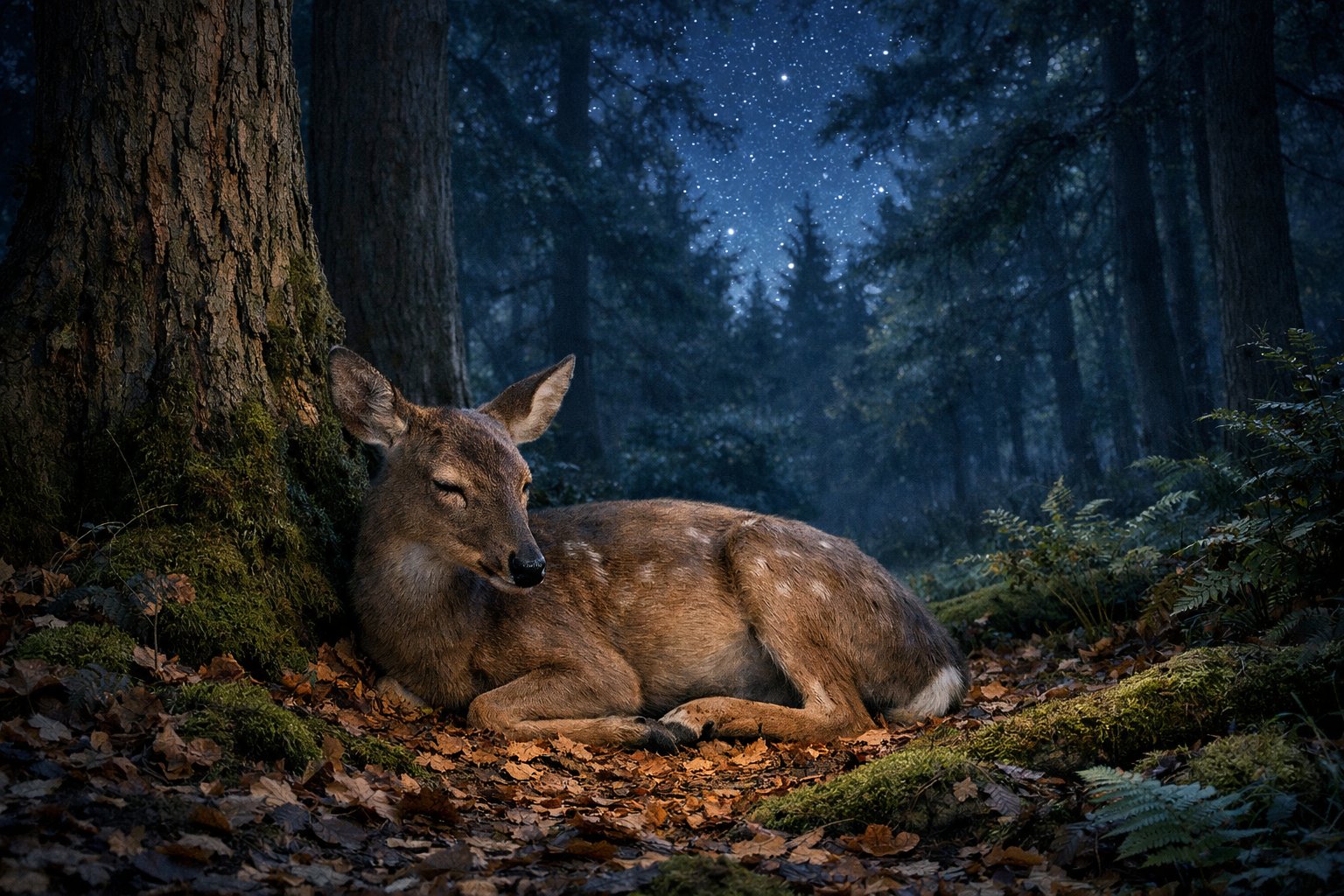
There’s a lot more to deer bedding than you might think. Does, bucks, and fawns all pick different kinds of beds at night. Sometimes they sleep alone, sometimes in groups. If you know what to look for, you can spot signs of an active bedding site. It definitely makes nighttime wildlife watching—or managing your land—a whole lot easier.
Where Do Deer Sleep at Night?

Deer don’t just plop down anywhere. They pick spots where they can hide, escape quickly, and grab a snack if they need to. You’ll find beds in places where they can see, smell, and stay sheltered—often balancing all three.
Common Nighttime Bedding Locations
Deer love forest edges, brushy field borders, and ridge tops after dark. These places let them stay hidden while keeping an eye—or a nose—out for trouble. In open fields, they’ll bed along fencerows or crop edges, where tall plants double as both cover and a snack.
Evergreen thickets—think pine or cedar—become go-to winter beds. These spots block the wind and trap warmth. In swampy areas, deer bed up on raised hummocks or tiny islands where predators rarely bother them. In the suburbs, they get creative, using overgrown yards and drainage ditches that feel a lot like wild cover.
If you’re out looking, watch for oval depressions, flattened grass, a few stray hairs, and tracks leading into thick cover.
Factors Influencing Bedding Site Selection
Wind and scent play a huge role. Deer often face into the wind so they can catch a whiff of anything sneaking up. Animals use leeward slopes or ridges to keep their scent away from open spots where they feed.
Escape routes matter a lot. You’ll find beds near trails, little clearings, or drop-offs—anywhere a deer can bolt in a hurry. If people or hunters are around, deer push into thicker, harder-to-reach cover. They like being close to food, but not so close that they’re easy targets.
Temperature definitely affects their choices. When it’s cold, deer hunker down in sheltered spots. On warmer nights, they’ll pick breezy, shaded areas instead.
Seasonal and Weather-Driven Changes
As the seasons change, so do bedding habits. In summer, deer hide fawns and stay cool in thick brush and tall grass. You’ll spot more beds in lush vegetation near water and food.
When winter hits, deer shift to south-facing slopes and evergreen cover for warmth. Deep snow pushes them to lower spots or cedar swamps where it’s easier to move. During the rut or heavy hunting, they bed in more hidden or rugged places. Moonlight and storms shake things up too—bright nights send them into denser cover, while overcast or calm nights let them sprawl closer to open edges.
Differences Between Species
Whitetail and mule deer don’t always sleep the same way. Whitetails stick to thick understory, forest edges, and cedar or pine groves. They like bedding close to food and don’t roam far. Mule deer, on the other hand, go for open ridgelines, rocky benches, and sagebrush flats where they can see danger coming.
Bucks usually bed alone, picking out high or hidden spots. Does often bed in groups, especially near their fawns, and stick to thicker cover. Fawns pick super-camouflaged places in tall grass or brush, not far from their mothers. If you pay attention to which species and age groups are around, you’ll get a sense for where beds pile up and how deer use the land.
Nighttime Deer Sleeping Habits and Grouping

Deer choose beds that give them cover, a decent view, and a quick getaway if something spooks them. They move around with changes in the moon, temperature, and human activity, always trying to keep fawns safe and avoid predators.
How Deer Sleep at Night
Deer usually rest lying down in shallow oval spots that hide their bodies but let them keep tabs on their surroundings. You’ll spot these beds near forest edges, brushy lines, or small clearings—places where they can see, but not be seen.
They don’t sleep all night in one go. Instead, they take lots of short naps. Most deep sleep lasts only 10–30 minutes, and they switch back to light dozing every few minutes. This way, they save energy and digest food after evening feeding.
Deer Alertness and Safety
Even when deer sleep, they keep their senses tuned for danger. Their ears swivel around, picking up the tiniest sounds. They often face into the wind to catch any strange scents.
On bright, moonlit nights, deer move into thicker cover so they don’t stand out. When it’s cold, they pick south-facing slopes or huddle under conifers for warmth and shelter from the wind. If you’re tracking, look for fresh beds by the flattened grass, nearby hoof prints, and a few droppings.
Sleeping Alone Versus in Groups
Bucks usually bed alone. They like higher or more tucked-away spots, probably because it gives them a better view of what’s around.
You’ll spot bigger, longer depressions where bucks have rested, and there’s usually just one exit trail leading away.
Does, on the other hand, tend to bed near each other. They often keep fawns hidden in thick cover close by.
Group bedding means several adults can keep watch for danger, while the fawns stay out of sight.
When hunters show up or pressure increases, deer start picking thicker cover or spots farther from trails. Does might move their fawns more often, just to keep everyone guessing.


