
When a bee lands on you, it’s totally normal to feel a little nervous. You might start to wonder if you’re about to get stung. But here’s some good news: most bees won’t sting you just because they landed on your skin.
Bees usually don’t want to hurt people. Sometimes they’re just curious or maybe they like your scent, but they aren’t looking for trouble.
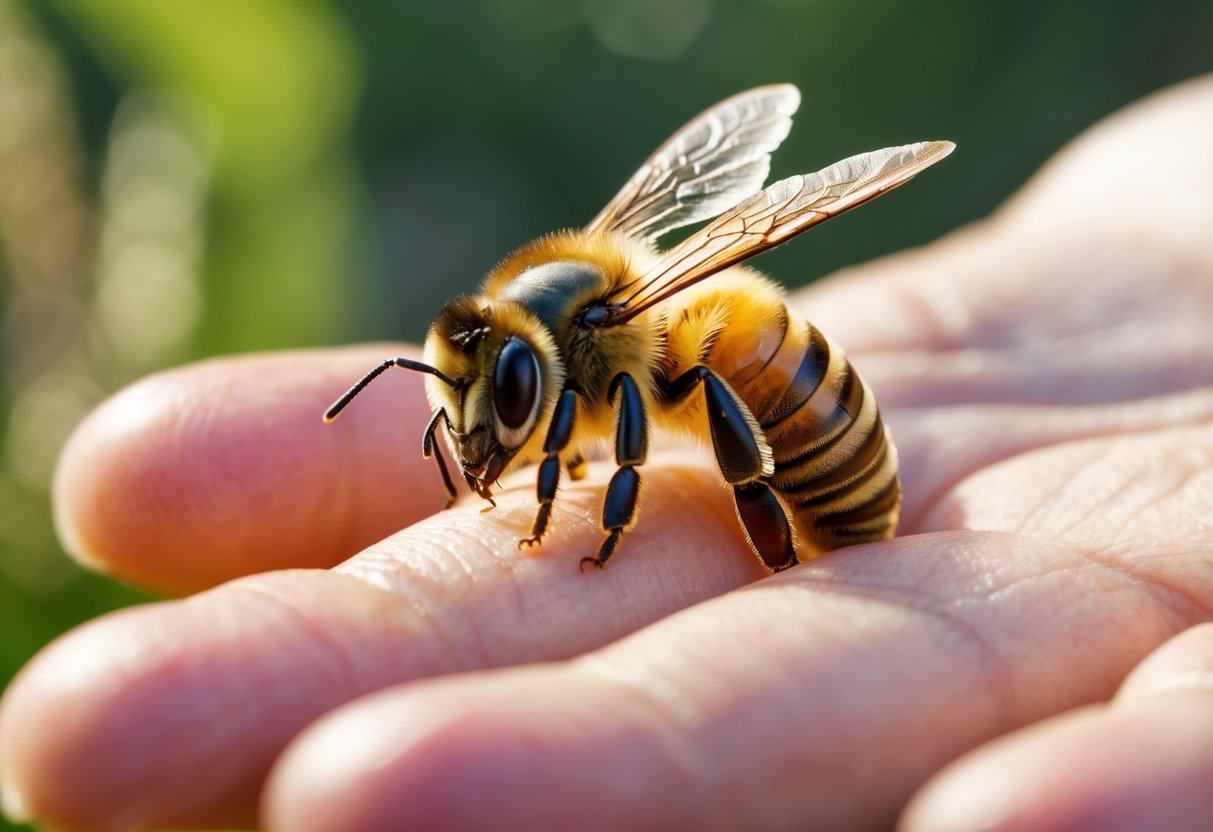
Bee stings can hurt and, sure, allergic reactions are a thing. Still, if you just stay calm and don’t swat at the bee, it’ll probably fly away without bothering you.
Understanding how bees act around people can make these moments a lot less stressful.
Will a Bee Sting You If It Lands on You?

A bee landing on you doesn’t mean you’re definitely getting stung. Bees often check people out because they’re curious or something about you caught their attention.
Whether a bee stings or not depends on how threatened it feels—and what’s going on around it.
Why Bees Land on People
Bees, especially honey bees, land on people for all sorts of reasons. Maybe your perfume, soap, or even sweat smells interesting to them.
Bright colors or floral patterns on your clothes can also draw them in. Sometimes they just want to explore.
Most of the time, they aren’t trying to sting. They’re just checking things out or searching for food sources.
What Triggers a Bee to Sting
Bees sting mainly to defend themselves. If you swat, push, or make sudden movements, the bee might feel threatened.
Honey bees are more likely to sting, but they avoid it if they can because stinging usually kills them.
If you keep calm and stay still, you make it much less likely the bee will sting. Bees really only sting if they think their life is in danger.
Misconceptions About Bee Stings
A lot of people think bees sting the second they land. That’s just not true.
Most stings happen when someone tries to scare the bee away. Another myth? That all bee stings are the same.
Some bees are more aggressive, and some barely sting at all. Honey bee stings hurt right away, but not every bee acts the same.
If a bee does sting, it injects venom, which causes pain and swelling. But if you stay calm, you probably won’t get stung.
For more on bee behavior, check this detailed guide.
Types of Bees and Their Sting Behavior

Different bees use their stingers in different ways. Some only sting when they’re really threatened, while others might act more defensive.
A bee’s behavior around you depends a lot on its species and what it’s doing—whether it’s part of a colony or out on its own.
Differences Among Bee Species
There are all kinds of bees: honey bees, bumblebees, carpenter bees, mason bees, and sweat bees. Most of them can sting, but not all do it the same way or for the same reasons.
- Honey bees usually sting to protect their hive. Their stinger stays in your skin, and the bee dies after stinging.
- Bumblebees can sting more than once because their stinger isn’t barbed. They’re pretty chill unless you bother them.
- Carpenter bees, especially the males, might hover near you but rarely sting since males don’t even have stingers.
- Sweat bees are tiny, and their sting is usually mild—if they sting at all, it’s often because they got squeezed.
Which bee you meet and how you act around it really changes your chances of getting stung.
Honey Bees Versus Other Bees
Honey bees have a reputation for being the most likely to sting, mainly because they defend their hive. Their barbed stinger means they die after one sting.
Bumblebees and mason bees can sting more than once. Bumblebees usually mind their own business unless you threaten them or their nest.
If you spot a lone bee with no hive nearby, it’s probably not interested in stinging. Honey bees care a lot more about protecting their home than bothering people passing by.
Role of the Beehive in Bee Behavior
Bees act differently depending on how close they are to their hive. If you get near a hive, you’ll notice they become much more defensive and honestly, who can blame them?
When a bee lands on you far from its hive, it probably isn’t out to sting you. Most of the time, it’s just curious or maybe taking a quick break.
Bees don’t want to sting unless they have to, since in some species, stinging means they die. That’s a pretty steep price, right?
If you stay calm and move slowly around bees, especially near their hive, you can usually avoid getting stung. Quick movements or swatting just make things worse.
You can check out more on how different bees react to threats at Types of Bees That Sting and Their Behavior.


