
You may spot a chipmunk after dark, but that does not usually mean it has changed its whole routine.
Most chipmunks are daytime animals, so nighttime movement usually points to a brief disturbance, a late-evening foraging trip, or a mix-up with another small animal.
If you are asking why a chipmunk would be out at night, the short answer is that it is unusual.
A chipmunk that appears after sunset often acts under stress, temperature pressure, or a temporary change near its burrow.

Why Nighttime Activity Is Unusual

Several common chipmunk species stick to daylight activity.
Their routine depends on vision, quick escape behavior, and safe movement through cover.
Chipmunks Are Diurnal, Not Nocturnal
Chipmunks are diurnal animals, which means they are most active during the day and usually rest in their burrows after dark.
A daytime schedule fits their fast, stop-and-go style of feeding and hiding.
Why Daylight Suits Their Vision And Predator Avoidance
Daylight gives chipmunks the visibility they need to spot food, watch for predators, and make split-second dashes to safety.
Their eyes and behavior work best when they can read motion and terrain clearly.
What “Out At Night” Often Means Near Dusk
A chipmunk seen “at night” is often active near dusk, when light is fading and the day is stretching late.
That timing can look like nighttime activity even when it is only a short extension of a normal evening routine.
Most Likely Reasons You Saw One After Dark
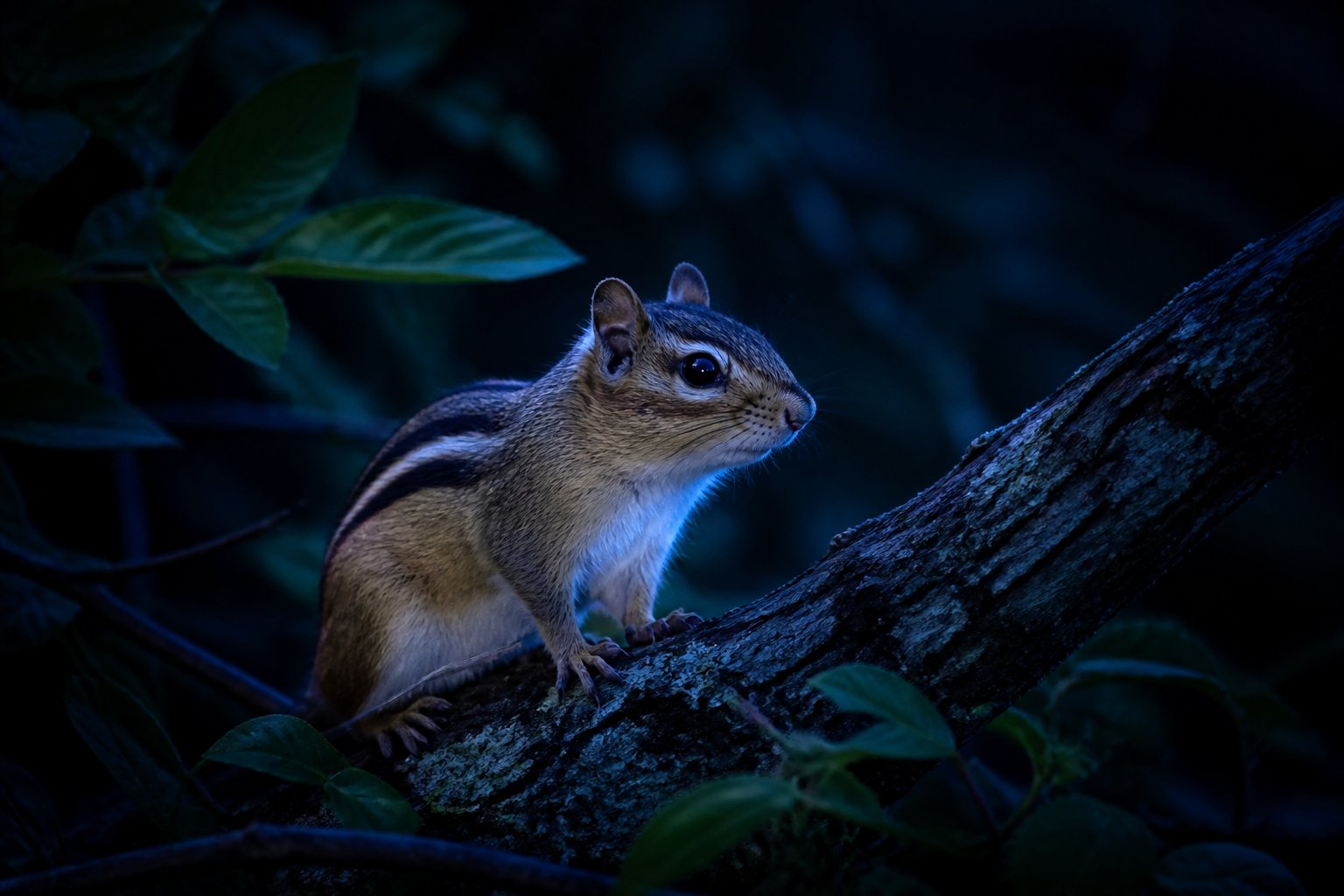
A true after-dark sighting usually has a simple explanation.
The animal may have been disturbed, briefly hungry, or pushed into a later schedule by weather or season.
A Disturbance Forced It Out Briefly
A loud noise, a predator, or human activity near the burrow can push an eastern chipmunk to emerge when it would rather stay hidden.
If its nest area feels unsafe, it may dart out to relocate or check the surroundings before retreating again.
Heat, Food Gathering, Or Seasonal Pressure Shifted Its Timing
Warm weather can stretch chipmunk activity later into the evening, especially if the animal is trying to gather extra food before resting.
In cooler months, changes in daylight and food availability can also shift the timing of movement.
It Woke Up Near Its Nest Or Entrance
If a chipmunk dozes lightly near the burrow entrance, it may pop out briefly, then disappear again.
That can look like a nighttime foraging trip when it is really a short safety check.
You May Have Seen A Different Small Animal
Mice, rats, and flying squirrels often get mistaken for chipmunks in dim light.
Quick movement, a flicking tail, or a striped shape can be enough to create the wrong impression after dark.
How Burrows And Seasonal Habits Affect Their Routine

Chipmunk burrows shape almost everything they do, from sleeping to food storage.
Their seasonal habits make nighttime wandering less necessary, since they focus on staying safe and efficient during the day.
How Chipmunk Burrows Support Sleeping And Safety
Chipmunk burrows give them a protected place to sleep, hide, and escape danger fast.
They use these underground spaces as shelter, which is one reason you usually do not see them moving around after dark.
Food Storage Reduces The Need To Forage At Night
Chipmunks collect seeds, nuts, berries, and insects during active hours.
They store food in their burrows for later, which cuts down the need to search for meals at night and keeps their routine concentrated in daylight.
Winter Torpor And Short Periods Of Activity
Eastern chipmunks may enter torpor or a light hibernation-like state during colder weather. They spend most of their time underground.
A chipmunk in this condition may wake briefly, then return to sleep. This pattern keeps nighttime activity limited and irregular, as noted in fall chipmunk behavior reports.


