
Most people assume animal babies always come from mothers. But seahorses? They break the mold.
Male seahorses actually carry fertilized eggs in a pouch, manage conditions for the embryos, and give birth to live young. This boosts survival rates and lets females get back to making more eggs.
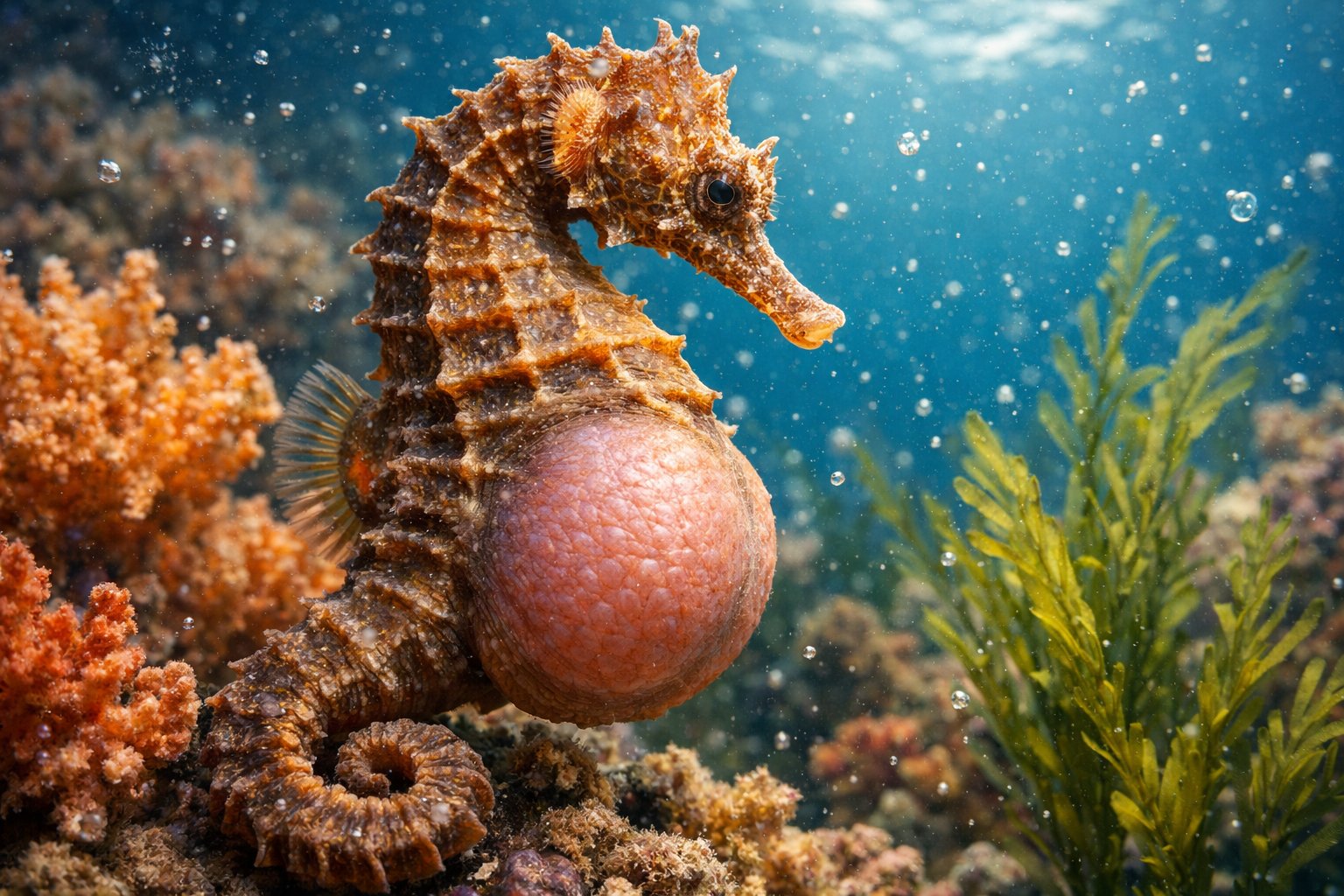
Let’s dive into how their pouch works, why males took on pregnancy, and what all this means for seahorse life and survival. Nature’s got some real surprises up its sleeve.
How and Why Male Seahorses Give Birth

Male seahorses take on the job of carrying and protecting embryos inside a special pouch. They supply oxygen and nutrients, then release fully formed young into the world.
Their bodies go through some wild changes. The brood pouch is key, and the eggs develop inside until they’re ready to pop out as tiny seahorses.
Unique Biology of Male Pregnancy
In the seahorse family Syngnathidae, male pregnancy flips the usual script. Females deposit eggs into the male’s brood pouch, and then males incubate them.
You’ll spot this in seahorses (genus Hippocampus), but pipefish and seadragons do it too. The male’s role takes the load off females and lets them make more eggs, faster.
Male hormones shift during pregnancy. Androgens help remodel the pouch and tweak immune responses so embryos aren’t kicked out.
This hormonal change turns the pouch into a temporary uterus and placenta. It’s honestly pretty clever.
Depending on the species and water temperature, pregnancy can last two to four weeks. Males use voluntary muscle contractions to give birth, which is different from the smooth muscle action mammals use.
Anatomy and Function of the Brood Pouch
The brood pouch runs along the male’s belly or tail. Inside, blood vessels and glands provide oxygen, ions, and nutrients to the embryos.
Once eggs arrive, the pouch seals up and swells. Blood vessels multiply to get more oxygen flowing.
Pouch glands release fluids that feed the embryos and help balance salt levels. That way, the fry grow in a stable environment.
The pouch shields embryos from predators and disease. Near birth, the pouch muscles start contracting.
You’ll see the male actually pump water in and out to help the babies get out. Depending on the species, he might release dozens—or even thousands—of tiny seahorses.
Fertilization and Embryo Development
Fertilization kicks off when the female puts eggs in the male’s pouch, and the male releases sperm inside to fertilize them. This method keeps eggs safer and boosts survival.
Inside the pouch, embryos loosely attach to the lining. They get nutrients from the yolk, pouch fluids, and a bit from the pouch wall itself.
The male’s circulatory changes move oxygen in and waste out. As embryos grow, organs form and they start to look more like seahorses.
There’s a pretty clear timeline: egg transfer, pouch sealing, blood vessel growth, then nutrient exchange and, finally, coordinated muscle contractions for birth.
Scientists study these steps to figure out how male pregnancy evolved and how immune tolerance works without the usual female pregnancy genes.
Evolutionary and Ecological Reasons for Male Birth

When males take on pregnancy, it shifts the whole parenting dynamic. Fathers handle care, mating rhythms change, and embryos stay safer while they develop.
This twist shapes how seahorses and their relatives reproduce and survive in their coastal homes.
Advantages of Parental Role Reversal
When males carry eggs, paternity becomes obvious. Males know they’re investing in their own young.
That means they’re more likely to guard and oxygenate embryos in the pouch. Females, free from brooding, can make more eggs sooner.
Pairs can produce more broods each season, which bumps up the number of offspring. The brood pouch also lets males control salt balance, provide oxygen, and keep out pathogens.
This setup works especially well in coral reefs and seagrass beds, where tiny fry would otherwise get eaten in a flash.
Impact on Reproductive Success and Species Survival
With males brooding, each female can produce more offspring. Females can mate again soon after laying eggs, so populations can bounce back faster after setbacks.
That’s a big deal for small seahorse species living in fragile reef patches. Male care also means newborns are bigger and more developed.
Larger fry survive better in rough water and crowded reef crevices. That helps more of them make it to adulthood, which supports the whole species.
But there’s a catch. If too many females rely on just a few brooding males, or if pollution messes with pouch health, entire batches of young could be lost.
Some seahorse species with small ranges really feel that risk.
Comparison with Pipefish and Sea Dragons
You see some pretty interesting strategies across the Syngnathidae family. Pipefish, seadragons, and seahorses all have males caring for the eggs, but they don’t do it the same way.
Pipefish usually carry eggs right on their bellies or in shallow brood areas. It’s not a full pouch, so they don’t have as much control inside, but the dads still know those are their babies.
Seadragons don’t have a real pouch either. Males just stick the eggs onto their tail or belly, which leaves the embryos more exposed than with seahorses.
Seahorses do things differently. Their pouches create a much more regulated environment, helping embryos with oxygen and keeping their salt levels balanced.
These differences actually shape where each species lives. Pipefish tend to hide out in seagrass and algae, which helps keep their attached eggs out of sight.
Seahorses and seadragons usually use reefs or kelp forests for camouflage while the males brood.
It’s kind of amazing how these contrasts show male pregnancy evolving to fit all sorts of coastal habitats.


