
Most people assume seahorses stay silent, but that’s not really true. Seahorses actually make faint clicks, snaps, and even low growls, though you probably won’t notice them without special equipment. These sounds usually connect to courtship, feeding, or stress.
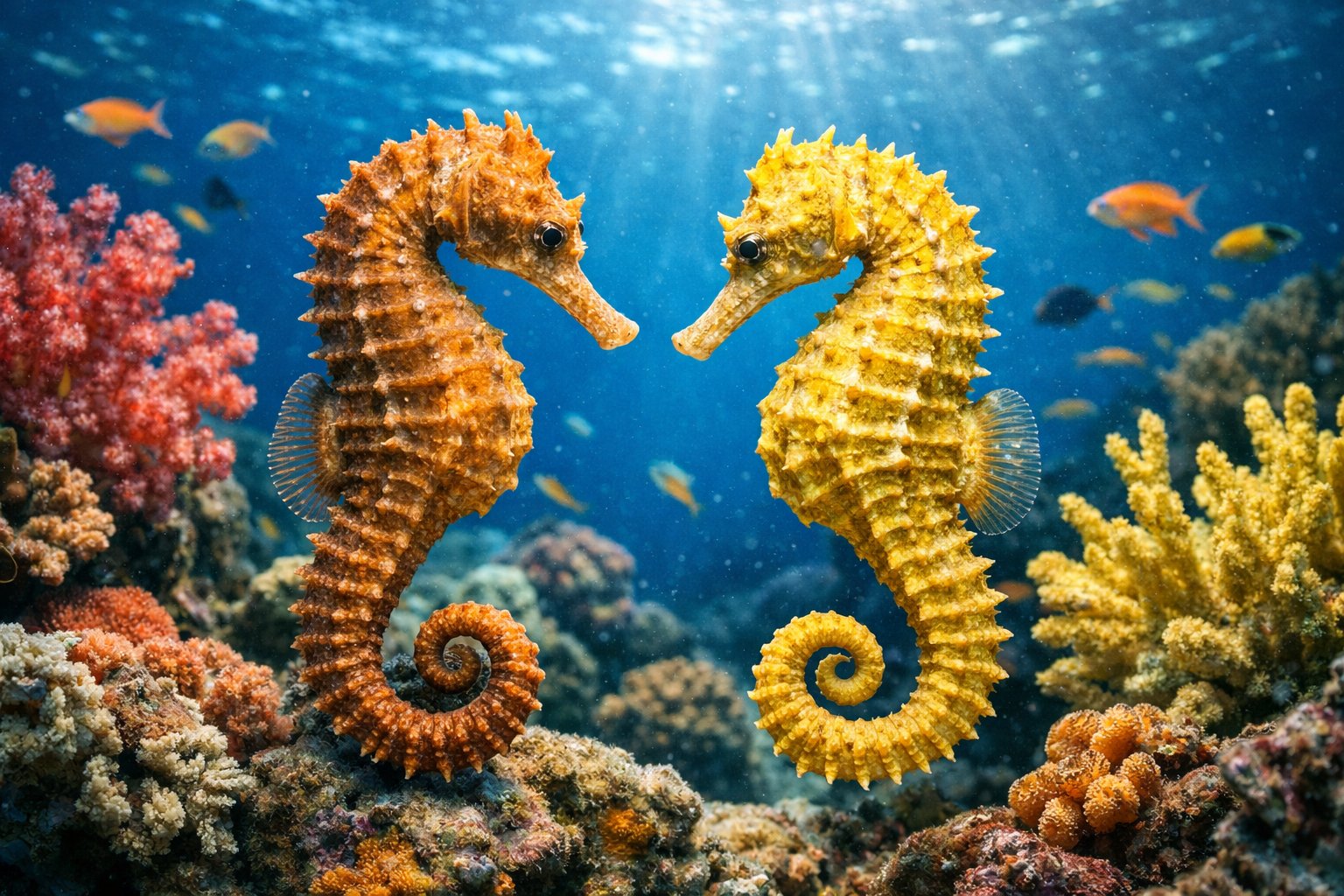
Curious about how they pull this off and what it means? Let’s break down the basic mechanics and the behaviors linked to each noise.
You’ll find examples and research links so you can hear what scientists have captured—and maybe get a sense for what these sounds mean in seahorse life.
How Seahorses Make Noise

Seahorses use short, sharp sounds when they court, feed, or defend themselves. You’ll see what those sounds are, how they’re made, and how they differ by species.
I’ll also touch on pot-bellied and thorny seahorses.
What Noises Do Seahorses Make?
Seahorses make clicks, snaps, and sometimes low grunts. These sounds are quick—usually under a second—and really faint.
You probably won’t hear them unless you’re using a hydrophone or you’re right there in very quiet water.
Clicks and snaps show up a lot during courtship dances or when a seahorse snaps at food. Some researchers have found deeper, growl-like sounds in a few species, mostly when they’re acting defensive or aggressive.
These sounds help mates sync up movements and can warn off rivals.
You can find sound clips and details in studies on seahorse acoustic behavior and in observations from aquariums.
Mechanisms Behind Seahorse Sounds
Seahorses don’t have vocal cords, so they make noise by rubbing or moving bony parts. The main trick is stridulation—basically, edges of their skull bones and the coronet scrape together to make clicks.
Quick head or snout movements make it louder.
The operculum (the gill cover) can also make noise when it moves fast against other bones. Some species even use their swim bladder to help carry the sound a little further.
Usually, they make these sounds while doing something specific—like snapping at prey or clicking over and over during a courtship dance.
Scientists use hydrophones and video to match each sound to a movement and figure out what’s going on.
Differences Among Seahorse Species
Not every Hippocampus species sounds the same.
Frequency, volume, and pattern depend on skull shape, body armor, and where they live. Species with thicker bony plates make sharper, higher-pitched clicks.
Slender types tend to be quieter and lower-pitched.
Some species mostly click during courtship, while others do it more when feeding. Where they live matters too—dense seagrass or reefs can muffle sound, so clicks only work at close range.
Studies on Hippocampus erectus and others show real differences in sound based on anatomy and behavior.
Notable Species: Pot-Bellied and Thorny Seahorses
Pot-bellied seahorses (Hippocampus spp. often found in aquariums) click a lot during feeding and when showing off for a mate.
Their round coronet and thicker skull edges make these snaps easier to pick up on recordings. You’ll hear these clicks during mouth strikes and mating rituals in captive studies.
Thorny seahorses (Hippocampus histrix) have big spines and heavier bony armor. That setup makes their clicks sharper and more distinct since the coronet and skull edges rub together.
Reports from labs and the field describe strong territorial clicking in thorny seahorses, especially when they’re defending a spot or during courtship.
Why Seahorses Produce Sounds

Seahorses make sounds when they feed, court, feel stressed, or move around. These noises come from bones rubbing and can reveal a lot about their behavior and their choice of habitat.
Seahorse Communication and Behavior
You’ll notice clicks, snicks, and low grunts during certain actions. Clicks pop up when seahorses feed or court, and deeper growls show up under stress.
These sounds usually match things you can see—like head-bobbing, pouch displays, or snapping that snout out.
The noise comes from skull bones rubbing together (stridulation), not from vocal cords. That means you can often spot the motion and hear the sound at the same time.
When you watch a courting pair, you’ll often catch short, rhythmic clicks that help them stay in sync.
If you’re observing seahorses, it pays to listen as well as watch. Sounds give you another way to figure out what’s happening besides just posture or color.
This helps marine biologists track mating, feeding, and how they react to things that bother them.
Role of Habitat in Sound Production
Seahorse sounds change with their surroundings. In thick seagrass, leaves and stems muffle and bounce sounds around, so noises don’t travel as far as they do over sand or coral rubble.
If you’re checking out a seagrass bed, expect quieter sounds—but they still matter for short-range communication.
The habitat shapes behavior too. Seahorses anchored to grass blades can move their heads more safely, which makes for clearer stridulation.
In noisy places with lots of boats or people, background noise can drown out seahorse sounds and even stress them out.
Researchers usually put hydrophones near where seahorses like to perch in seagrass to catch their natural calls. This setup shows how the habitat affects both how seahorses make sounds and how useful those sounds are for talking to each other.
Research Into Seahorse Acoustics
Scientists have recorded seahorse sounds during feeding, courtship, handling, and stress. They link certain sound patterns to specific behaviors and measure how long and how high-pitched the sounds are.
Tests show that when the skull and coronet touch, the resulting snaps and clicks sometimes get amplified by the swim bladder.
If you look at scientific papers, you’ll spot terms like pulse rate and dominant frequency to describe these calls. Researchers compare sounds from wild and captive seahorses to see how stress or handling changes what they hear.
Project Seahorse and university teams often use video and hydrophones together to match each noise to an action.
Right now, this research helps people spot disturbance and mating signals. Still, there are gaps—most species don’t have full sound catalogs, and we need more fieldwork in different habitats to really map out how all seahorses communicate.
Human Interaction and Conservation
The way you interact with seahorses really shapes their sound behavior. If you touch, handle, or even chase them, they might make stress sounds or dart away.
Try not to touch wild seahorses. When people handle them, it throws off their behavior and could actually damage their fragile bodies or skin.
Conservation groups now use acoustic cues to keep tabs on seahorse populations without disturbing them. Teams listen in on seagrass beds and get a sense of seahorse activity—all without needing to capture any animals.
Project Seahorse and similar organizations encourage people to protect seagrass habitats. When those beds are quiet and healthy, seahorses can communicate and breed more easily.
If you’re out diving or snorkeling near seahorses, keep your distance. Move slowly and try to stay quiet.
That way, you help keep the animals safe—and you don’t mess up important conservation efforts.


