
If you’re curious about seahorse “love,” just watch how they move: they’ll dance, switch colors, greet each other every day, and the female actually passes her eggs to the male’s brood pouch. He fertilizes and carries them. All those routines—synchronized swimming, color bursts, and the male’s careful brood-pouch parenting—show off their strong pair bonds and how they share parenting.
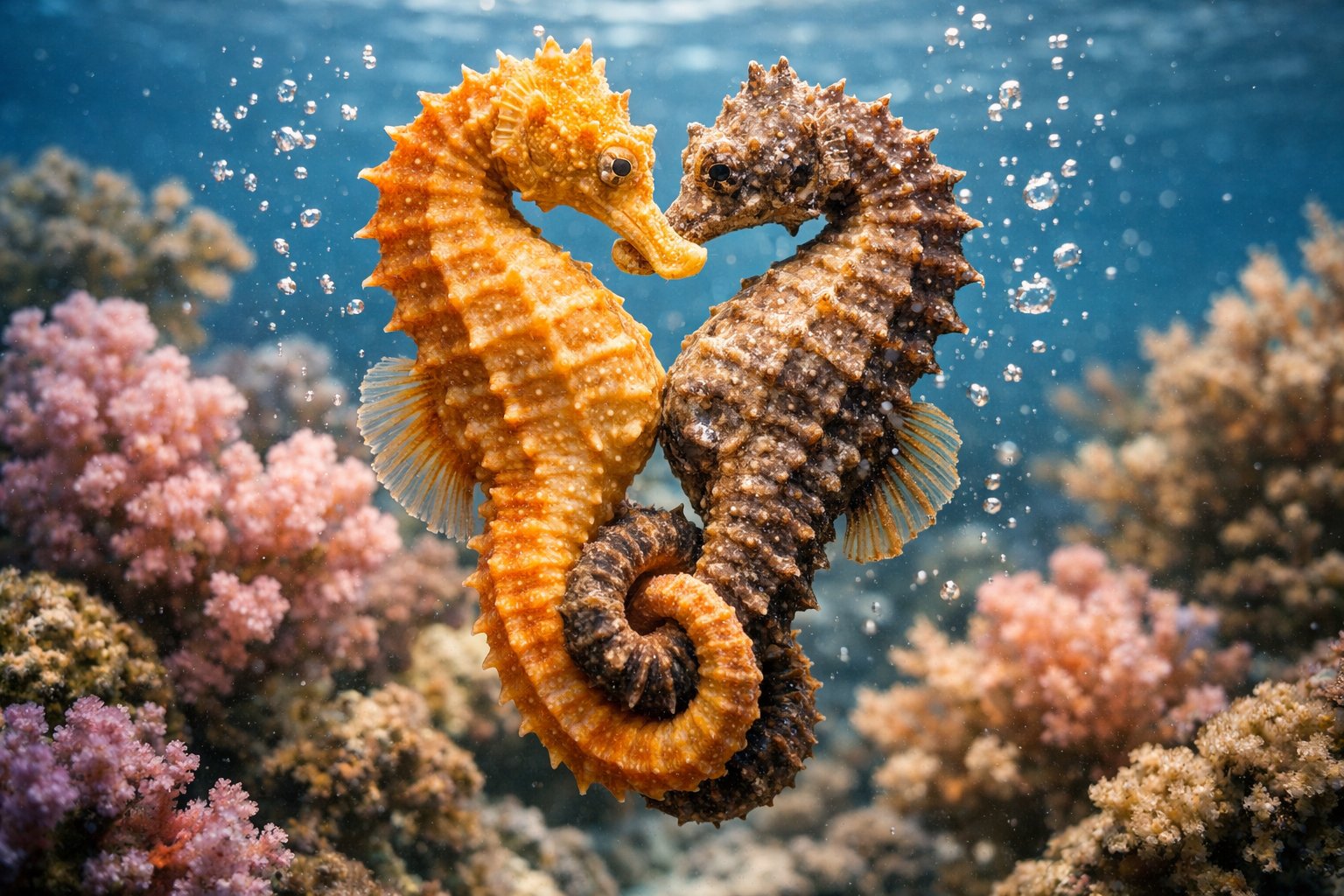
Their morning greetings and perfectly timed movements keep partners in sync over time. You’ll see why so many species stick with one mate, what their courtship looks like, and what these bonds really mean for their survival.
Seahorse Love: Unique Courtship and Daily Rituals

Seahorses build tight bonds with a set of actions that repeat every single day. You’ll notice their dances, synchronized moves, tail linking, and the special role the male’s brood pouch plays.
Greeting Dance and Daily Rituals
Seahorse pairs usually perform a morning greeting that looks a lot like a dance. They rise up, face each other, and mirror each other’s movements for a few minutes.
This ritual keeps their bond strong and helps them time mating and egg transfer during breeding season. In species like White’s seahorse (Hippocampus whitei), pairs do this dance every day while they’re breeding.
You might spot quick color flashes and gentle spirals during the ritual. It’s almost like a daily check-in that keeps both partners ready for reproduction.
Synchronized Swimming and Color Changes
Pairs often swim side by side, mirroring each other’s moves. They match their fins and tails to keep the same speed and direction.
When they court, both males and females change color fast. These shifts signal readiness and help grab the partner’s attention.
Bright color changes make it easier for partners to find each other in seagrass or reefs, especially before egg transfer.
Tail Holding and Pair Bonding
Tail holding shows attachment. Partners wrap their tails around each other or cling to the same anchor.
This physical link helps them stay steady in the current and close between dances. During long courtship, tail contact keeps them near.
Monogamous pairs hold tails the most when they breed over a season. Holding tails helps them stay coordinated for displays and mating.
The Role of the Brood Pouch in Courtship
The male’s brood pouch is right at the center of all this. During mating, the female actually puts her eggs into his pouch.
He fertilizes them and carries them inside until they’re born. The pouch gives oxygen, nutrients, and a safe spot for the eggs.
Courtship lets the female judge if the male’s ready to take eggs. Males with healthy pouches and a good track record attract more interest.
Right before she transfers the eggs, you’ll see both partners moving in sync and flashing colors.
Devotion and Partnership: The Depth of Seahorse Bonds

Seahorses form bonds you can see and measure. Their mating, parenting, and even daily routines reflect these partnerships.
You’ll notice how some species stick with one mate, how males carry the eggs, and how pairs act less aggressive than loners.
Monogamy and Lifelong Mates
A lot of seahorse species form pair bonds that last a whole breeding season, sometimes longer. In species like Hippocampus abdominalis, pairs greet each other daily to keep their bond strong.
These rituals—synchronized swimming and color changes—help partners recognize each other. Monogamy can boost their reproductive success.
By sticking with one partner, they spend less time searching and more time mating and raising young. Researchers like Amanda Vincent have spotted these stable pairings in the wild.
Partner fidelity pops up most in places where seahorses live far apart. Not every seahorse species is monogamous, though.
Some change things up if their habitat or population shifts. Still, for many seahorses, having a regular partner and daily bonding rituals shapes their whole life.
Shared Parental Care and Male Pregnancy
You get to see a rare twist: the male carries the fertilized eggs. The female passes her eggs into his brood pouch, and he fertilizes and broods them until they hatch.
That pouch gives oxygen, balances salt, and keeps the embryos safe. It’s like a little nursery, boosting the odds that the young survive.
Different species have their own pouch structures and incubation times, so survival rates vary. Scientists like Till Hein, and books like The Curious World of Seahorses, explain how this shared parenting splits the workload.
Pairs coordinate so the female can make more eggs while the male broods the current clutch. That way, they can have several broods in a single season.
Emotional Connections and Reduced Aggression
You’ll notice that bonded seahorse pairs act much calmer than those living alone. When seahorses pair up, they chase and fight less, and you’ll often spot them spending time together in synchronized displays.
They keep up these daily rituals—people sometimes call them morning greetings—which help them stay in sync and cut down on stress.
Seahorses recognize their partners by color patterns, unique movements, and just by interacting over and over. This recognition helps them avoid territorial fights and lets them save energy for reproduction.
Researchers out in the field have seen it firsthand: bonded pairs get into fewer aggressive encounters than unrelated neighbors.
Is it love? That might be a stretch, but these behaviors—regular greetings, swimming together, less aggression—definitely show a real partnership at work.
The benefits are obvious. You get better cooperation, more successful breeding, and a steadier environment for the young.


