
Maybe you’ve heard that seahorses always stick with one mate for life. Actually, it’s not that simple. Some seahorse species do form strong seasonal bonds and even greet each other with daily dances.
But others? They’ll switch partners if the situation changes. A lot of seahorses just pair up for a breeding season, not forever.
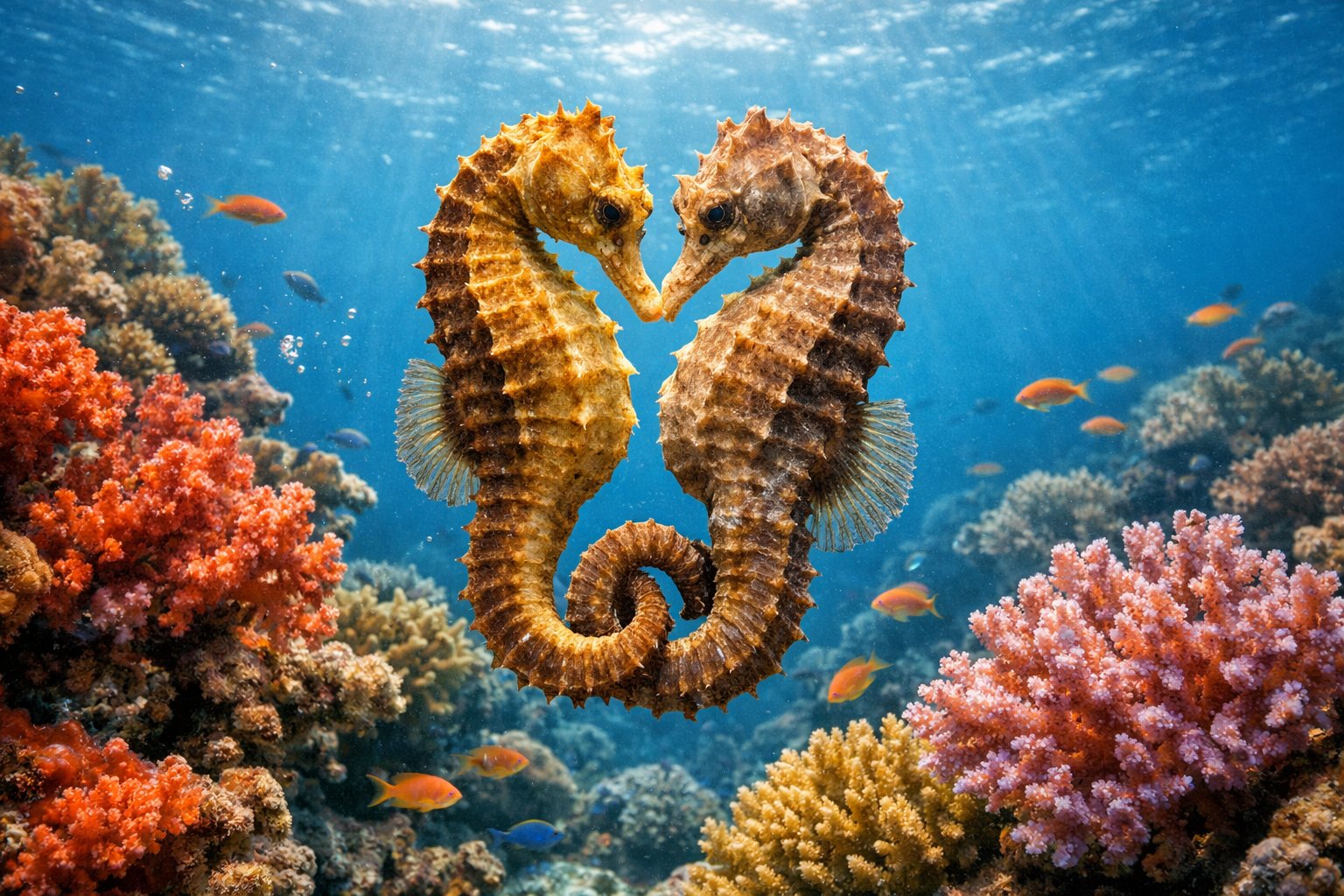
Let’s get into how Hippocampus courtship works. I’ll cover why pairing up helps them reproduce and what the male’s brood pouch actually does.
You’ll also see how things like habitat and mate availability can decide whether a pair sticks together or not.
Do Seahorses Only Have One Mate?

Seahorse partnerships really depend on the species, what you mean by “mate,” and the local environment. Some seahorses form tight pair bonds and stick with the same partner for several breeding cycles.
Others? They change mates more often, especially if conditions push them to do so.
What Monogamy Means in Seahorses
Monogamy for seahorses usually means a pair stays together for a whole breeding season, sometimes longer. They often perform a morning greeting dance to keep their cycles in sync and help with egg transfer into the male’s brood pouch.
This looks like strong fidelity, but it’s mostly social monogamy—partners might breed only with each other for a while, but that doesn’t always last.
Social monogamy isn’t quite the same as lifelong genetic monogamy. Wild studies show pairs often stick together across days or seasons, especially where finding a mate isn’t easy.
Differences Among Seahorse Species
Not every Hippocampus species acts the same way. The lined seahorse (Hippocampus erectus) and a few temperate species often form long-term bonds and court daily.
Other species, especially those living in scattered habitats or at low densities, might just pair up for a single brood.
White’s seahorse (Hippocampus whitei) can go either way, depending on where they live. If mates are hard to find or if coordinated courtship helps them reproduce, some populations show more faithfulness.
Genetic studies say that strict, lifelong monogamy is actually pretty rare, even though social pairings happen a lot.
Environmental Influences on Mating
Habitat plays a huge role in seahorse mating. In places where seagrass beds or coral reefs crowd seahorses together, you’ll notice more repeated pair bonds and longer courtship.
If the habitat breaks up or predators thin out the population, seahorses move or pick new mates, and those bonds get weaker.
Temperature, food, and human activities like habitat loss also shake up their pairing patterns. In aquariums or protected places where mates are always around, seahorses can seem more monogamous than in wild, fragmented areas.
When Pair Bonds End
Pairs split up for obvious reasons sometimes. A mate might die, get eaten, or just leave.
Environmental stress—like pollution or losing habitat—can interrupt their daily dances and break bonds. Sometimes, a seahorse finds a new mate if things aren’t working out, or if breeding times fall out of sync.
You’ll even see “divorces” after failed broods; one partner just moves on. If a seahorse loses its mate, it often pairs up again fast, since finding a mate isn’t always easy for these awkward swimmers.
If you want to read more, check out the Smithsonian’s piece on seahorse pair bonds (https://ocean.si.edu/ocean-life/invertebrates/seahorse-lovebirds) or some research summaries on species variation (https://iere.org/do-seahorses-have-one-mate/).
Courtship, Reproduction, and Parental Care

Seahorses form pretty tight pair bonds, and their courtship is a whole ritual of synchronized moves. The male carries eggs in a brood pouch where they develop.
Their courtship helps with timing, makes mate-searching less risky, and keeps their daily bond strong—boosting the odds for a successful pregnancy.
The Seahorse Courtship Dance
Seahorse courtship is honestly fun to watch. They change color, swim side-by-side, and do this vertical “dance” that can last minutes or even hours.
You’ll see them rise and fall together, twine tails, and bob their heads quickly.
Daily greetings keep pairs in sync. Since seahorses aren’t great swimmers and often live far apart, sticking with one partner saves them energy and time.
Courtship also helps them synchronize egg transfer, so the male’s pouch is ready when the female releases her eggs.
How Male Seahorses Get Pregnant
When it’s time to mate, the female puts her eggs right into the male’s brood pouch through an opening on his belly. The pouch closes up, and fertilization happens inside.
You can think of the pouch as a safe chamber that gives oxygen and nutrients to the embryos.
Pregnancy lasts anywhere from two to six weeks, depending on the species and water temperature. The male’s body adjusts blood flow and the chemistry inside the pouch to help the embryos grow.
When babies are ready, the male contracts his pouch muscles and gives birth to dozens or even hundreds of tiny, fully formed seahorses.
Seahorse Offspring and Early Life
Newborn seahorses pop out as miniature adults and instantly have to fend for themselves. They don’t get any more parental care after birth.
Their survival depends on size, water conditions, and whether there’s enough seagrass or coral to hide in.
Young seahorses use their little tails to anchor onto plants and avoid predators. Since they’re tiny and not strong swimmers, currents and predators are a big threat.
If they can find thick cover and plenty of tiny prey like plankton, they’ve got a better shot at making it.
Unique Seahorse Adaptations
Seahorses have picked up some fascinating traits over time that really shape how they reproduce and care for their young. Their prehensile tails? Those let them grab onto things—like a bit of coral or even each other—especially during those quirky courtship dances.
They stand upright and have these long snouts, which work well for ambush feeding. But, honestly, they’re not winning any races; swimming isn’t their strong suit. That makes finding a mate a bit of a challenge.
You don’t see male pregnancy often in the animal kingdom, but seahorses flip the script. Males take on most of the reproductive investment, which totally changes how mates choose each other and how pairs interact.
The male’s brood pouch gives embryos a safe place to develop, way better than just leaving eggs out in the open. With all these unique features, it’s no wonder many seahorse species stick with the same partner and mate again and again.


