
You might assume seahorses always stick with one mate, but honestly, the reality is a bit more complicated. Some seahorse species form pretty strong pair bonds and stay with a partner for a whole breeding season—or even longer. Others? They’ll switch mates between broods. It really depends on the species and what’s going on around them.
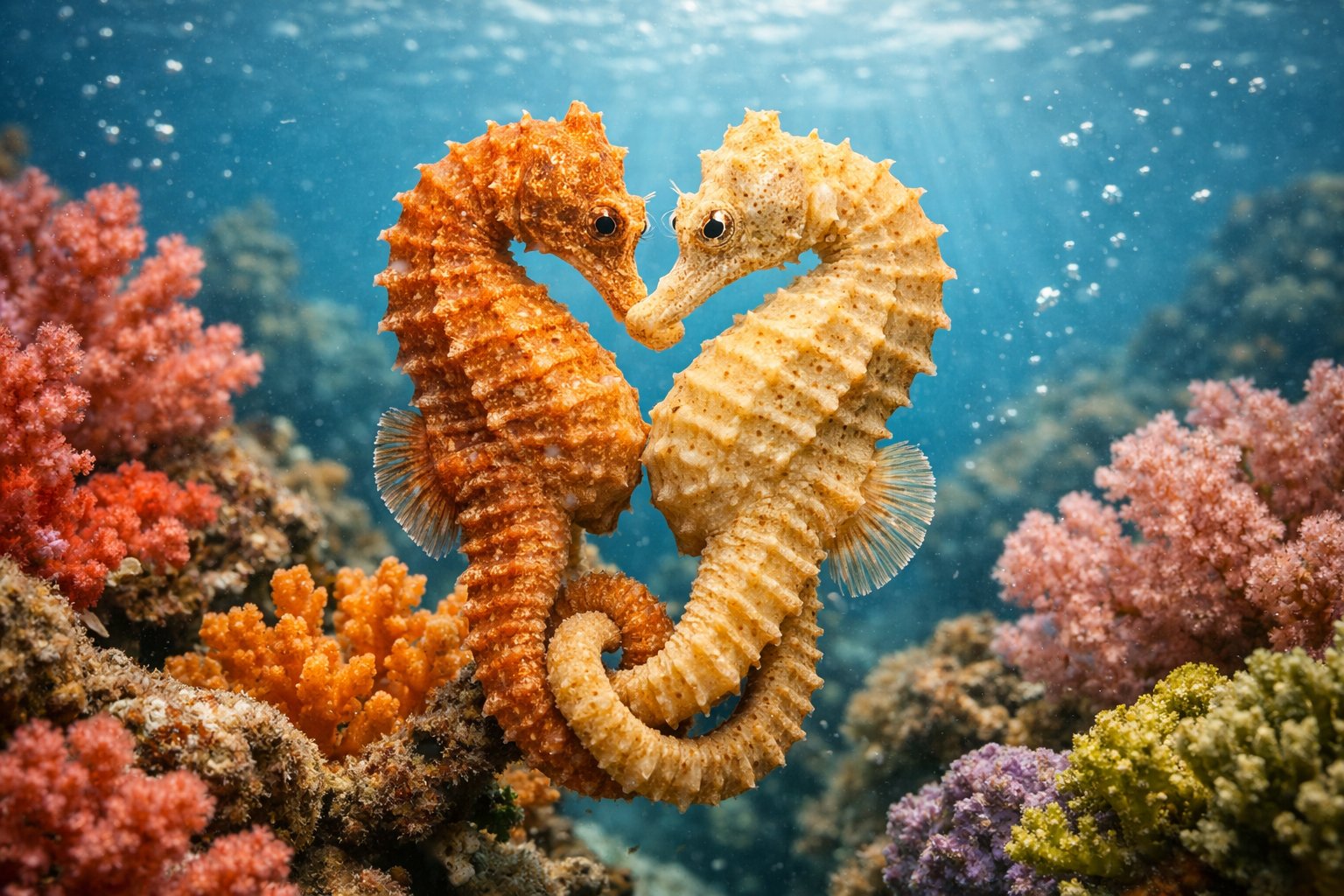
Scientists sometimes call these bonds “monogamous,” but they hesitate to say all seahorses mate for life. You’ll see clear examples of courtship, daily greeting rituals, and how their environment and survival pressures shape these partnerships.
Male pregnancy and those synchronized dances? They play a big role in seahorse mating life. If you’re curious about whether a pair is genuinely loyal or just being practical, you’ll find some clues here.
Do Seahorses Mate for Life?

Seahorse mating really depends on the species and the situation. Some pair up tightly for months or even years. Others change partners every breeding cycle. Males carry the eggs themselves, and daily courtship keeps the partnership in sync.
Understanding Seahorse Pair Bonds
Many seahorses show a pretty obvious social bond. In species that pair off, partners do a daily “greeting” dance. You’ll spot color changes, tails entwined together, and short, synchronized swims.
This daily ritual helps both seahorses time the egg transfer and shows off their fitness. It’s kind of sweet, honestly.
Researchers like Amanda Vincent have watched these routines in shallow seagrass beds and along coral reefs. Males get the eggs in their brood pouch and carry the babies. Having a steady partner makes it easier to coordinate brood after brood.
Most seahorse pair bonds are social, not always genetic. You might see the same two hanging out together, but genetic tests sometimes reveal more than one father’s DNA in a single male’s pouch.
Species Differences in Monogamy
Not every Hippocampus species acts the same way. Lined seahorses (Hippocampus erectus) often stick with one partner through a breeding season or even longer. Other species, especially those in dense populations, tend to switch mates between broods.
Pipefish and seadragons—close relatives in the Syngnathidae family—show a lot of variety too. Some pipefish species are monogamous, while others are more flexible. So, you really can’t generalize and say every seahorse pairs for life.
Field studies on different seahorse species reveal a whole spectrum: some form strict seasonal pairs, others keep long-term pairs, and some just have short-term flings. If you observe one species, don’t assume all seahorses behave the same way. Always check the specific species’ habits before making any big claims.
Environmental Factors Affecting Fidelity
The local habitat changes how seahorses pair up. On coral reefs or in seagrass meadows with stable spots and not much mate turnover, seahorses usually stick with one partner longer. But if fishing, pollution, or storms mess up their habitat, pair bonds break more often.
Mate availability makes a difference too. If there are lots of healthy potential partners around, seahorses might remate more often. When mates are hard to find, pair bonds last longer. Human impacts that shrink population size or mess with habitats can make long-term pairing less likely.
Groups like Project Seahorse and other researchers work to protect these habitats. Thanks to their efforts, you can still spot natural seahorse pairing in the wild.
Seahorse Mating Habits and Behavior

Here’s a closer look at how seahorses court, how males carry the young, how the ovipositor works, and what makes pairing and breeding tough.
Courtship Rituals and Daily Dances
Seahorse pairs often kick off the day with a short, repeated greeting. You might catch them changing color, rising up in the water, and wrapping their tails together while twirling around a holdfast.
This morning ritual keeps their bond strong. They even keep it up during pregnancy, and it can speed up mating once the male gives birth.
You’ll notice their movements move slowly and deliberately. These dances help them line up for egg transfer later.
Pairs usually match in size. Bigger females tend to visit bigger males with larger brood pouches. Project Seahorse documented long-term pairing in some species, showing how these rituals help with repeated mating.
Male Pregnancy and Brood Pouch Explained
Male seahorses carry the embryos in a brood pouch on their belly. You can think of the pouch as a kind of womb that provides oxygen and nutrients to the growing young.
After the female delivers her eggs, the male fertilizes them inside the pouch. Pregnancy lasts anywhere from about 10 days to six weeks, depending on species and water temperature.
During this time, the pouch changes its chemistry to protect the embryos. When it’s time for birth, the male contracts his pouch and releases the young.
He can give birth to just a few or up to thousands of tiny seahorses. The newborns are independent right away, and the male might mate again soon after.
Role of the Ovipositor in Reproduction
The ovipositor is a tube-like organ the female uses to place eggs into the male’s pouch. You’ll see the pair rise slowly as the female lines up her ovipositor with the pouch opening.
Egg transfer often takes several tries. They have to line up just right so the eggs enter the pouch intact.
Once the eggs are inside, the male seals the pouch and starts caring for the embryos. The ovipositor’s size and shape differs by species and can affect mating success.
In species with long-term pairs, repeated practice with courtship makes egg transfer smoother and boosts the number of offspring.
Seahorse Conservation Challenges
Seahorses deal with a lot of threats that mess with their ability to mate and survive. Habitat loss, bycatch in fisheries, and the aquarium trade all chip away at local populations and split up pairs that would otherwise stick together.
Since they’re such poor swimmers, seahorses really depend on seagrass, coral, and anything they can grab onto for shelter. If these habitats get damaged, pairs can’t meet up or find enough food. That drops their chances of mating and leaves populations scattered in weird patches.
Groups like Project Seahorse actually step in to protect habitats, manage fisheries, and push for better trade rules. If you want to help, you could support them or just pick sustainable seafood to lower bycatch and keep seahorse breeding spots safe.


