
Fish courtship might seem straightforward, but seahorses? They take it to a whole new level. Their ritual involves a delicate dance and, surprisingly, the male ends up carrying the eggs. When a pair courts, the female actually places her eggs into the male’s brood pouch. The male then fertilizes them and carries the developing babies until they’re born.
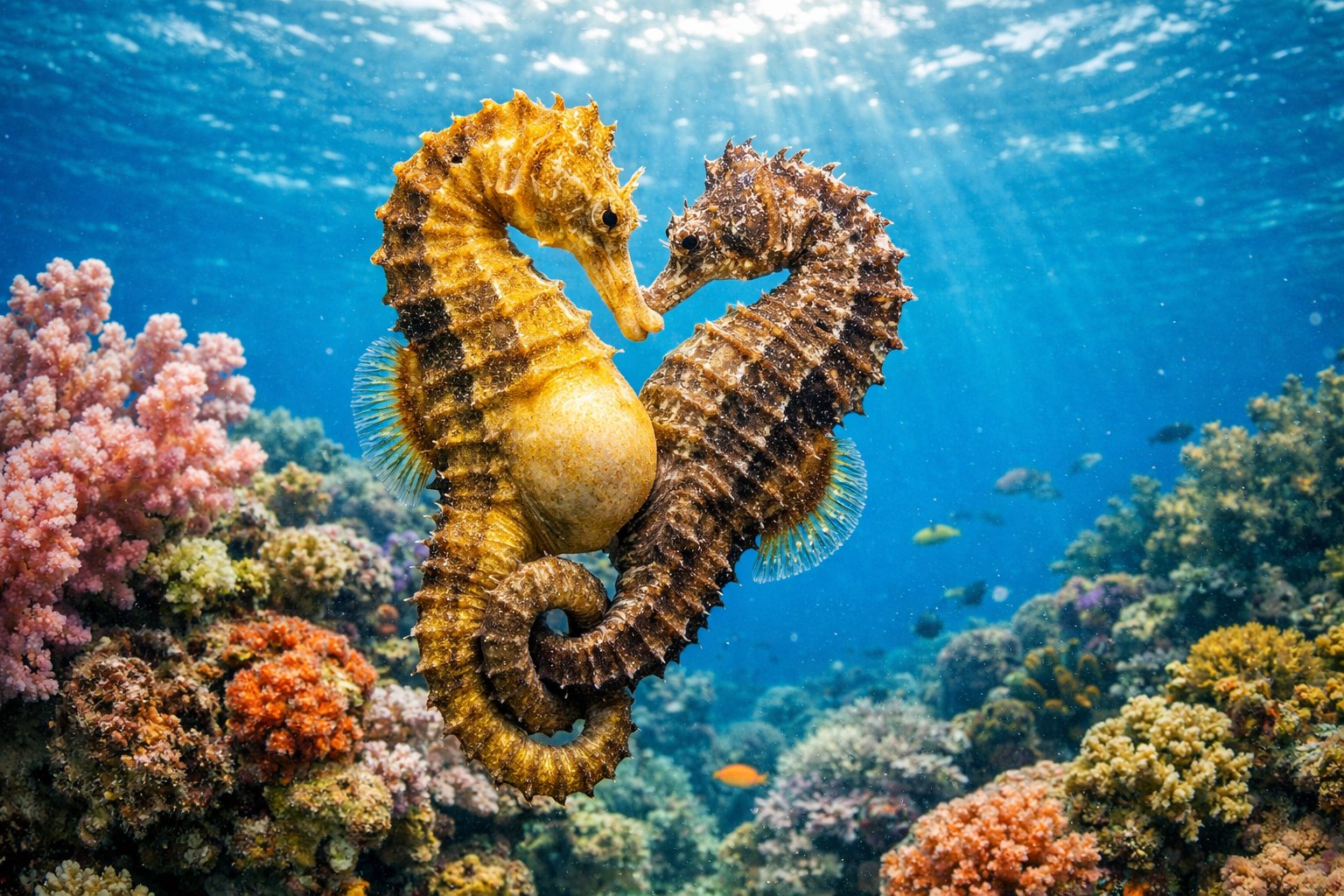
If you watch closely, you’ll spot bright colors, twined tails, and perfectly timed movements during their greeting and mating dances. These rituals help the seahorses find each other and get the timing right for egg transfer.
Different seahorse species tweak these moves, but a lot of them stick with the same partner and repeat these dances while the male is pregnant.
Now that you know this, the rest of the article will make a lot more sense as we get into the nitty-gritty of their mating rituals, how the eggs get transferred, and what male pregnancy really looks like for seahorses.
Mating Rituals and Courtship

Seahorse courtship isn’t just a quick swim. It’s a mix of dance, color changes, and building a strong pair bond.
You’ll notice them moving together, greeting each other daily, and signaling back and forth—it’s a whole communication system just for mating.
Synchronized Swimming and Color Changes
Seahorses swim side by side, mirroring each other’s moves. Sometimes, they twist, rise, and fall in sync, even linking tails for a moment.
This synchronized swimming keeps them in tune, ready for the next step.
They also change color, and they do it fast. One moment bright, the next a bit darker—these shifts signal readiness or maybe a little stress.
Color changes help both seahorses time the egg transfer and steer clear of rivals.
These aren’t just random quirks. Across Syngnathidae—think pipefish and seahorses—these dances and color cues help avoid mistakes and make sure the eggs end up with a prepared male.
Pair Bonding and Courtship Dance
Many seahorses form short-term monogamous pairs, especially during breeding season. You’ll often see them perform a courtship dance over several days, which really tightens their bond.
Some species even greet each other every morning with this ritual.
The dance includes vertical rises, entwined tails, and slow circling. By repeating these moves, they sync up the female’s egg release with the male’s brood pouch being ready.
Project Seahorse and other researchers have seen daily dances last anywhere from a few minutes to a few hours.
Pair bonding means fewer missed chances. Faithful partners can better time the egg transfer and don’t have to worry as much about competition from others nearby.
Mate Selection and Communication
Seahorses size up potential mates by watching posture, color, and movement. Females might flash certain colors to catch a male’s eye.
Males answer back by showing off their brood pouch and signaling that they’re ready to carry eggs.
They use touch, too. A gentle nudge, a tail wrap—these little contacts confirm identity and willingness.
Pipefish, their relatives, use similar touch-and-display signals to figure out who’s a good match.
Mate choice is all about health and timing. Before transferring eggs, seahorses usually check each other out carefully to make sure the chosen partner can carry and protect the young.
Egg Transfer and Male Pregnancy

The center of seahorse mating is pretty clear: the female moves her eggs into the male’s brood pouch, and the male fertilizes and carries them until they hatch.
Let’s look at how the ovipositor works, how the pouch protects the embryos, how long gestation lasts, and what threatens baby seahorses and their parents.
Ovipositor and Brood Pouch Function
The female uses her ovipositor—a slim tube—to push eggs straight into the male’s brood pouch. This usually happens during their dance, when they line up and rise together in the water.
Timing matters. The female releases eggs only when the pouch is open and ready.
Depending on the species, the brood pouch sits on the abdomen or along the tail. Once the eggs are inside, the male seals the pouch and tweaks its internal conditions.
The pouch supplies oxygen through tiny capillaries and balances salt to match seawater, keeping things stable for the embryos.
Fertilization and Embryo Protection
Fertilization happens inside the pouch, right after the eggs go in. Sperm meets eggs inside, not in open water.
This gives the male way more certainty that he’s the dad, unlike most fish.
Inside, embryos stick to the pouch lining and get oxygen from a network of capillaries. The male also creates a special fluid that feeds the embryos and helps their immune systems.
All this lowers the risk from predators and bad water, giving the fry a better shot at survival.
Gestation and Birth of Seahorse Fry
Gestation can last anywhere from about 10 days to six weeks, depending on species and water temperature. Lined seahorses and other Hippocampus species fit this pattern.
Warmer water speeds things up, cooler water slows it down.
When it’s time, the male goes into labor. He contracts his pouch, pushing out the fry in pulses.
A single birth can mean a few dozen to several thousand newborns, depending on the species. Most newborn seahorses are about 8–10 mm long and instantly independent, drifting as plankton until they settle down.
Threats and Conservation Efforts
Habitat loss and overfishing hit seahorse populations hard. These issues make it tougher for males to reproduce.
You’ll probably notice there’s less seagrass, mangrove, and coral where Hippocampus species hang out. That means less food and shelter for both adults and fry.
Groups working on conservation try to protect habitats, set trade limits, and run breeding programs. Researchers dig into seahorse reproduction so they can boost captive breeding and reintroduction efforts.
Want to help? You can support local conservation groups or avoid buying anything tied to the seahorse trade. Backing marine protected areas helps keep brood pouch carriers and their young around for the future.
- Key protections: marine reserves, seagrass restoration, regulated fisheries.
- Actions you can take: support conservation groups, avoid unsustainable seafood, and share accurate info about seahorse needs.
If you’re curious about brood pouch function or male pregnancy, Project Seahorse has some good reading on embryonic care and birth.


