
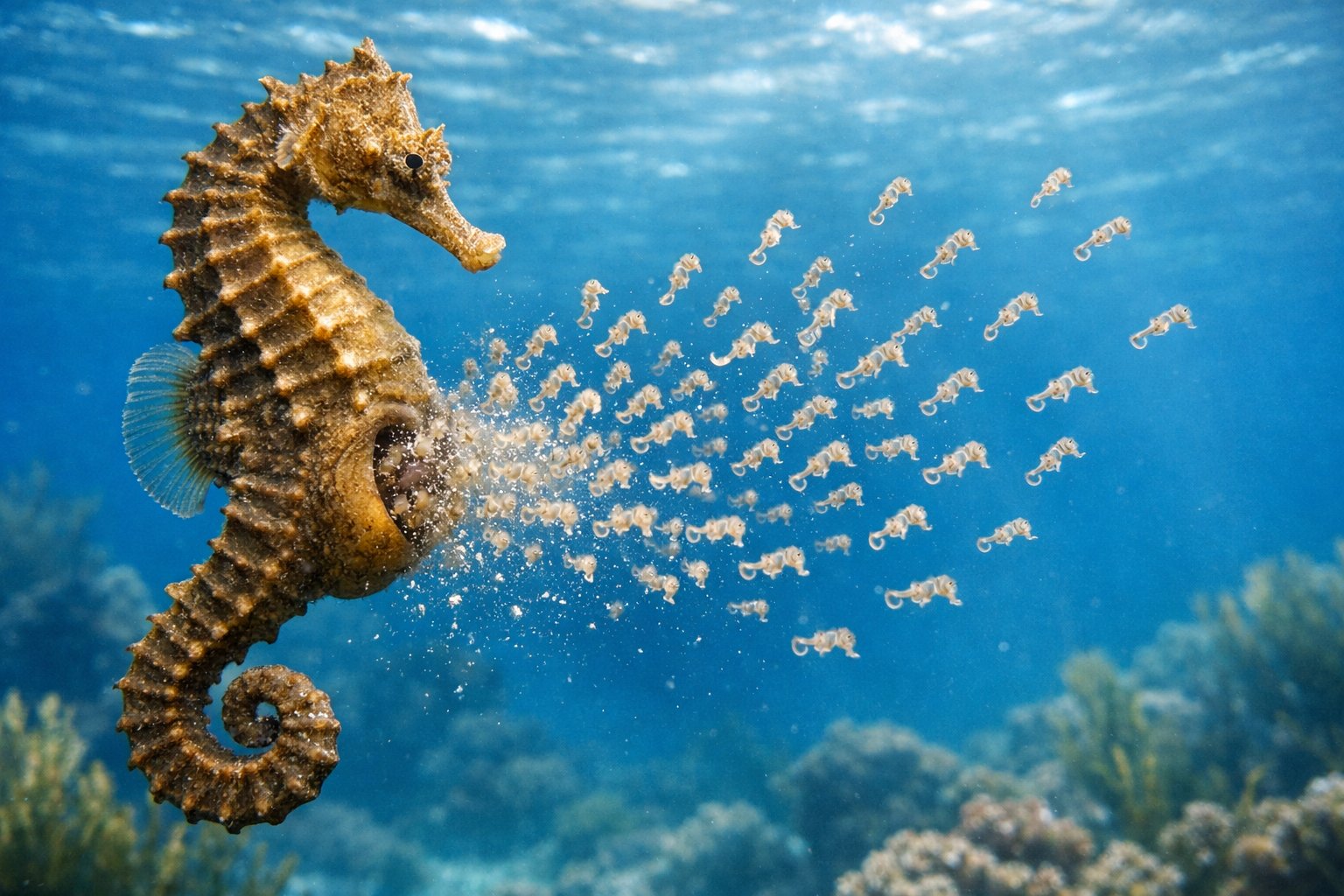
It’s wild, but male seahorses actually carry the babies—and the number they give birth to is kind of jaw-dropping. A male seahorse might release just a handful or, in some cases, over a thousand tiny seahorses at once. Most species usually have broods of about 100–200 young. That’s a huge range, and it makes seahorse births feel even more unpredictable and fascinating.
If you stick around, you’ll find out what controls brood size, how the male’s pouch actually works, and why so many babies never make it. Honestly, that background gives you a better sense of the weird balance in seahorse life cycles—and why people care about protecting them.
How Many Babies Does a Seahorse Give Birth to at Once?

Let’s get into the details: you’ll see what brood sizes look like for different seahorse species, why males end up carrying and giving birth, and what makes brood size change from one pregnancy to the next.
Typical Brood Sizes by Species
Seahorse broods jump around a lot depending on the species. Take the dwarf seahorse (Hippocampus zosterae)—they usually release anywhere from 5 to 200 babies at a time.
Move up to larger species, like the pot-bellied or long-snouted seahorses, and you’ll see them release several hundred, sometimes even over a thousand young. Some folks have even counted up to 2,000 babies in the biggest species if conditions are just right.
Brood size mostly comes down to the seahorse’s body size and how much their pouch can hold. Female seahorses transfer eggs into the male’s pouch, and the number of eggs she makes depends on her size and health.
If you want exact numbers for a specific species, you’ll need to check a reliable species profile—honestly, the numbers keep changing as researchers discover more.
Unique Birthing Role of Male Seahorses
Here’s the twist: male seahorses carry fertilized eggs in a brood pouch. That pouch protects the embryos, supplies oxygen, and keeps the salt levels just right while the babies develop.
This “pregnancy” can last anywhere from 10 days up to 6 weeks, depending on the water temperature and which species you’re looking at.
When it’s time, the male contracts his pouch and pushes out fully formed, tiny seahorses. Males can actually give birth again and again during a breeding season, as long as females keep bringing eggs.
This unusual setup lets females get back to making more eggs while the male handles the current batch. It’s a pretty clever system, honestly.
Factors That Influence Brood Size
A bunch of things affect how many babies the male ends up releasing. Larger, healthier females usually pass along more eggs.
The male’s pouch size and condition set a hard limit on how many embryos can survive to birth.
Environmental stuff matters too. Warmer water can speed up development, but sometimes that means fewer survive. If food is scarce, females make fewer eggs and fewer babies survive.
Predators love baby seahorses—most don’t make it. So, the big brood size is really just the seahorse’s way of making sure at least a few survive. If you want numbers for a specific spot or species, check out local studies.
Seahorse Reproduction and Conservation

Let’s look at how male seahorses carry eggs, how their relatives do things differently, and why most babies don’t make it. It’s also worth knowing what puts seahorses at risk these days.
Brood Pouch and Pregnancy Process
The male seahorse has a special brood pouch right on his belly. When a female drops her eggs in, the male fertilizes them and takes over.
Inside the pouch, he manages salt levels, brings in oxygen, and gets rid of waste. That lets the embryos grow for about 2–4 weeks, depending on the species and water temperature.
Birth is basically a series of contractions. The male forcefully pushes out the tiny, fully formed seahorses from his pouch.
Brood size changes with species and the size of the parents. Sometimes it’s just five babies; in other cases, you might see over a thousand. Bigger males and females usually mean bigger broods.
Comparing Seahorses with Seadragons and Pipefish
Seahorses, seadragons, and pipefish all belong to the syngnathidae family, but they don’t all do reproduction the same way. Seahorses have a deep pouch that completely covers the eggs.
Pipefish often just stick the eggs along the male’s belly or in a shallower pouch. Seadragons are different again—the female glues eggs to the male’s tail, and he carries them out in the open.
These differences change how the dads care for the eggs and how many babies they have. Pipefish broods are usually smaller and more exposed.
Seadragon broods are smaller too, but they’re easier to keep an eye on. Seahorses have the advantage with their pouch, since it lets the male regulate conditions for better embryo development than their relatives.
Survival Challenges for Seahorse Babies
The second those babies are born, they’re on their own. They eat tiny plankton and copepods, but predators like fish and crabs don’t give them much of a chance.
Strong currents can sweep the babies away from safe spots like seagrass or coral. Survival rates? Honestly, they’re brutal—usually less than one in 200 makes it to adulthood.
Losing nursery areas like seagrass beds and mangroves just makes things harder. That’s why seahorses have so many babies in the first place—most won’t survive, so only a few get to grow up and keep the population going.
Conservation Concerns for Seahorses
You’ll run into three big threats if you care about seahorses: habitat loss, overfishing, and trade. Coastal development and pollution keep wiping out seagrass beds and coral reefs.
Fishing trawls often snag seahorses as bycatch. People also collect them for traditional medicine and the aquarium trade, which adds even more pressure.
What actually helps? Protecting seagrass and mangrove habitats really matters. Fishermen can use bycatch-reduction gear, and authorities should enforce trade rules under international agreements.
Supporting marine protected areas makes a difference, and choosing reputable aquariums can help too. Honestly, every step counts—you give more seahorses a shot at making it from their brood pouches to adulthood.


