
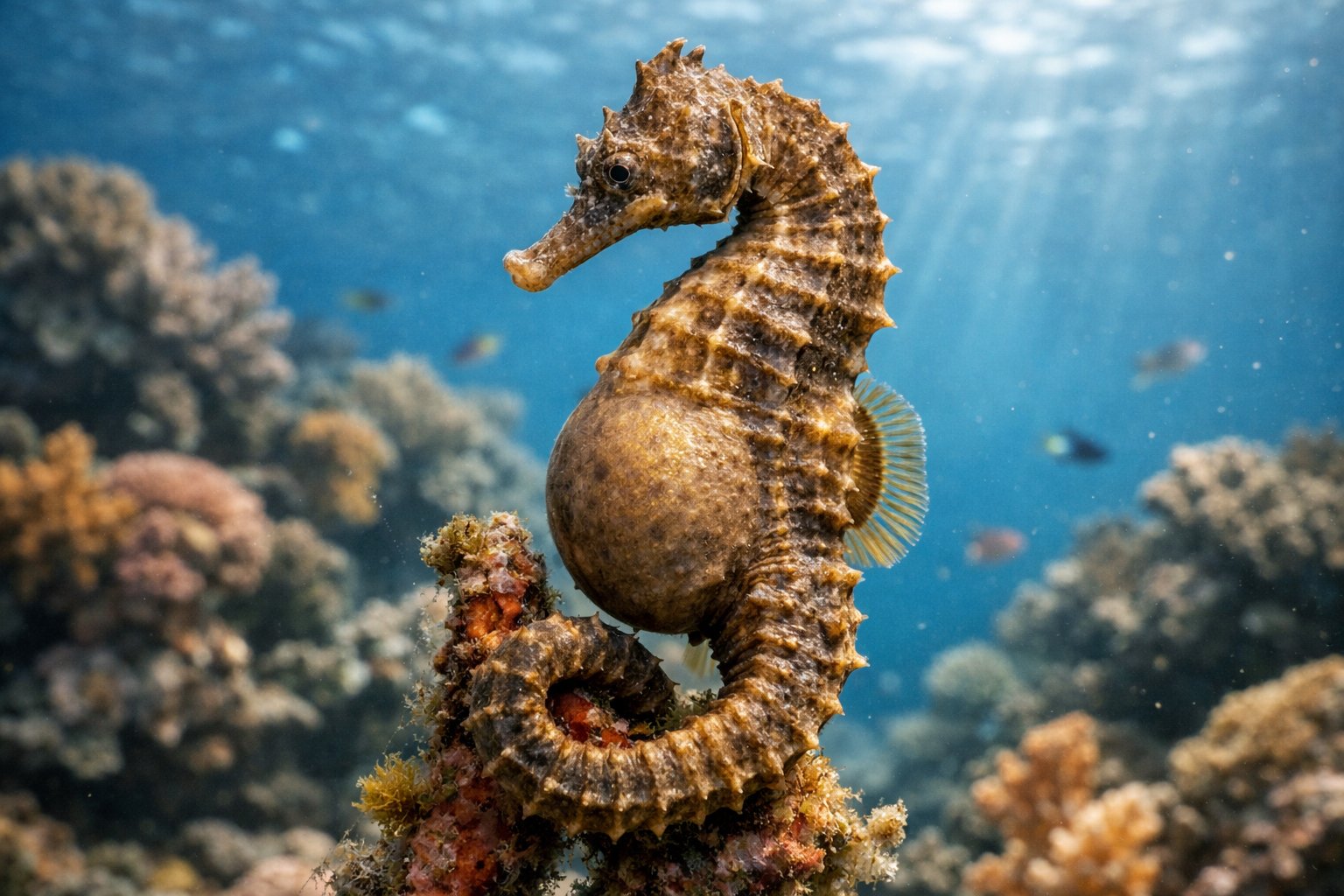
You can spot a male seahorse by one clear sign: the brood pouch on his belly. He uses that pouch to carry and incubate eggs. That pouch proves he’s male—it’s his job to do the “pregnancy” part in many seahorse species. Once you know this, you don’t have to guess who’s male or female.
If you’re curious about how scientists confirm the sex, how that pouch works, and why this odd role evolved, you’re in the right place. I’ll break it down with simple examples from different seahorse species.
Keep reading and you’ll see how biology, behavior, and evolution all come together to explain why male seahorses end up with such a rare parenting job.
How Scientists Identify Male Seahorses
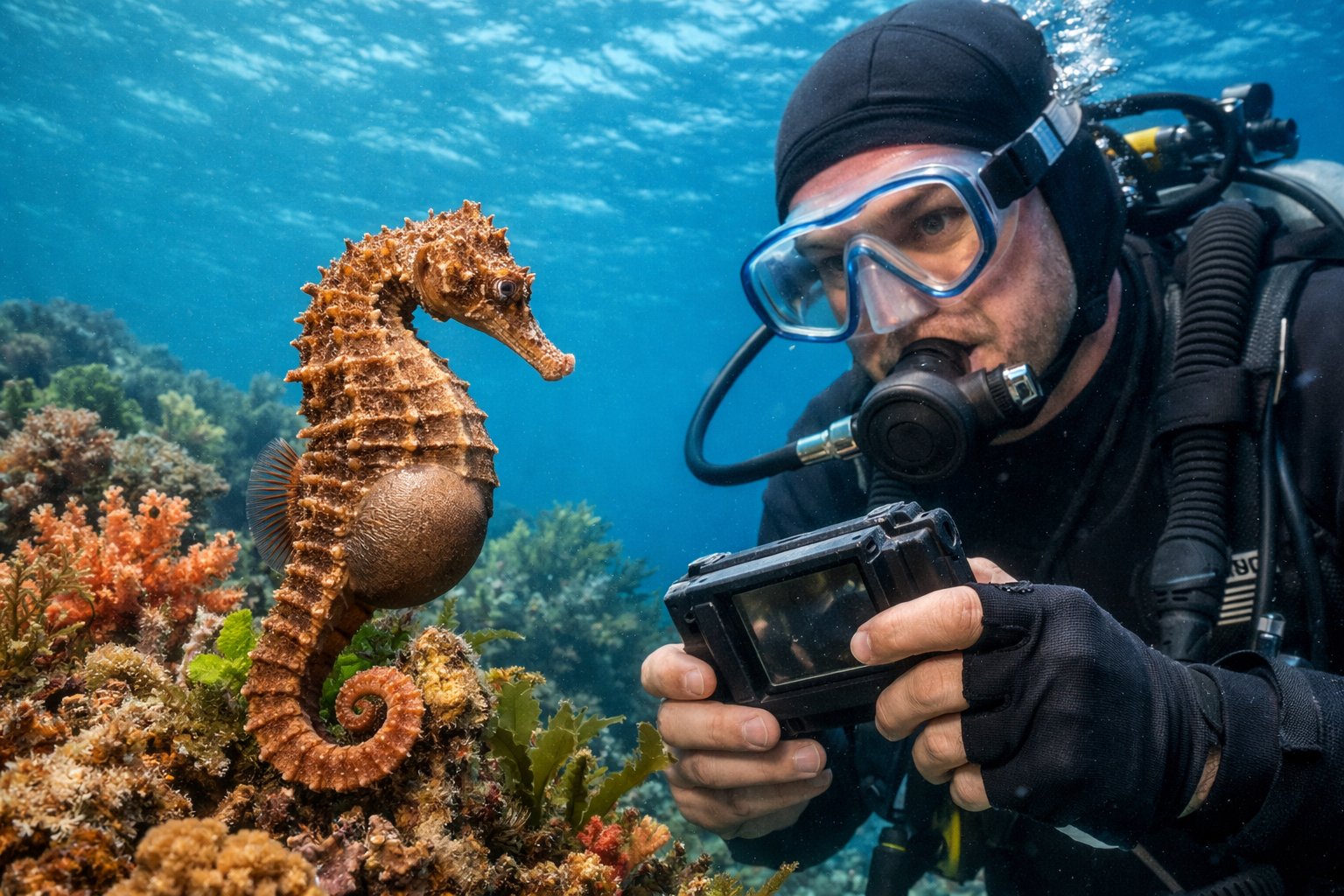
You can spot a male seahorse by looking for the pouch, watching courtship, and checking reproductive anatomy. Scientists combine these visible traits and behaviors to tell males from females and confirm which seahorses carry eggs.
The Role of the Brood Pouch
You’ll find the brood pouch on the male’s belly, near the base of his tail. It’s the clearest sign you’re looking at a male. Some pouches look like a slight fold, others like a deep pocket—it depends on the species and whether he’s breeding.
When the pouch fills up, it bulges out. Even when it’s empty, you might still spot a seam or thickened area.
Inside the pouch, the male gives oxygen and ions to the growing embryos. Researchers watch how the pouch changes during gestation to confirm pregnancy and estimate how far along the embryos are.
Studies show the pouch expresses pregnancy-related genes that are unique to Syngnathidae, the family that includes pipefish and seadragons.
Field guides and aquarists use the pouch’s shape, position, and texture as a checklist for telling males from females. You can compare pouch development across species, since not every male’s pouch looks exactly the same.
Egg Transfer and Reproductive Anatomy
During mating, the female uses her ovipositor—a short tube-like opening on her underside—to deposit eggs right into the male’s pouch. You can sometimes spot this quick contact during courtship. The pair lines up, and the female curves her tail toward his pouch.
Fertilization happens as the eggs enter the pouch. If you check where the eggs sit, you can figure out which animal provided the eggs and which one carries them.
Scientists might gently check the anal fin position and belly area to find the pouch and ovipositor. In young seahorses, the anal fin position helps sex them when the pouch hasn’t formed yet.
Researchers sometimes use noninvasive imaging to peek at embryos inside the pouch. That way, they can count embryos and watch their development without harming the pair.
Differences From Female Seahorses
Females don’t have a brood pouch. Instead, their bellies are flatter, and the ovipositor sits there. During mating season, you can spot the ovipositor, but outside of it, it’s pretty hard to see.
Female bodies often look slimmer or more tapered compared to a male with a pouch.
Behavior gives more clues. Males show off their pouches and sometimes change color to signal they’re ready. Females produce and deposit eggs—they don’t carry embryos after transfer.
In Syngnathidae relatives like pipefish and seadragons, you’ll see similar sex differences. The pouch’s form and location can vary, so you need to use species-specific markers to identify sex.
A quick visual check—pouch presence, ovipositor visibility, and courtship behavior—usually gives you a reliable answer.
Evolution and Adaptations of Male Seahorses

Male seahorses carry eggs in a specialized pouch. They feed and protect developing young.
You’ll find them in coastal habitats like seagrass beds and mangroves, places that shape their bodies and behavior.
Male Pregnancy in the Animal Kingdom
Male pregnancy in seahorses is rare among vertebrates. It’s a wild thing to witness—clear physical and hormonal changes, and you can actually see them.
Males have that brood pouch on their belly where females deposit eggs during mating. Inside the pouch, the male fertilizes the eggs, provides oxygen, and helps regulate salts and waste for the embryos.
Researchers often compare this pouch to a placenta because it moves nutrients and fluids between father and embryos. Hormones like androgens drive pouch growth and immune changes, making it safe for embryos to develop.
You can spot pregnant males by their swollen pouch and the way they breathe rhythmically to aerate the babies.
This trait evolved within Syngnathidae (seahorses and pipefish). Different species show steps from simple egg attachment to fully enclosed pouches, which helps us understand how male pregnancy started.
Benefits for Survival and Reproduction
Male pregnancy shifts the parental work to the male. It affects how many young survive and how often parents can breed.
By carrying embryos, males shorten the time between female egg batches. Females can lay more eggs over a season, while males protect the developing babies until release.
The pouch boosts embryo survival by offering oxygen, stable salinity, and a bit of nourishment. More baby seahorses leave the pouch ready to swim.
Males can even control brood size by accepting fewer eggs if conditions aren’t great. That raises the chances each offspring survives.
This system favors pair bonds in many species. You’ll sometimes see the same male and female greet each other daily, which boosts the number and size of broods.
In protected areas and healthy habitats, this setup helps keep seahorse populations stable.
Habitat Influences on Seahorse Physiology
Where seahorses live really shapes their bodies and daily routines. You’ll find them in coastal seagrass beds, mangroves, and along reef edges. They use their tails to grip onto holdfasts and avoid drifting away.
These spots offer great camouflage and plenty of tiny crustaceans to eat. That steady food source changes how their pouches develop and what they need during pregnancy.
Seagrass beds and mangroves constantly shift in oxygen and salt levels. Male seahorses have to adjust the conditions inside their pouches to keep embryos healthy. Sometimes, I wonder how they manage the stress of all those changes.
Stronger currents or fewer places to hide push seahorses to grow sturdier tails. They also form tighter pair bonds—probably because it helps lower stress on their young.
Marine protected areas keep these habitats safe, so you’ll notice healthier seahorse populations there. They tend to have bigger broods and breed more often.
But if these habitats start to disappear, males struggle more. They lose more broods and have to spend extra energy just to keep their embryos alive.


