
You watch these playful bundles of fur as they practice stalking, wrestling, and pouncing, all while figuring out how to survive. Lion cubs spend most of their time sleeping, playing, and watching adults to pick up hunting skills, social rules, and learn how to stay safe.

They snuggle with their mothers, nurse, and hide in tall grass at first. As they get a little older, you might catch them testing their skills with rough-and-tumble play or tagging along on slow hunts with the pride.
Watch how cubs use play to learn. The pride works together to keep them safe and fed. Let’s take a closer look at what a full day actually looks like for a lion cub.
A Day in the Life of Lion Cubs

Cubs split their time between playing, resting, eating, and some short bursts of exploring. Their day really revolves around learning from their mother and the pride, all while staying safe in thick cover or sticking close to adults.
Playtime and Social Learning
Play is basically practice for survival. Cubs stalk, pounce, and wrestle with their siblings to figure out hunting moves and test their own strength.
If you watch closely, you’ll notice how they mimic a lioness’s stalking posture and the way she sneaks up quietly. These little games build muscle, sharpen reflexes, and help with timing for a real hunt.
Play also helps set social rules. Cubs take turns, show submission by lowering their heads, and use all sorts of vocal cues—chirps and squeaks mostly.
Female lions often join in or watch, nudging certain behaviors along. Older cubs sometimes correct the younger ones, teaching them about rank and how to control their bite so nobody gets seriously hurt.
Resting, Sleeping, and Grooming
Cubs sleep a lot—sometimes 16 to 20 hours a day. That much rest helps their bodies grow and recover.
You’ll usually find them piled together in tall grass or under a shady tree, protected by a lioness or the pride. Their sleep comes in short naps, broken up by play or feeding.
Grooming is a big deal. Lionesses lick the cubs to remove scent, which hides them from predators. Cubs also groom each other.
This keeps their fur clean and builds social bonds. Grooming calms cubs and helps cut down on parasites that could make them sick.
Nursing, Eating Meat, and Weaning
At first, cubs rely completely on milk. A newborn will nurse often and gain weight quickly.
By around 10 weeks, you’ll see them sampling meat from kills the pride brings back. Females share milk and food, and several lionesses help raise the litter.
Weaning happens slowly. By 4 to 6 months, most cubs eat mostly meat, but they might still nurse now and then.
Learning to eat from a carcass takes some practice. Cubs figure out how to tear flesh and follow adults on hunts. Switching to solid food boosts their odds of making it.
Exploring, Climbing, and Adventure
Cubs start exploring outside the den at about three months, but always with supervision. You’ll spot them creeping into bushes, testing out slopes, or sprinting for short distances.
These little adventures teach them how to navigate and use cover when stalking prey. Climbing is part of the fun too.
Cubs climb low branches to escape heat, avoid being pestered, or just to work on their balance. If something scares them, they hurry back to the safety of the adults.
Each adventure helps build confidence, but the pride’s adults keep them close and safe.
How Lion Cubs Thrive Within the Pride
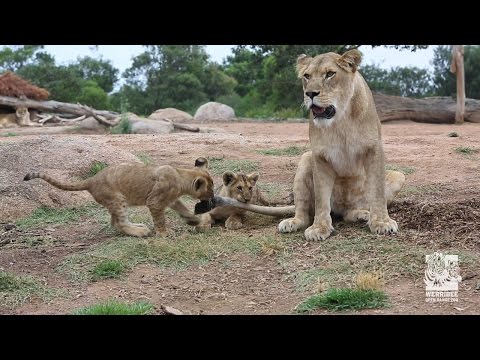
Lion cubs rely on others for safety, food, and learning. Mothers and other females take care of them, older pride members teach hunting skills, and the cubs face threats from predators and rival males. Eventually, each cub finds its place in the pride—or leaves to start something new.
Maternal Care and Synchronized Birthing
Female lions handle most of the cub care. A lioness nurses her cubs for about six or seven months, though cubs start nibbling meat at six to eight weeks.
Females hide newborns in thick grass or under bushes for the first few weeks to keep them safe from hyenas and other predators.
Related female lions often give birth at around the same time. This synchronized birthing means cubs are raised together, and sometimes they even nurse from different mothers.
That kind of teamwork spreads out the work: females take turns guarding dens, hunting, and keeping cubs warm. Male lions in a coalition patrol the territory and chase off intruders, lowering the risk of attacks on cubs.
Learning to Hunt and Joining the Hunt
Cubs start playing with siblings and older cubs to learn the basics of hunting. Play includes stalking, pouncing, and mock chases.
These games build muscle, timing, and coordination. Around six to twelve months old, cubs begin to tag along on hunts led by the lionesses.
Female lions handle most of the hunting for the pride. At first, cubs help by harassing prey or eating leftovers.
As they get older, they join in on coordinated chases and learn roles like flanking or finishing a kill, all under the watchful eyes of adults.
Challenges: Predators, Infanticide, and Survival
Cub survival is tough. Predators like spotted hyenas, leopards, and crocodiles can kill cubs if they’re left alone or near kill sites.
Disease and starvation also lower survival rates, especially during drought or when food is scarce.
Male lions that take over a pride may kill existing cubs to bring females into estrus. Infanticide spikes cub mortality right after a takeover.
A strong pride structure and dominant male coalitions help reduce this risk. If your pride has males who defend territory well, your cubs have a better shot at making it.
Growing Up: Pride Structure and Dispersion
You pick up pride roles based on your age and sex.
Female lions usually stick around in the pride they were born into. They inherit territory alongside their sisters, mothers, and aunts. Older lionesses show you how to mark territory, hunt together, and raise the next litter.
Male lions, on the other hand, leave when they’re about two or three years old—or sometimes the adults just push them out. Young males often band together with their brothers or other males their age. These coalitions give them a better shot at taking over a pride someday. When you’re in a coalition, you might challenge resident males to claim a pride and get the chance to mate.
This constant movement keeps the genes mixed, but honestly, it makes life a lot riskier for males than for females.
If you want to dive deeper into pride life or cub roles, you can check out articles on pride behavior and cub care. Observations from places like Turpentine Creek Wildlife Refuge (pride dynamics) and general summaries (pride behavior) have a lot more detail.


