
Spotting a frog in your house can be a bit of a surprise, right? Frogs usually wander inside searching for moisture, shelter, or a bite to eat, especially if your place has cracks, open windows, or bright lights that pull them in. They love damp areas and often sneak through tiny gaps around doors or windows.
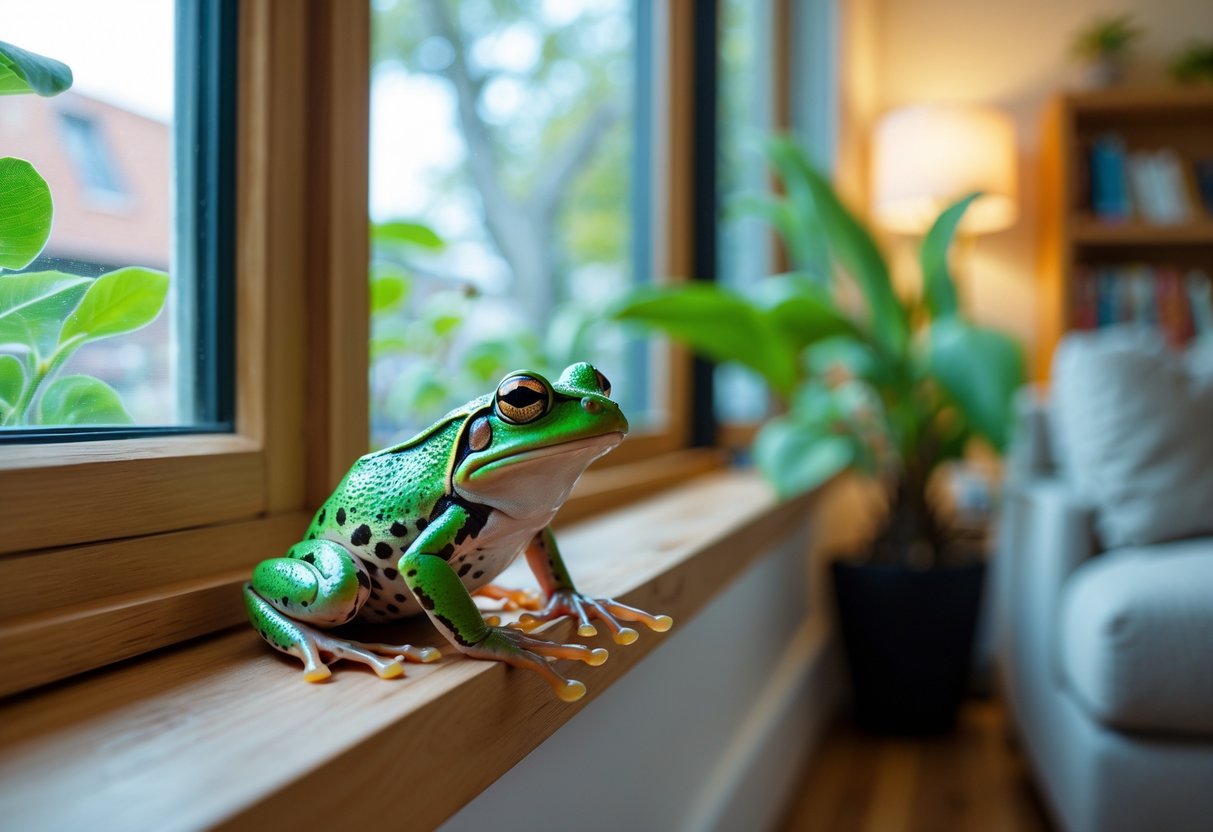
You might catch frogs hanging out near lights because those spots draw in insects, and, well, frogs can’t resist a good snack. Sometimes, they just want to escape harsh weather like blazing heat or chilly nights.
If you’re trying to figure out how they get in and how to keep them out, you’re in the right place. Let’s dig in.
Why Frogs Come Into Houses

Frogs head indoors mainly because they need water, food, and shelter. They’re always on the lookout for cool, damp spots and get drawn toward lights where bugs like to gather.
Weather changes and the seasons play a big part, too. When things get rough outside, frogs start looking for safer places to hang out.
Moisture and Water Sources
Frogs rely on moisture to keep their skin healthy. Your house probably has damp spots like basements, bathrooms, or areas near pipes.
When you’ve got standing water—maybe in plant saucers or drains—it’s basically an open invitation for frogs. Even puddles or little pools in your yard can lure them closer, making it more likely they’ll sneak inside through cracks or open doors.
Try to keep those areas dry. Fix leaks and clear up any water buildup so frogs won’t want to stick around.
Attraction to Light and Insects
Lights outside or inside your house attract bugs like moths and mosquitoes. Frogs, being bug lovers, just follow the food.
Porch lights and garden lamps really pull them in at night. Once they’re near your house, it’s easy for them to find a way in—maybe through an open window or a ripped screen.
Cutting down on bugs helps. You could swap out white bulbs for yellow “bug lights” and make sure you seal up any openings. That way, frogs won’t have such an easy time getting in while they’re hunting.
Seasonal and Environmental Factors
Frogs come inside more often when the weather’s extreme. When it’s hot and dry out, they want cool, damp places indoors.
When it gets cold, they look for warmth and might sneak in through tiny gaps near pipes or under doors. Rainy seasons get frogs moving, too, since rain can push them toward your house.
If you know when frogs are most likely to show up, you can prep by sealing cracks and cutting down on indoor moisture.
For more about frog habits and how to keep them outdoors, check out this guide on how frogs get into houses.
How Frogs Get Into Homes and Ways to Keep Them Out

Frogs usually slip inside homes through small openings while searching for moisture or food. You can keep them out by sealing up those entry points and using a few simple barriers.
Common Entry Points and Vulnerabilities
Frogs can squeeze through tiny gaps around doors, windows, and vents. If your window screens are torn or missing, that’s a big problem.
Look for cracks in your walls or foundation, and check for gaps under doors. Basements and crawl spaces are especially attractive to frogs since they’re often damp and dark.
Drainage systems that let water pool near your house can also draw frogs in. Vents and pipes that lead inside are easy access points, too.
Protect your home by checking these areas. Fix broken screens, add door sweeps or weatherstripping, and seal up even the smallest gaps.
Prevention Techniques and Barriers
Stop frogs before they get in by setting up barriers and managing moisture. Door sweeps and weatherstripping block gaps under doors, and fixing your window screens keeps frogs from hopping through.
Take care of standing water around your house. Fix drainage issues and avoid letting damp spots build up.
A sand or gravel barrier near your home can help, too. Frogs don’t like crawling over rough, dry ground.
Keep an eye out for new gaps or cracks and seal them up as soon as you spot them. That’s really the best way to make sure frogs don’t move in.
Effective Deterrents and Long-Term Solutions
You can use natural deterrents to keep frogs away without hurting them. Try planting marigolds, garlic, or lemongrass around your home; frogs really don’t like their smell.
These plants look nice and also help control the bugs that frogs eat. It’s a win-win, honestly.
Motion sensor lights might startle frogs, making your place less appealing at night. If you cut down on insects inside your home, you’ll take away the main thing that attracts frogs in the first place.
Still seeing frogs even after all that? You might want to call in professional pest control. They can spot tricky entry points and offer real advice for keeping frogs out for good.


