
Ever spot strips of missing bark and wonder what on earth messed with your tree? Deer usually strip bark to mark their territory or scrape velvet off their antlers during rutting season. Sometimes, they’re after nutrients too. This habit can really hurt—or even kill—young trees if you don’t do something about it.
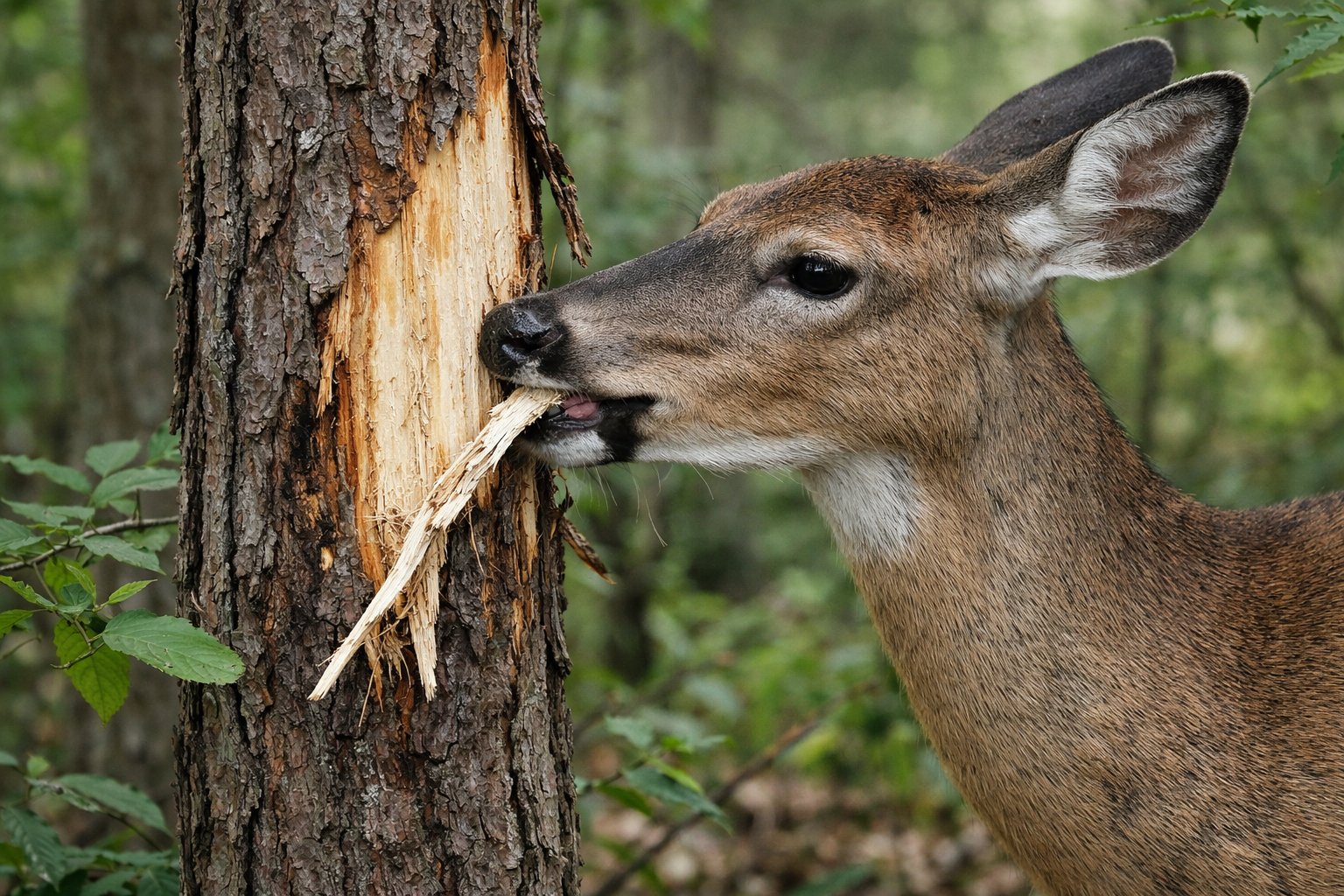
Let’s figure out how to tell deer damage apart from other critters, why it happens during certain times, and what you can actually do to keep your saplings and mature trees safe. If you understand why deer rub and strip bark, you can jump in fast to save your trees and keep your yard or woods healthy.
Why Do Deer Strip Bark?

Deer rub bark off trees for a few main reasons. They usually go after small trunks or saplings, and their rubbing tears away the cambium and phloem.
That kind of damage can seriously hurt or even kill the tree.
Antler Velvet Removal
Male deer, or bucks, often strip bark to get rid of the soft velvet on new antlers. In summer and early fall, bucks rub their antlers against trunks and branches to scrape off the velvet.
This rubbing shreds the outer bark and exposes the cambium underneath. You’ll spot these fresh rubs as long, vertical wounds—usually on saplings or young trees under six feet tall.
Those wounds strip away the phloem and stop nutrients from flowing through that part of the trunk. If a rub goes all the way around, the tree can’t move water or sugars, and it might die.
If bucks hang around your yard, try using trunk guards or wrapping young trees. That helps protect the cambium so your saplings can survive the rut.
Territorial Marking and Rutting Season
During rutting season, deer get more aggressive about rubbing. Most rubs act as territorial signals.
Bucks leave scent and visual marks to show dominance and let others know they’re ready to breed. You’ll notice more rubs popping up in late fall as testosterone spikes.
The stripped bark and broken branches show other males where trails cross. Female deer may use the same spots, which brings even more deer and more damage.
If you see rubs along certain paths, you can try fencing or moving salt licks to cut down on visits. Putting up taller barriers around at-risk trees helps prevent repeat rubbing during the rut.
Nutritional and Behavioral Factors
Sometimes deer strip bark for other reasons. In winter, when food gets scarce, deer chew or strip bark to reach the inner layers for nutrients.
The cambium and inner bark have sugars and nutrients they need. You’ll usually find this damage low on the trunk, sometimes under the snow.
Smaller critters like voles can do similar damage in winter, so check the height to figure out who’s responsible. When deer keep stripping bark, it weakens trees and makes them easy targets for pests or disease.
To keep deer from feeding on bark, try offering food sources away from your trees or use repellents during tough months. Protecting the base with wire cages or trunk shields can really help keep the cambium safe.
Other Animals That Strip Bark and Prevention Measures

Lots of animals chew or rub bark for food, shelter, or marking. Let’s look at which small mammals and larger animals cause trouble, which trees they go after, and what you can do to protect your trees.
Rodents and Small Mammals
Voles, deer mice, and rabbits chew bark right near the ground, especially under snow. Look for horizontal teeth marks and bark missing just above the soil line.
Voles can girdle young saplings in winter. Rabbits leave clean, angled cuts about one or two inches up where they can reach.
Squirrels—including fox squirrels (Sciurus niger), gray squirrels (Sciurus carolinensis), and red squirrels—strip bark from branches and trunks too. Their damage looks like patches of missing bark and little piles of flakes under horizontal limbs.
Porcupines and beavers do even heavier damage. Porcupines strip bark higher up and on tender branches. Beavers chew off big chunks of trunk and leave tooth scars and wood chips on the ground.
Black bears sometimes strip bark in spring, leaving vertical claw or tooth marks about shoulder height.
Tree Species Susceptibility
Some trees just seem to attract more attention. Honey locust, red maple, and sycamore often get hit.
Young fruit trees and thin-barked species have it even worse because their cambium is easy to reach.
Conifers can get targeted by deer during rutting season, which peels bark and shreds wood. Squirrels like horizontal branches, while voles and rabbits attack low trunks.
Porcupines prefer trees with softer inner bark and will climb for upper branches. Beavers go for trees near water and will take down bigger trunks if they can.
Protecting Trees from Bark Stripping
Start with physical barriers. Wrap tree trunks using plastic tree guards, hardware cloth, or heavy-gauge mesh. For rabbits and voles, go with guards at least 18–24 inches tall. For deer or porcupines, you’ll want them 4–6 feet high.
Bury the bottom 2–4 inches or flare the guard outwards. That way, you can keep burrowing voles from sneaking in.
Try setting up fence lines. A 7–8 foot fence usually keeps deer away. If you’re dealing with rabbits, shorter mesh fences around each tree should do the trick.
When it comes to beavers, use wire cages around trunks or put up protective fencing in wet spots. Repellents might help for a while—just follow the label instructions for deer or rabbit repellents, and remember to reapply after it rains.
Keep the area tidy. Remove brush and tall grass so voles have fewer places to hide. You might also plant sacrificial browse farther from young trunks to distract hungry critters.
Check your trees often. If you spot minor damage, fix it with a clean cut. Skip heavy pruning during risky seasons.
If you notice large or repeated damage, reach out to local wildlife control or your extension service for advice.
Need help identifying bark stripping by squirrels or other animals? Check out the Barkstripping overview at the Internet Center for Wildlife Damage Management (ICWDM): https://icwdm.org/identification/barkstripping/.


