
It’s honestly pretty wild how fast deer move, even when snow blankets everything. Most deer still manage quick sprints between 30 and 40 miles per hour during winter, though deep snow and biting cold definitely cut that top speed. They can’t keep it up for long, either.
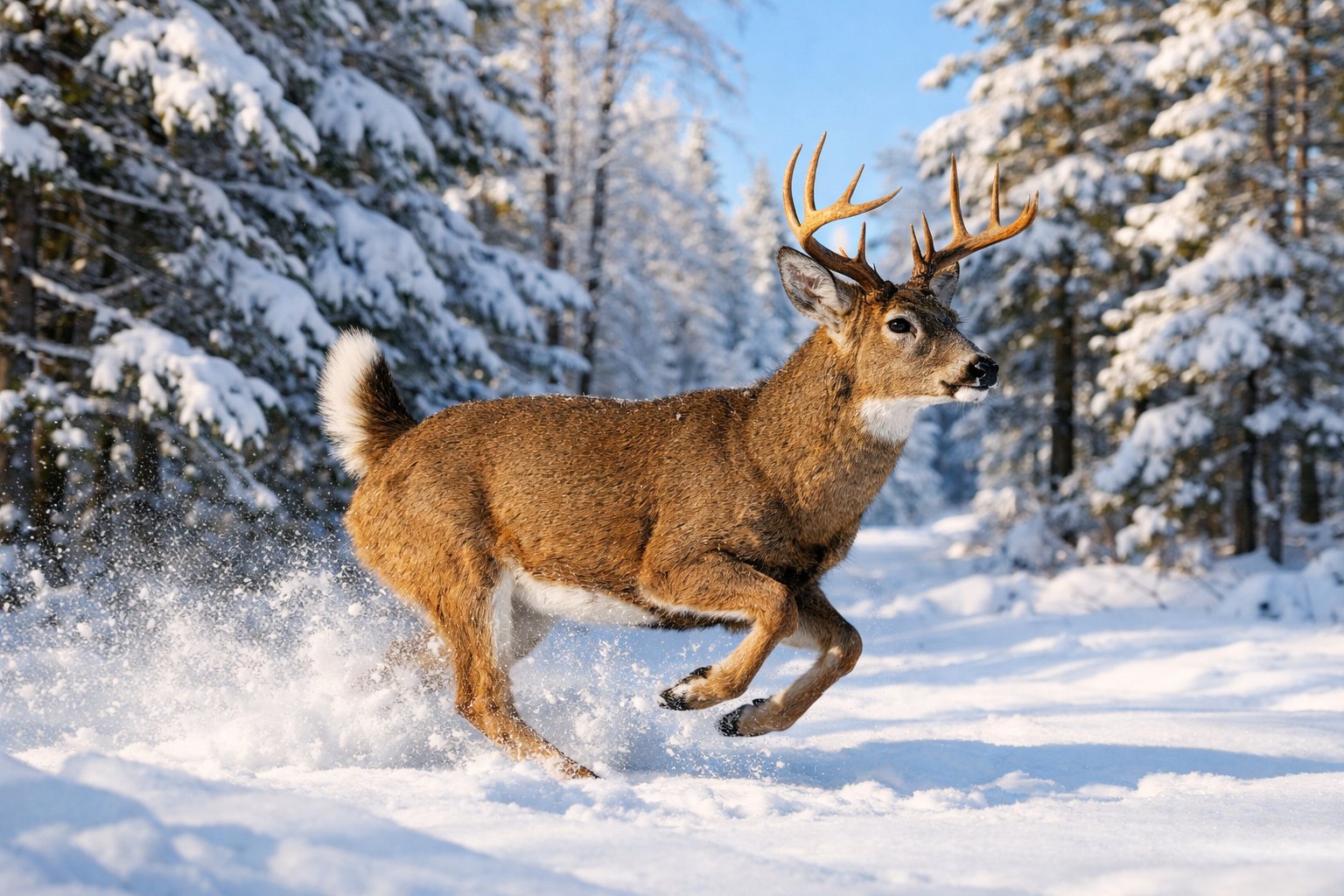
Snow depth, icy ground, and scarce food slow their long runs. Deer have to use quick bursts and sharp turns when they’re trying to escape danger.
Different species and body types deal with winter in their own ways. Some use long legs and light steps, while others rely on strength or just pick their routes carefully to keep moving.
Winter Running Speeds of Deer

Winter forces deer to slow down and move with more caution. Snow, ice, and cold change how far and fast they run, so deer start using energy-saving gaits and stick to trails they know.
Typical Winter Speeds Versus Other Seasons
You’ll notice deer run slower in winter compared to fall or spring. When it’s open and dry, a white-tailed or mule deer can hit short bursts close to 30–40 mph.
In winter, those bursts usually drop by 20–40% because snow packs down their stride and makes them take shorter steps. Most escape sprints in packed snow or crusty conditions sit around 20–30 mph for healthy adults.
Older deer, lactating does, and fawns just can’t keep up with that. Instead of long chases, deer rely on short, explosive moves and quick leaps.
Impact of Snow and Ice on Deer Speed
Snow depth and the type of surface underfoot matter most. Deep, soft snow eats up their energy and slows them down by several miles per hour.
Crusty or icy surfaces can go either way. Hard crust lets deer bound faster, but thin ice or slick spots make them slip and shorten their strides.
You’ll often see deer using trails, frozen roads, and compacted edges to keep their speed up. They change gaits, shifting from fast bounds to stotting or short hops to keep their balance.
Running through deep snow burns a lot more calories, which gets risky in winter when food is hard to find.
Can Deer Still Outrun Predators in Winter?
They can, but it really depends on the weather and the predator. Deer escape wolves or coyotes by sticking to packed trails and making sharp zigzags that show off their agility.
Predators like wolves, who move well in snow and hunt in packs, make things tougher for deer. Packs and ambushes work better when deer get bogged down in deep snow.
Still, deer have a few tricks: they pick firm ground, use bounding leaps, and veer into thick cover. These moves help them avoid getting caught, even when they can’t hit their usual top speed.
Species Variation and Adaptations for Winter Mobility

Different deer species move in winter based on their size, leg shape, and where they live. Snow depth, crust, and cover all decide where you’ll find them and how fast they can travel.
White-Tailed Deer and Mule Deer in Snowy Conditions
White-tailed deer and mule deer don’t handle deep snow the same way. White-tailed deer usually stay in low, dense woods where the trees keep snow from piling up. They stick to packed trails and use short bursts of speed—usually under 30 mph on firm ground—because deep powder and crust slow them down.
They count on nimble turns to dodge predators, not long-distance running. Mule deer like broken terrain and open slopes if snow is shallow.
Their longer legs help them move across crusted snow more efficiently. If snow gets deeper than about 40 cm, both types shift to sheltered “deer yards” and barely move to save energy.
Losing wintering yards or having their habitat broken up forces them onto riskier, more exposed routes.
Moose, Elk, and Reindeer Winter Movement
Bigger species handle winter in their own way. Moose move slowly through deep snow but break trail with their weight and long legs.
Most of the time, you’ll see moose saving energy by browsing in willow or aspen stands near water. Elk form tight herds in wintering areas, and the packed trails inside those herds let them move faster than solitary deer.
Heavy snow still slows them down, though. Reindeer (caribou, if you’re in North America) migrate long distances and follow well-worn routes.
Their hooves harden in winter to grip icy, crusted snow. Red deer in Europe act a lot like elk, sticking to lower slopes and woodland edges to avoid deep drifts.
Wildlife corridors keep these bigger species connected to their feeding grounds and mating spots during winter.
Behavioral Strategies for Winter Survival
You’ll notice animals using a lot of the same tricks to get through winter. They move around less each day and stick close to spots that offer good thermal cover.
Deer, for example, switch from grazing to browsing. Instead of wandering for grass, they munch on twigs and buds nearby, which saves them energy.
Their bodies slow down, and they rely on fat reserves to make it through times when food’s scarce. It’s honestly amazing how well this works for them.
Landscape changes can really mess with these behaviors. When habitats get broken up, animals have to travel farther, which can get risky.
Longer journeys mean they might bump into predators more often. It’s not ideal for anyone.
If we keep wildlife corridors open and protect old wintering grounds, deer, elk, moose, and reindeer can move around safely. That goes a long way toward keeping local herds healthy.


