
Ever felt a sudden thump under your feet and noticed a deer stamping its hoof at you? That stomp isn’t an attack—it’s a warning. The deer wants to alert others and figure out if you’re a real threat.
When a deer stamps, it’s usually trying to gather more info or warn the herd. If you stay still and quiet, the animal often calms down.
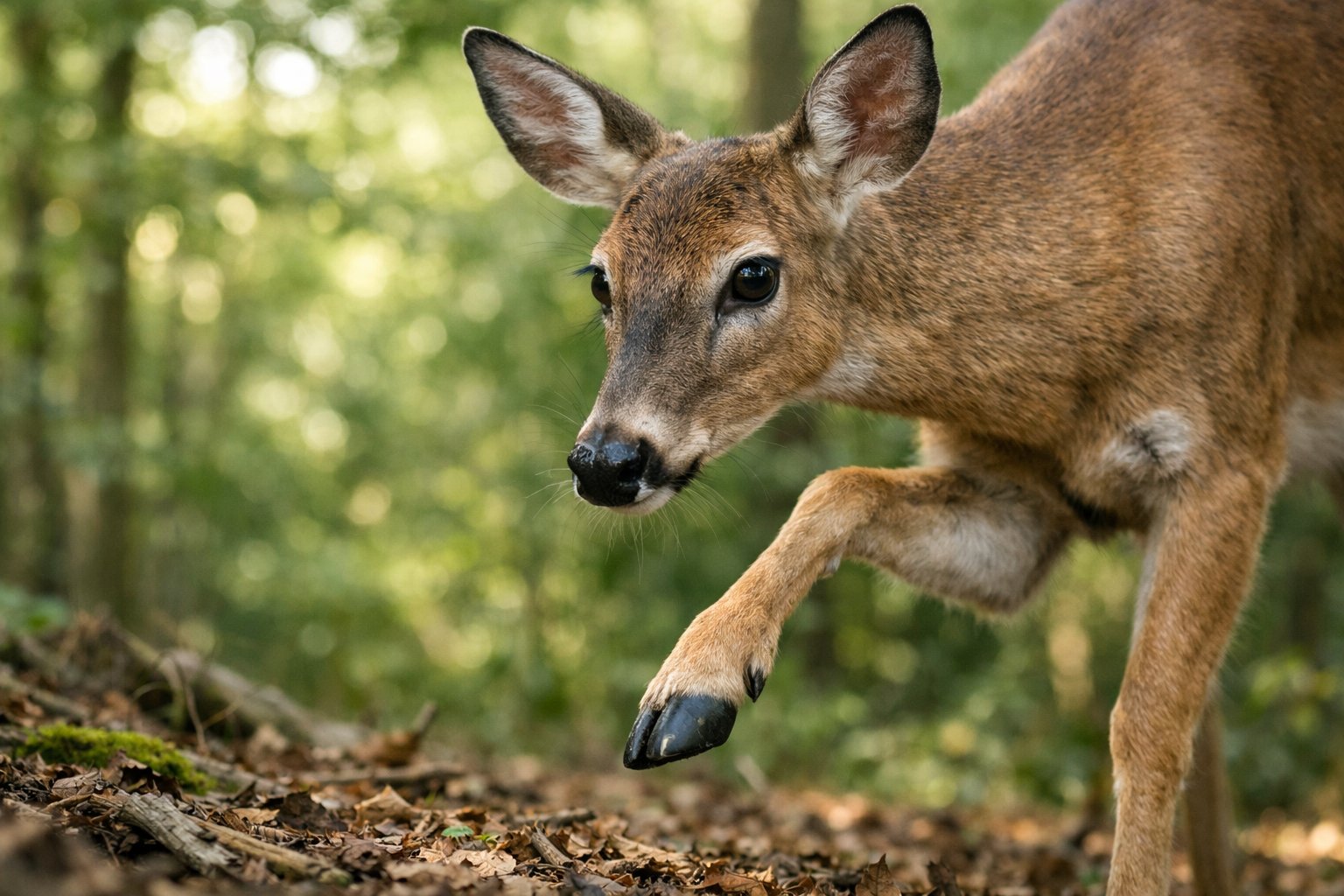
You’ll probably spot other signals too—maybe a head sway, a snort, or a flicking tail. These signs, together, give you a hint about what the deer plans to do next.
Keep an eye on its body language and scent cues. That way, you’ll know if it wants to bolt, hang around, or just keep its distance.
Why Do Deer Stomp at People?

Deer usually make it obvious when they feel uneasy. You’ll see a stomp paired with alert body language, so take in the whole scene before you react.
Warning and Alarm Signals
When a deer stomps at you, it’s probably because it senses danger. That stomp makes a sharp sound that cuts through the woods.
You might also notice its ears shoot up, its stare lock onto you, or its tail flick up in alarm. If you’re downwind or moving quickly, the deer might stomp to warn others nearby.
This behavior works like an early alarm, getting the herd’s attention so they can move or hide. If you spot this, back up slowly and try not to make sudden moves.
Protecting Fawns and Maternal Instincts
A doe will stomp more if her fawn’s around. You might catch her mixing in short, rapid stomps and low snorts.
These signals tell other deer to stay alert and also try to scare you off. Don’t get close to a fawn or its mother.
The mother’s instinct is intense; she’ll step between you and her baby or move the fawn if she feels you’re too close. Give them space and leave quietly to avoid making her more aggressive.
Feeling Threatened or Startled
A single, hard stomp often means you startled the deer. Maybe you got too close before it noticed.
Loud noises or quick movements can trigger this. If a deer stomps because it feels threatened, it might back up while keeping its eyes on you.
A slow, calm retreat usually ends the behavior. Avoid staring straight at the deer, and definitely don’t try to feed or touch it—those things only make a deer more nervous.
Personal Space and Defensive Behavior
Deer stomp to keep their space, especially in tight areas or along trails. If you block a deer’s escape route, it may stomp to tell you to move.
The stomp is a clear signal: “You’re in my way.” Step aside and give the deer room to leave.
If you’ve got a dog, keep it leashed and quiet—dogs almost always make the stomping worse. Giving deer space lowers their stress and reduces the chance of a bluff charge or other defensive moves.
Deer Communication and Body Language

Deer use sound, scent, and body movements to warn each other and check out what’s nearby. You can read their ears, tail, hooves, and even their breath to figure out if they’re curious, nervous, or flat-out alarmed.
Using Stomping to Alert the Herd
When a deer stomps, it slams a front hoof down hard. That stomp makes a sharp noise and even a tiny vibration you might notice if you’re close.
Deer usually stomp when something feels off, but they’re not sure if they should run yet. Stomping acts as a quick alarm and also tries to make a threat show itself.
You might see a single slow stomp or a quick burst of them. If the stomps get faster and its ears pin back, the deer’s super tense and might bolt or even charge.
If you hear a stomp, stop and look around. Back away slowly, and keep dogs leashed.
Don’t go near a deer that’s stomping close to where a fawn might be hiding.
Deer Snorting and Its Meaning
A snort sounds like a sharp exhale through the nose. Deer snort to warn others and get their attention fast.
A snort usually follows a stomp and comes with raised, alert ears. Snorts can be loud—meant to startle both threats and other deer.
They also help the deer catch scents in the wind. If you hear several snorts or see a snort with tail flagging, the deer probably sees real danger and will move soon.
If a deer snorts at you, keep your distance and don’t move fast. Talk calmly and back away at a steady pace, giving the animal a clear path.
Interdigital Scent and Scent Signals
Deer have small glands near their hooves called interdigital glands. When a deer stamps, it presses these glands to the ground and leaves a scent mark.
That scent tells other deer something happened right there. Scent marks work like quick messages—kind of like, “Hey, check this out,” or “Warning.”
Deer also use glands on their legs, face, and near the tail for longer-lasting signals. You probably won’t smell these, but deer sure can.
If you spot fresh tracks with deep stomps, expect other deer to check out the area. Give them room and try not to disturb any scent trails.
Tail Flag and Other Visual Warnings
A tail flag is hard to miss—a bright, usually white flash when a deer flicks or lifts its tail. Deer use this move to signal alarm, and it also helps others follow a fleeing animal through thick brush.
You’ll often catch tail flagging along with stomping or a sharp snort. Deer might also swivel their ears toward a sound, bob their heads, or just freeze on the spot.
When a deer bobs its head or stands frozen, it’s trying to make a threat move first so it can get a better look. If you see pinned ears and quick, short rushes, that deer feels nervous or maybe even aggressive.
So if you notice a rigid body, tail up, or repeated head bobs, it’s best to give the deer space. Back away calmly—no need to risk making things worse.


