
Ever spotted two frogs stuck together and wondered what’s going on? Most of the time, you’re seeing frogs in the middle of mating. The male holds onto the female in a position called amplexus.
This helps them release eggs and sperm close together, making it easier for fertilization to happen outside the female’s body.
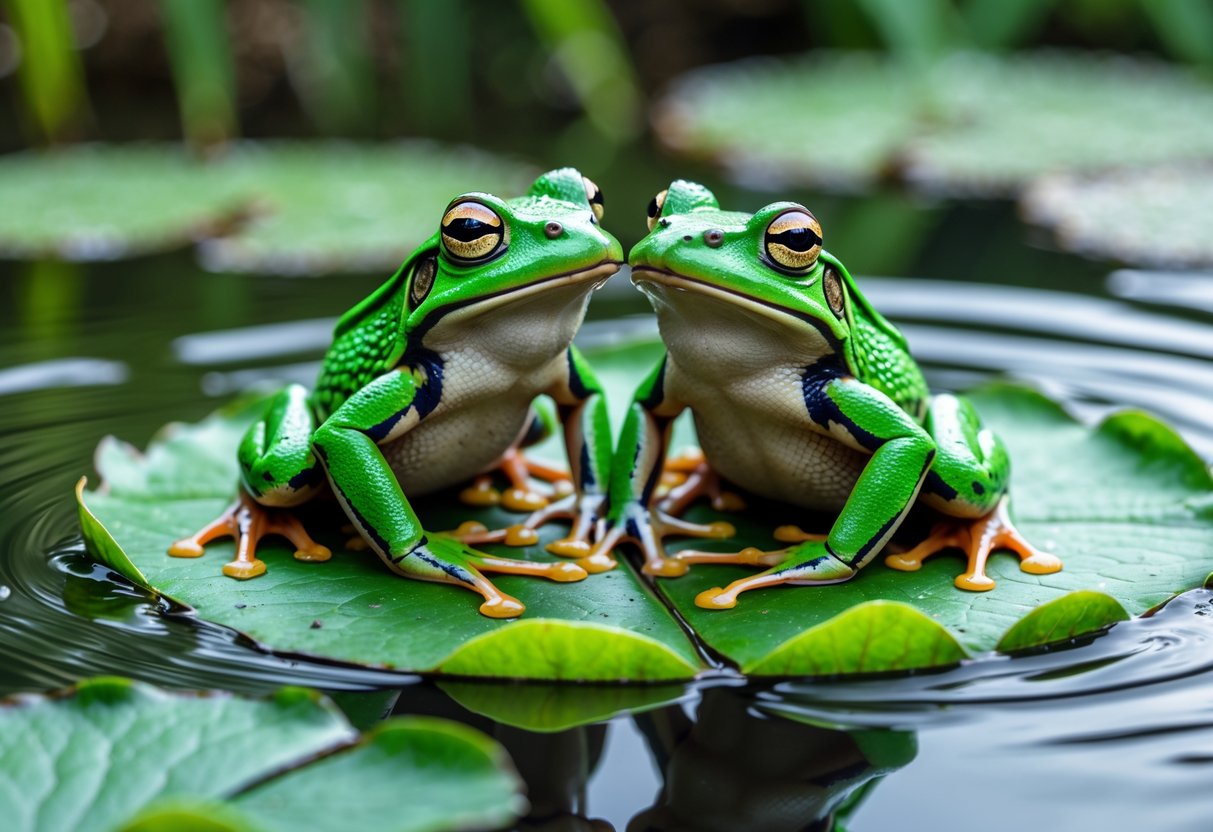
Sometimes frogs get stuck because their skin or toe pads produce sticky mucus. That stickiness helps them climb and cling to things.
During mating season, things can get a little wild—confusion or competition can lead to frogs grabbing each other tightly. Learning about these reasons gives you a glimpse into the quirky world of frogs and their odd behaviors.
Mating Behavior: Why Frogs Get Stuck Together

When frogs mate, they often stay physically attached for hours, sometimes even days. This close contact helps them stay together through the whole egg-laying process.
Some frogs use a special grip, while others produce sticky secretions that act almost like glue.
Amplexus: The Mating Embrace
You’ll see male frogs latch onto females in a hold called amplexus. The male grabs the female, usually around her back or waist.
This grip keeps him in place as she releases her eggs. It puts him right where he needs to be to fertilize the eggs as soon as they come out.
Amplexus can last a long time—sometimes hours, sometimes days. The American toad, for example, uses this grip during its breeding season.
Even if the female moves, the male keeps his hold. That way, fertilization is more likely to succeed.
The strength of this grip changes depending on the species, but it’s always firm enough to keep the pair together for the whole process.
Sticky Secretions in Rain Frogs
Rain frogs take sticking together to another level by making natural glue. Both the male and the female secrete sticky stuff from their skin during mating.
Males release glue from their chest and arms, and females from their backs where the male holds on. This sticky bond can last from an hour to several days.
It’s especially useful because the male’s arms can’t always reach around the female’s round body. The glue makes up for that, keeping them connected underground while they mate.
Scientists noticed that this sticky bond breaks down naturally after a few days. This gluey trick seems unique to rain frogs—you won’t find it in most other frog species.
Frog Species Most Often Seen Stuck Together
You’ll mostly notice frogs sticking together in species where the female is much bigger, or where mating takes a long time. Rain frogs are well-known for their sticky secretions.
For most other frogs, like the American toad, it’s all about the strong amplexus grip. These frogs usually stay stuck for shorter periods, but the hold is still important.
Some frogs live underground or in dry places and only come out to breed. In those cases, staying stuck together helps them avoid getting separated in tough conditions, especially since mating often happens at night.
Whether it’s a tight embrace or natural glue, frogs stick together to make sure their eggs get fertilized and the next generation has a shot. If you’re curious, you can read more about how common rain frogs stick together.
Environments and Grouping: When and Where It Happens
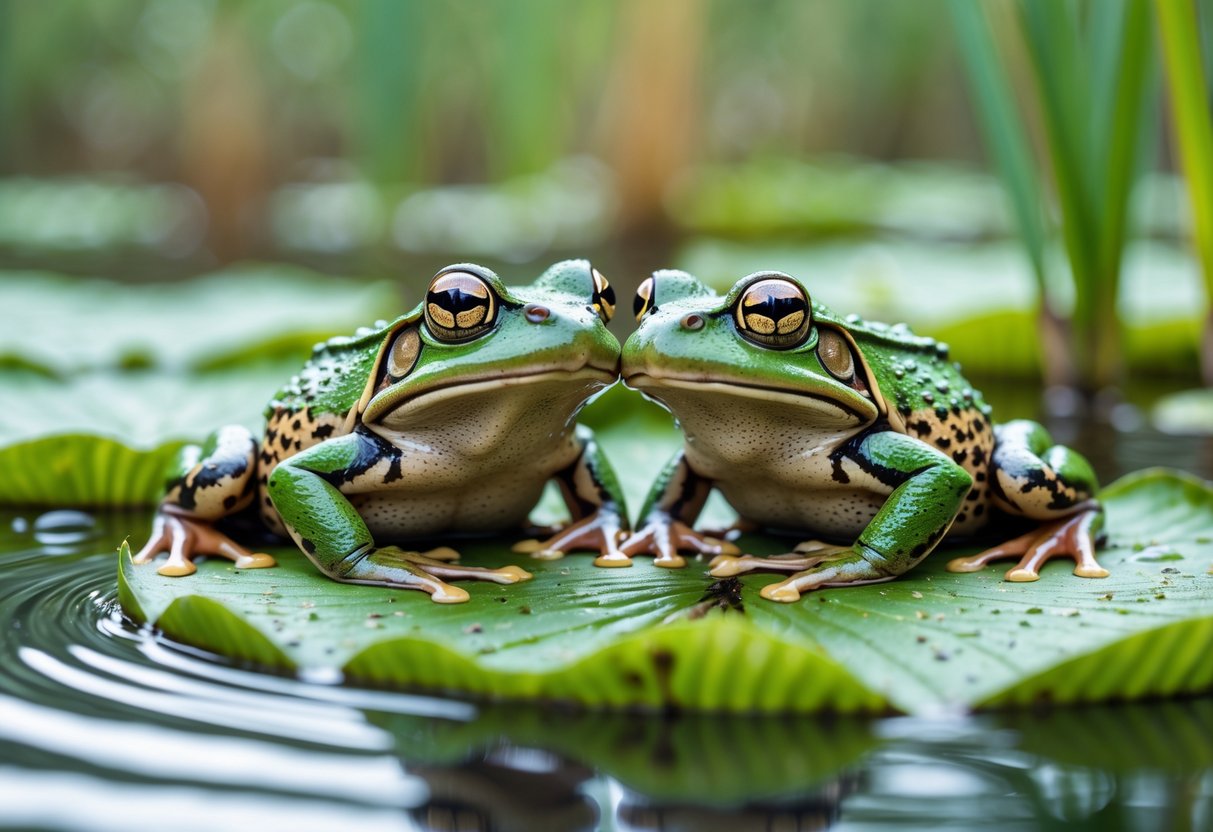
Frogs usually stick together at certain times and in specific places, depending on their breeding needs. You’ll mostly spot them in watery spots where eggs and tadpoles have a better chance to grow.
Breeding Season and Vernal Pools
During breeding season, lots of frogs gather in vernal pools. These temporary pools show up in spring after winter rains.
Vernal pools are perfect for laying eggs because they usually don’t have fish that might eat the eggs or tadpoles. Males call out from these pools to attract females.
Once a female chooses a mate, the pair often stays stuck together for hours or even days in amplexus. Since many frogs breed at the same time, you might see huge groups or choruses in these pools.
Tadpoles’ Role in Frog Congregations
You’ll probably spot groups of tadpoles hanging out in those same vernal pools or any calm freshwater spot nearby. Once the eggs hatch, the tadpoles stick together in big clusters.
They group up mostly to dodge predators and, honestly, to make finding food a bit less of a chore. Tadpoles really need clean, still water if they want to grow up strong.
These crowded patches matter a lot for their development. Once they finally turn into frogs, they head out of the water for good.
Frog and tadpole gatherings shift a lot depending on the environment. Vernal pools, in particular, give them a safe home during these important stages.
Curious about vernal pools or how frogs breed? There’s a great breakdown here: frogs and toads.


