
Let’s dive into which squirrels actually belong in British Columbia—and which ones are more recent arrivals. Only two small tree squirrels—the red squirrel and the Douglas squirrel—are truly native to B.C. The familiar eastern grey (and its black color variant) came from somewhere else and now hangs out mostly in cities.

If you’re hoping to spot these little critters, or just want to know why some get called “invasive,” this guide should help. I’ll walk you through where each species lives, what they do in forests and cities, and why it matters for wildlife in your area.
Keep reading to figure out how to tell the locals from the newcomers—and what their presence actually means for local habitats.
Native Squirrel Species in British Columbia
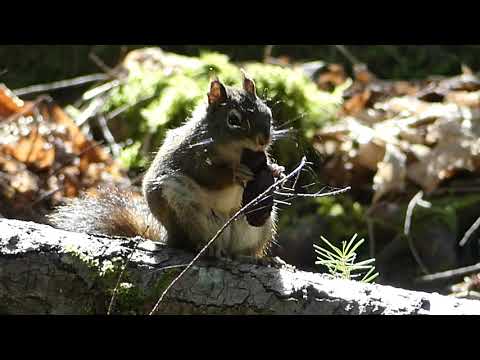
You’ll find three main native tree squirrels in B.C. They use forests and mature trees, but each one acts a bit differently.
Get familiar with their appearance, their favourite spots, and how to spot them in the wild.
Red Squirrel (Tamiasciurus hudsonicus)
Red squirrels are small, energetic little animals. Their rusty-red coats, white bellies, and bushy tails make them pretty easy to recognize.
Both males and females look the same. They’re usually about 20–25 cm from head to tail base and weigh around 200–300 grams.
You’ll find red squirrels in conifer forests, especially where there are lots of cones. They defend small territories and stash cones in piles called middens.
Listen for their sharp, chattering calls during the day. They eat seeds, cones, buds, and sometimes fungi or insects.
If you stumble on a pile of chewed cones or spot something dashing through the branches, chances are it’s a red squirrel. Scientists sometimes call them the American red squirrel.
Douglas Squirrel (Tamiasciurus douglasii)
The Douglas squirrel looks a lot like the red squirrel but is a bit smaller. Its back is more olive-brown or reddish-brown, with a yellowish or orange belly.
You’ll mostly find Douglas squirrels on B.C.’s southern coast and the nearby islands.
They stick to dense, mature conifer stands and rely on hemlock and fir cones for food. Nests show up in tree cavities or as stick nests tucked into branches.
Douglas squirrels usually stay in forests and rarely wander into city parks.
If you notice quick, low movements and hear loud alarm calls, you’ve probably found a Douglas squirrel. Their range is more limited than the red squirrel, so don’t expect to see them inland or in dry forests.
Northern Flying Squirrel (Glaucomys sabrinus)
Northern flying squirrels are night owls—you won’t see them much during the day. They’re medium-sized, with soft gray-brown fur and a flat tail.
The most unique thing? Those broad skin flaps between their front and back legs let them glide between trees.
Flying squirrels live in mature, old-growth, or mixed forests. They nest in cavities, old woodpecker holes, or leaf nests.
You might spot their nesting cavities with droppings, or hear soft squeaks after dark.
They eat fungi (especially truffles), lichens, nuts, and seeds. By spreading fungal spores, they actually help tree roots.
If you leave old trees and dead wood in place, you’re giving these squirrels a hand—and helping the whole forest, honestly.
Non-Native and Invasive Squirrel Species in BC

Let’s talk about the non-native squirrels living in BC, where they came from, and how they impact native species. Here’s what you should know about where these newcomers show up, their legal status, and the risks they pose to forests and cities.
Eastern Gray Squirrel (Sciurus carolinensis)
People brought eastern gray squirrels (Sciurus carolinensis) to BC, starting with Stanley Park in 1909 and then southern Vancouver Island in 1966.
You’ll mostly see them in cities and parks around the Lower Mainland and the Capital Regional District.
They’re bigger than native squirrels and come in grey, black, or brindle fur. Since they’re listed under Schedule C of BC’s Wildlife Act, you can trap or move them in many spots, but there are rules about how far you can take them.
Eastern grays thrive in urban areas. They eat almost anything, nest in buildings and trees, and don’t seem to mind people much.
If you find an injured one, it’s best to contact a wildlife rehabilitator instead of trying to care for it yourself. For more info on their urban spread, check out this ArcGIS storymap: https://storymaps.arcgis.com/stories/12516e3ec39c475da68e21959bd7d7b3.
Black Squirrels in BC
Black squirrels aren’t a different species—they’re just a color variant of the eastern gray squirrel. You’ll spot them in the same urban areas as their grey relatives.
Their black coats come from a genetic twist that came along when people introduced eastern gray squirrels.
Black squirrels didn’t wander into BC on their own. People probably released or moved them here.
When you see a black squirrel, consider it part of the larger eastern gray group for reporting or management.
If you want to report a sighting or learn more about their range, check out provincial outreach guides and local records here: https://www.env.gov.bc.ca/van-island/wildweb/pdf/Squirrel_FAQ_10_July_09.pdf.
Effects of Invasive Squirrels on Native Populations
Eastern gray squirrels often go head-to-head with native red and Douglas squirrels, especially in cities or chopped-up forests.
You’ll spot gray squirrels raiding bird feeders, poking around gardens, and hanging out in non-coniferous trees—places native squirrels don’t really favor.
Researchers in BC have found that urban development changes habitats and usually causes native squirrels to decline more than gray squirrels pushing them out directly.
But gray squirrels still put pressure on native populations by grabbing the same nesting spots and food in towns.
Disease risk really depends on where you are. Over in Europe, gray squirrels carry the squirrelpox virus, which is bad news for red squirrels.
So far, nobody’s reported squirrelpox in BC’s squirrel populations.
Keeping new introductions out from other places helps protect BC’s squirrels from that virus (https://spca.bc.ca/programs-services/wild-animal-programs/wildlife-coexistence/learn-about-bc-wildlife/squirrels/).


