
Ever seen a chipmunk dash out of sight and wondered where it vanished? These little guys almost always make their homes underground in burrows. They hide the entrances under rocks, bushes, or logs, and honestly, it’s pretty clever.
Those hidden spots give them shelter from predators and a safe spot to stash their food.
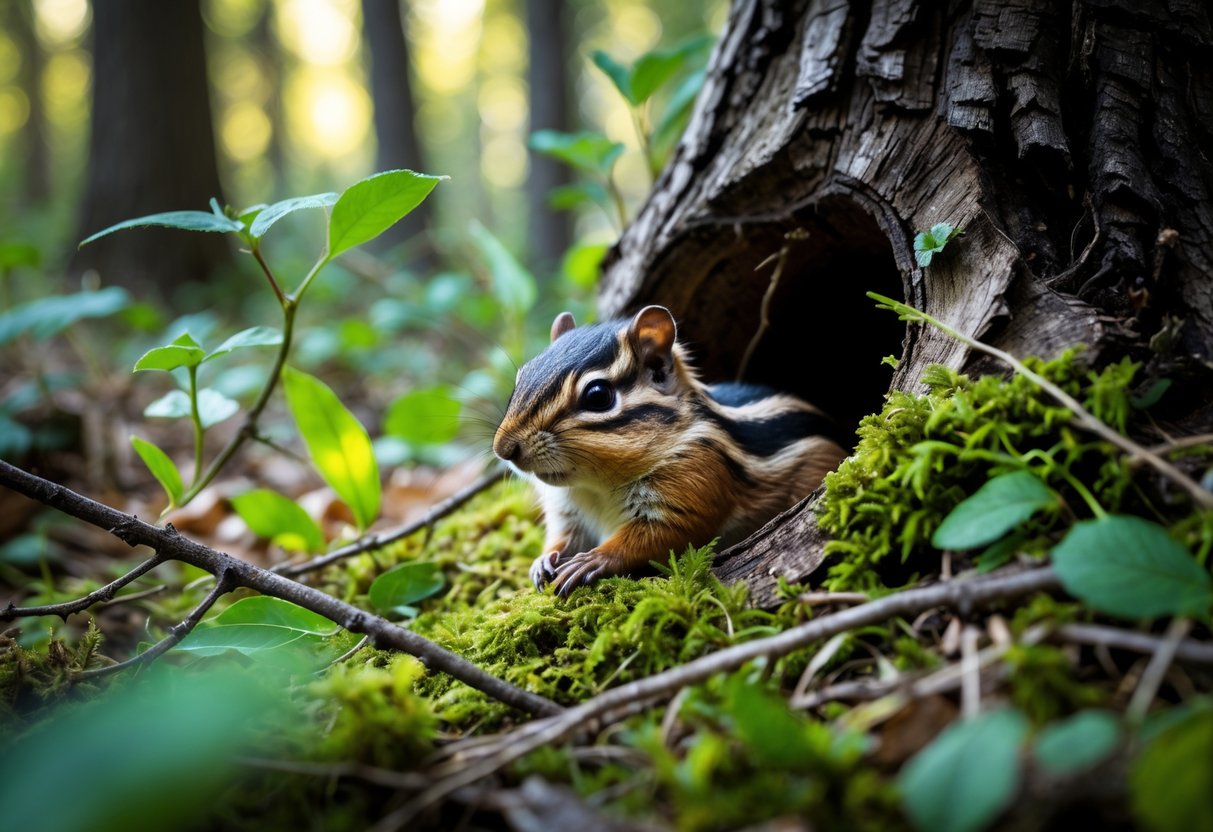
You’ll often catch chipmunks ducking into tall grass or slipping behind a woodpile in the yard. Their burrows aren’t just random holes in the ground. They dig out tunnels and create little rooms to sleep, snack, and raise their babies.
If you want to figure out chipmunk behavior or keep your garden chipmunk-free, it helps to know where they like to hide.
Curious about how they stay safe or what those burrows look like? Let’s dig into the secret life of chipmunk hideouts.
Typical Hiding Places for Chipmunks

Chipmunks pick shelter in spots that feel safe and let them store food. They love cozy, tucked-away places where they can bolt at the first sign of trouble.
You’ll spot them using both natural features and things humans leave lying around.
Underground Burrows and Tunnel Systems
Most chipmunks spend their time in underground burrows. They dig out networks of tunnels leading to different rooms.
One room works as a nest, lined with dry leaves for warmth and comfort. Other chambers become food pantries packed with seeds and nuts.
Chipmunks usually dig their tunnels alongside tree roots. Roots make digging easier and help keep the burrow from collapsing.
Some tunnels slant down to drain away water, which keeps their home dry. You might see a few entrances, some hidden or blocked to fool predators.
These burrows give chipmunks plenty of escape routes and places to hide.
Natural Hideouts: Logs, Rocks, and Dense Vegetation
During the day, chipmunks use natural cover to stay out of sight. Fallen logs, big rocks, and thick bushes make perfect hiding places.
Tall grass and piles of leaves work well, too. They let chipmunks forage and stay hidden at the same time.
You’ll often see chipmunks darting in and out of woodpiles or old stone walls. Cracks and holes in these spots are favorites for quick escapes.
Garden and Yard Structures
In backyards and gardens, chipmunks look for cluttered, shady areas. They tuck themselves under decks, around sheds, or behind flowerbeds.
These places offer shade and a quick getaway if something spooks them.
If you notice tiny holes near your plants or stone walls, chipmunks might be slipping in and out of those spots. Garden mulch and leaf piles also work as hiding places or food stashes.
Leaving out birdseed or nuts? That’s an open invitation for chipmunks to stick around.
Hidden Spaces Around the Home
Sometimes chipmunks squeeze right into houses through tiny openings. Gaps near attic vents, torn screens, or cracks in doors can all let them in.
Once inside, they hide in cluttered spots like basements or crawl spaces. You might hear scratching or spot some damage if they’ve settled in.
They always look for quiet, hidden places with easy access to food. Sealing up gaps and keeping things tidy outside can help keep chipmunks away from your home.
For more on how chipmunks sneak indoors, check out How Did Chipmunks Get in my House?
How Chipmunks Choose and Protect Their Hiding Spots

Chipmunks pick their homes with care, always thinking about safety and food. They dig out complicated underground spaces with special rooms for storage and rest.
They keep an eye out for predators and defend their territory from other animals. If you make changes in your yard—like adding a catio or doing wildlife control—it can change where chipmunks decide to hide.
Food Storage Chambers
Chipmunks stuff food into their cheek pouches and haul it to storage rooms underground. They pick dry, hidden spots for these food stashes.
Some of these storage rooms hold hundreds of seeds, nuts, or berries. You probably won’t ever see these chambers, but they’re essential for surviving winter.
If you clear away bird feeders or fallen fruit, chipmunks might move on. Their food pantries are usually deep enough underground to stay safe from other animals.
Nesting Chambers and Safety Tactics
Chipmunks line their nests with soft leaves or plant bits. They spend time keeping things tidy to avoid bugs and stay comfy.
You’ll find these nests hidden in thick shrubs, wood piles, or deep in their tunnels.
Chipmunks always watch for danger and dash back to their burrows if anything seems off. They mark their turf with scent to warn other chipmunks to stay away.
Sometimes you’ll see them chasing off intruders or making loud chip sounds when someone gets too close.
Predator Evasion and Competition
Predators like cats, hawks, snakes, and raccoons make life risky for chipmunks. They rely on quick sprints and hiding spots to stay alive.
Living near thick brush or sturdy shelters helps them escape fast.
When chipmunks share territory with outdoor cats or squirrels, things can get competitive. They guard their burrows fiercely and use alarm calls to warn others of danger.
Adding a catio might cut down on cat hunting in your yard, which could make things a bit safer for chipmunks—and your cats stay entertained, too.
Impacts of Wildlife Control and Garden Modifications
When you remove wood piles or block off burrow entrances, you change where chipmunks can hide. If you put down gravel borders or use L-shaped footers around your foundation, chipmunks have a much harder time digging new homes.
Clearing away clutter and taking away food sources can push chipmunks to leave your garden. Some gardeners set up plant-free zones or move bird feeders out of reach—both seem to cut down on chipmunk visits.
If you’re curious about more humane ways to keep chipmunks out of your yard, check What to do about chipmunks.


