
Ever spotted a chipmunk darting around your yard and wondered if it’s trying to sneak inside? Chipmunks don’t usually mean to come into your house, but sometimes they slip in by accident when they’re searching for food or a cozy spot to hide. Most of the time, they’d rather stay outdoors, but a tiny opening can let them wander into your attic or walls.
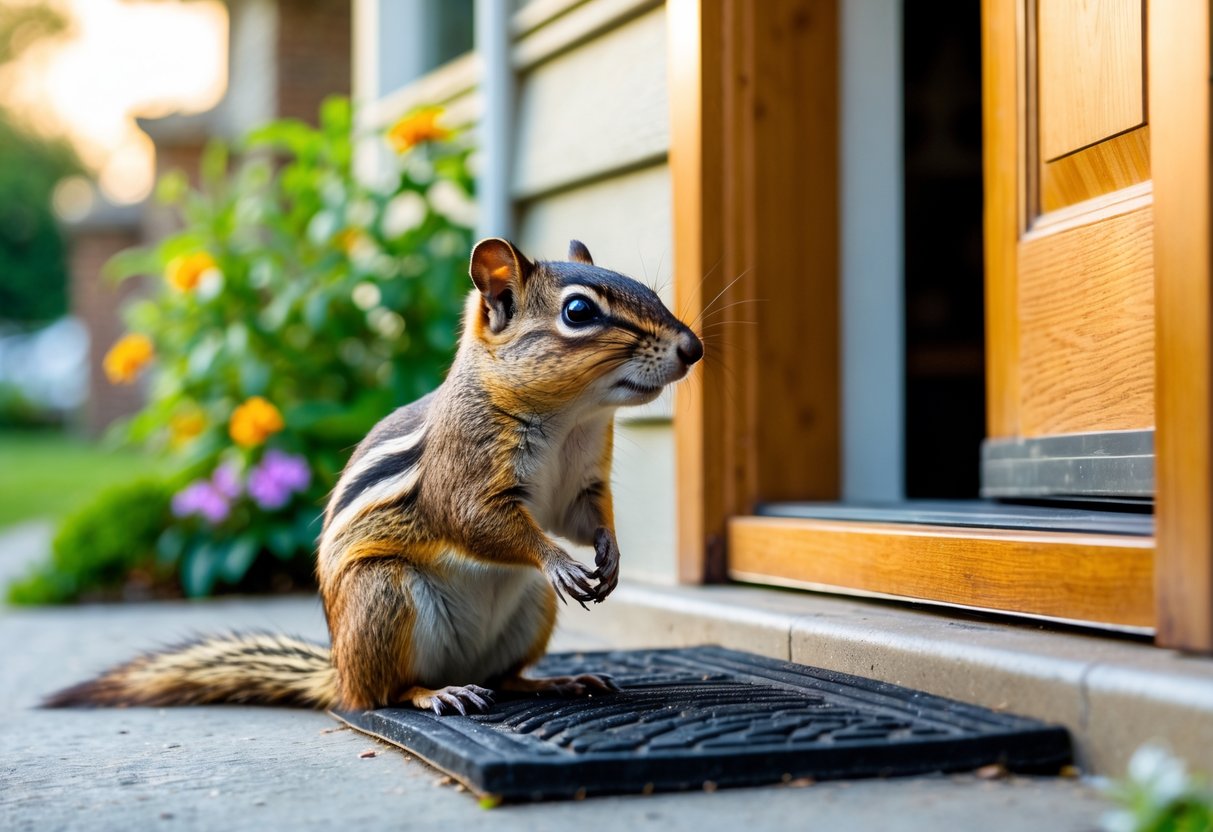
You might see chipmunks hanging out near open doors, windows, or little holes—honestly, if a space is the size of a quarter, that’s enough for them. These critters squeeze through the tiniest gaps to explore, stash snacks, or escape bad weather.
If you know this, you can spot how they might’ve gotten inside and stop them before they make a mess.
Why Chipmunks Try to Get in Your House
Chipmunks search for safe places to eat, rest, and store food. Your home gives them warmth, shelter, and sometimes easy food access.
They’re small and clever, so they find ways inside through tiny cracks or gaps.
What Attracts Chipmunks to Homes
Food grabs a chipmunk’s attention first. Bird feeders, pet food left outside, or even fallen nuts and seeds in your yard can bring them closer.
If you’ve got a garden with fruits or veggies, that’s another big draw.
When it gets cold, chipmunks look for warmth. Attics and basements turn into cozy hideouts for them.
You also make your house more inviting if you keep woodpiles or thick shrubs right up against your walls. These spots give chipmunks cover and a way to inch closer to your home.
Common Entry Points for Chipmunks
Chipmunks squeeze through tiny holes—seriously, you’d be surprised. Cracks in the foundation, gaps under doors, or busted window screens are all easy ways in.
Attic vents, open windows with no screens, and spaces around pipes or cables leading into your house also work as entry points.
They even chew on wood or softer materials to widen a gap. Sometimes, tree branches or shrubs touching your roof act like little bridges for them. Want to dig deeper? Check out this article on common entry points.
How to Identify Chipmunk Activity Indoors
If chipmunks get inside, you’ll probably hear scratching or scurrying, especially in the attic or walls.
Look for small, dark, pellet-shaped droppings near baseboards or in tucked-away corners.
You might notice chewed wires, insulation, or wood. Chipmunks have to chew to keep their teeth short.
Sometimes you’ll spot nesting material or tiny holes in the walls. If you think chipmunks are inside, act fast to stop damage. For more tips, check chipmunk activity indoors.
Effective Ways to Prevent and Get Rid of Chipmunks Indoors

You can stop chipmunks from coming inside by blocking their access and making your home less tempting. Natural methods help keep them away, and there are steps you can take if one gets in.
Honestly, pets like cats can help keep chipmunks away too.
Prevention Tips for Keeping Chipmunks Out
First, check your home’s outside for any little holes or cracks. Even a gap the size of a quarter is big enough for a chipmunk.
Seal up spaces around the roof, crawlspace, and attic with sturdy materials.
Trim tree branches and shrubs so they don’t touch your house. Chipmunks love using them as pathways.
Keep your yard free of dense ground cover or piles of debris—chipmunks love hiding in those.
Make sure window and door screens fit tight and aren’t ripped. If you use bird feeders, you might want to move them since they’re a chipmunk magnet. Learn more about chipmunk prevention.
Natural and Homemade Chipmunk Deterrents
Try some natural tricks to keep chipmunks away, no harsh chemicals needed. Sprinkle cayenne pepper or garlic powder where they hang out—those strong smells really bother them.
You can scatter human or pet hair near entrances or gardens, which tells chipmunks predators might be close. Some folks use mothballs in garages or basements, but be careful—they’re toxic to pets and kids.
Plant-free gravel borders along your house make chipmunks less likely to linger near your walls. These simple steps help keep them outside. Find more ideas on natural repellents.
Safe and Humane Chipmunk Removal
If a chipmunk makes it indoors, don’t try to corner or catch it yourself. When they get scared, chipmunks can bite or scratch.
Instead, open doors or windows to give them a clear way out.
You can set up humane live traps with bait like Cheerios or nuts. Check the traps often and release chipmunks far from your home, somewhere with natural cover.
Skip poisons or strong chemicals—they’ll hurt pets and other wildlife too. If you’d rather not deal with it, just call a professional for safe removal. See tips for humane removal.
The Role of Pets Like Cats in Chipmunk Deterrence
If you’ve got a cat, you’ll probably notice fewer chipmunks hanging around your place. Cats have those strong hunting instincts, and chipmunks definitely pick up on that—they get skittish and tend to steer clear of yards where cats roam.
Honestly, even just having cat scent around can make chipmunks rethink their visit. But let’s be real, cats can’t solve everything. Chipmunks are fast, and they climb and jump like little acrobats.
If you already have pets, it’s smart to use natural deterrents and set up some physical barriers too. Mixing these methods with a pet’s presence just gives you better odds at keeping chipmunks away.


