
Have you ever spotted a squirrel or a chipmunk darting around your yard and wondered which one’s bigger? Squirrels usually tower over chipmunks, often ending up more than twice their size. Chipmunks tend to measure about 8 to 10 inches long, while squirrels can easily hit 10 to 12 inches—or even more—without even counting that wild, bushy tail.
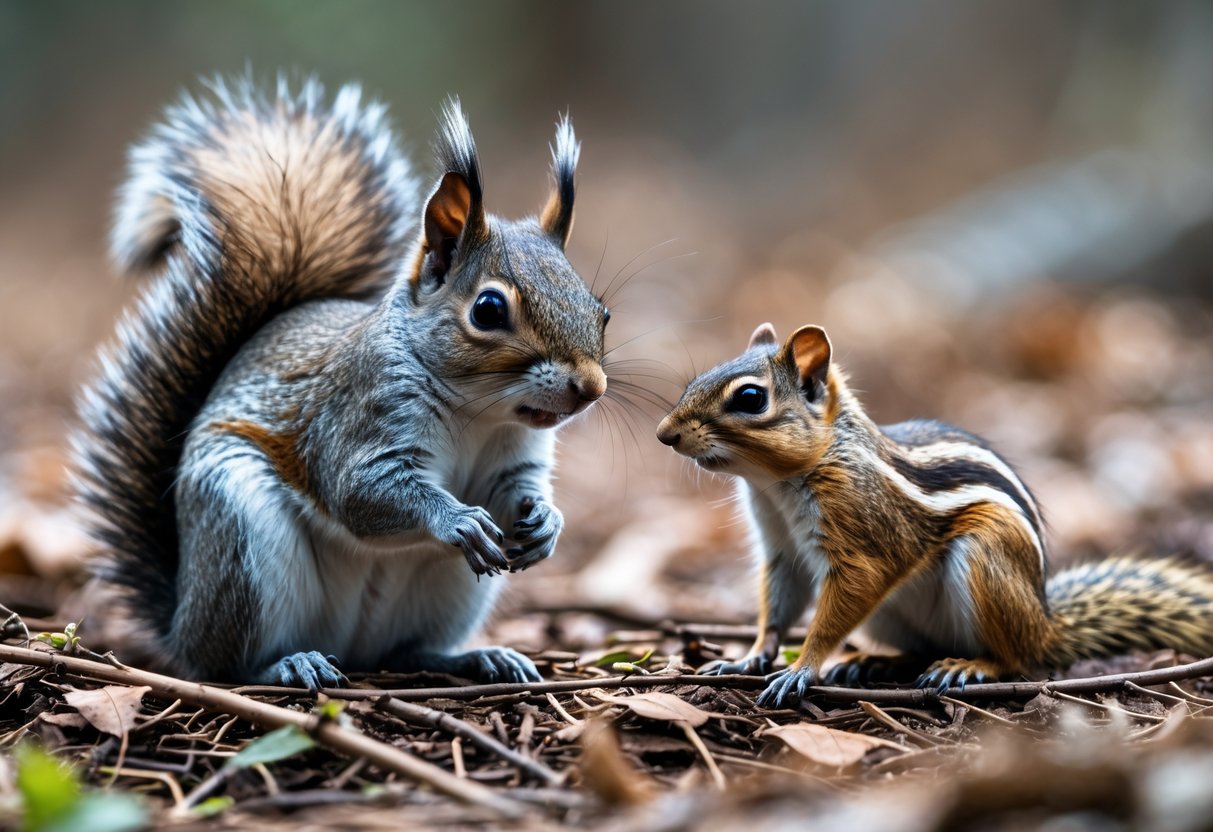
Noticing the size gap helps you tell them apart when they’re darting around. Plus, knowing a bit about their size gives you hints about their habits and what they snack on.
Let’s dig into what makes squirrels and chipmunks so different, not just in size but in a bunch of other ways too.
Squirrel vs. Chipmunk: Size and Physical Differences

Squirrels and chipmunks might seem similar at first glance, but their size, markings, and overall shape really set them apart. If you know what to look for, it’s actually pretty easy to spot which rodent you’re dealing with.
They both belong to the sciuridae family, but honestly, they look quite different when you see them side by side.
Average Size and Weight Comparison
Squirrels, like the Eastern gray squirrel (Sciurus carolinensis), usually grow much larger than chipmunks. Most squirrels measure about 18 to 20 inches from their nose to the tip of their tail. They weigh somewhere between 1 and 1.5 pounds.
Red squirrels and fox squirrels come in different sizes, but they’re still in that general range or even bigger.
Chipmunks, such as the Eastern chipmunk (Tamias striatus) or the tiny least chipmunk, stay much smaller. They usually measure 6 to 12 inches long, tail included, and rarely weigh more than a few ounces.
Because of this, chipmunks can be less than half the length of many tree squirrels, which is kind of wild if you think about it.
Distinctive Markings and Coat Patterns
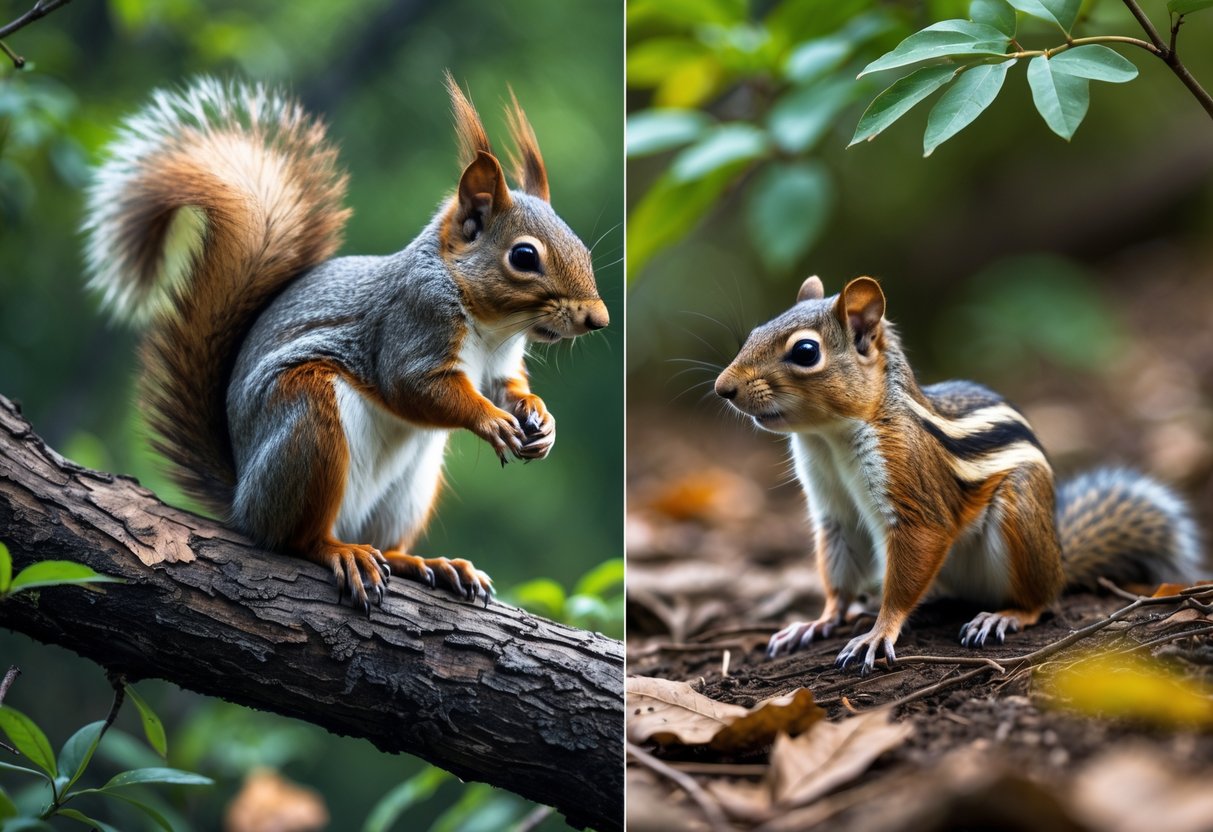
If you want an easy way to tell these critters apart, just look at their fur. Chipmunks wear bold stripes—usually five dark ones running from head to tail and lighter stripes in between.
Their bellies are pale, so those stripes stand out even more.
Squirrels, on the other hand, don’t have stripes at all. Their coats are usually pretty uniform, and the color depends on the species.
You’ll see grays, browns, reds, or even black. Eastern gray squirrels are mostly gray with some white mixed in, while red squirrels have a reddish coat without any stripes.
Tail and Body Shape Differences
Squirrels show off those big, bushy tails—sometimes almost as long as their bodies. They use those tails for balance when climbing and for warmth in the winter.
Their bodies look longer and more slender, which makes sense since they’re built for climbing trees and leaping from branch to branch.
Chipmunks have smaller, thinner tails that don’t fluff out nearly as much. Their bodies are compact and kind of round.
Unlike squirrels, chipmunks stick close to the ground and do a lot of digging. Their bodies are perfect for burrowing and darting around on the forest floor, not swinging through the trees.
That’s why you’ll usually see chipmunks scurrying low while squirrels leap overhead.
Behavior, Habitat, and Adaptations
Squirrels and chipmunks don’t just look different—they use totally different places to live and stash their food. Their habits really show how they’ve each figured out their own survival tricks.
Where Squirrels and Chipmunks Live
Squirrels mostly stick to the trees. You’ll spot them jumping from branch to branch or nesting in tree cavities and dreys, which are those messy-looking nests made out of leaves and twigs.
Chipmunks, though, are all about life on the ground. They dig burrows with several entrances, usually in wooded or brushy spots.
These tunnels keep them safe from predators and bad weather.
Squirrels can adapt pretty well to city life, sometimes even nesting in attics or city parks. Chipmunks prefer areas with thick ground cover and soft soil that’s easy to dig.
Nesting and Burrow Habits
Squirrels build dreys up in the trees or sometimes take over natural cavities. This keeps them away from ground predators.
Flying squirrels, which are just another type of tree squirrel, also use tree cavities to make their homes extra secure.
Chipmunks dig out complicated burrows underground, with separate chambers for food and sleeping. They make sure to include multiple exits so they can escape quickly if something goes wrong.
Squirrels use their nests to stay hidden above the ground, while chipmunks count on their tunnels and quick movements to stay safe down below.
Food Storage Strategies
Chipmunks use their cheek pouches to carry food. You can actually watch them stuff seeds, nuts, and even insects into those stretchy pockets before they dash back to their burrows for winter.
Squirrels, on the other hand, go for scatter hoarding. They hide food in lots of small caches above ground—sometimes in trees, sometimes under leaves.
This way, they spread out their food stash, so if a predator finds one, it won’t wipe out everything.
Both animals eat nuts, fruits, and seeds. But chipmunks add fungi and insects to their diet.
Their storage habits really show where they live: chipmunks keep their food underground, while squirrels hide theirs in spots near or above the ground.
Curious about more details? Take a look at chipmunk vs squirrel differences in behavior and habitat.


