
So, you spot a bee just sitting there on the ground. Is it in trouble, or just taking a quick break? The best thing you can do is gently check if the bee seems hurt, tired, or maybe wet, and offer a little sugar water if it looks weak. Try to be careful and gentle—nobody wants a sting, and you don’t want to hurt the little creature.
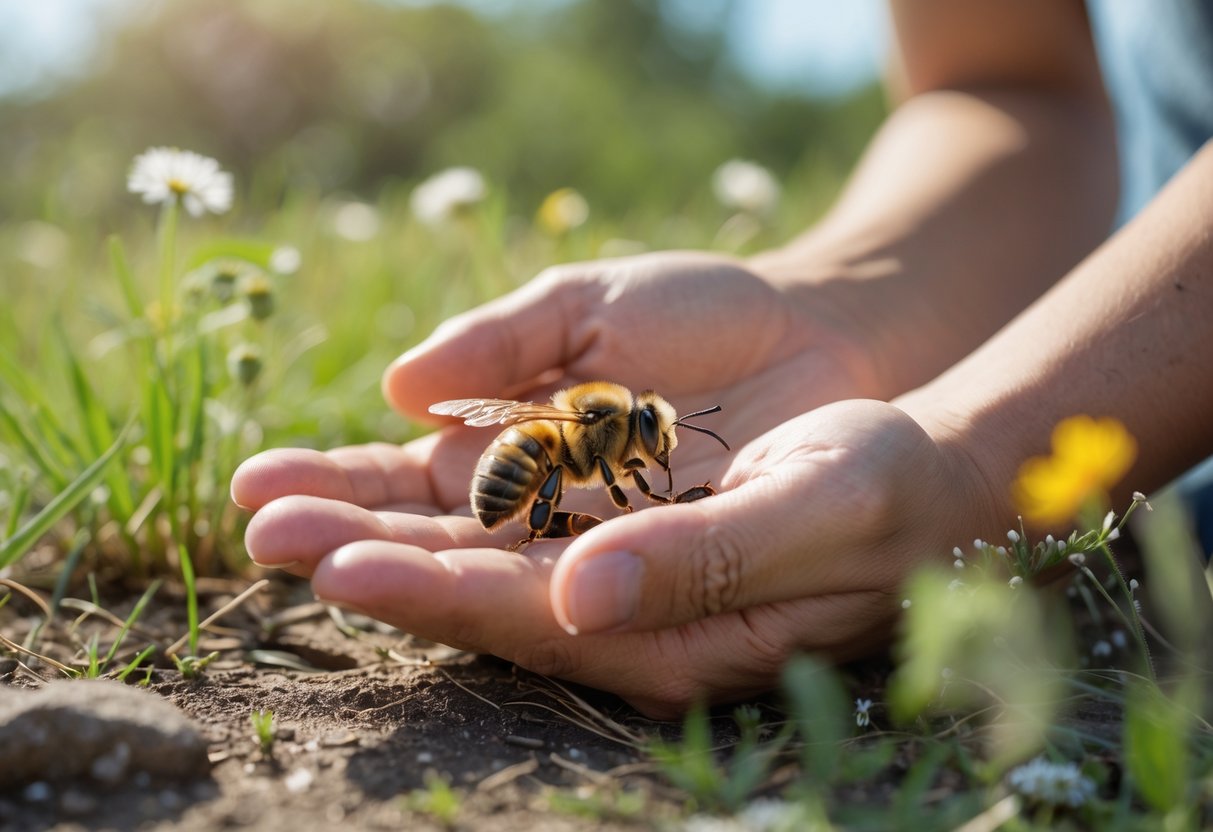
Not every bee you find on the ground needs saving. Sometimes, they’re just tired, or honestly, they might be at the end of their life. If you can tell the difference, you’ll know when to step in and when to just watch.
In this post, you’ll pick up a few simple, safe ways to help a bee if it really needs it. Sometimes, though, it’s better to just admire from a distance.
Helping even one bee feels good—bees matter a lot for flowers, plants, and our food. Let’s see how you can help next time you find a bee on the ground. If you want more info, check out what to do if you see a bee on the ground.
Steps to Take When You Find a Bee on the Ground

When you see a bee on the ground, it helps to know what to look for and how to help safely. Some bees might be tired or hurt, while others aren’t alive anymore.
Your care and caution can make a difference for both you and the bee.
Assess If the Bee Is Alive or Dead
First, just watch the bee for a bit. Do you see any movement, like twitching or maybe a little wing flap?
If the bee stays totally still for a long time, it’s probably dead. Sometimes, bees you find on the ground are just old and near the end of their life.
Ragged wings or bald spots usually mean the bee is weak or dying. Don’t spend your time trying to revive a bee that really can’t recover.
Focus on bees that move or show signs of life—they’re the ones you might be able to help.
Determine If the Bee Is in Distress
Check where the bee is hanging out. Bees in risky spots, like on sidewalks or near lots of people, could get hurt.
If the bee seems sluggish or can’t fly, it might be dehydrated or just plain tired.
A bee that crawls slowly or can’t get airborne probably needs a boost—maybe some water or sugar. Still, not every grounded bee can be saved.
Some are too sick or injured. Figuring out the difference will guide your next steps.
Safely Helping a Grounded Bee
If the bee’s alive and in danger, you can gently move it to a safer spot. Use something like a leaf, a twig, or even a piece of cloth to scoop it up.
Try not to touch the bee with your bare hands. That keeps the bee calmer, and you safer.
Put the bee near some flowers or in the grass so it can rest. If you want, offer a little water mixed with sugar—just a drop or two near its mouth is enough.
Don’t drown the bee; a few drops will do.
Important Precautions to Avoid Bee Stings
Bees usually only sting when they feel threatened. Stay calm and move slowly around them.
Avoid quick, jerky movements. Wear light-colored clothes if you can, and skip strong perfumes.
If you need to handle the bee, stick with tools like leaves or gloves. Try to avoid the bee’s head and stinger.
If you’re allergic to bee stings, it’s safer to call a professional instead of moving the bee yourself.
Understanding Bees Found on the Ground and Their Nests

Bees you see on the ground might be busy with important stuff, like building nests or collecting food. If you know what kinds of bees you might find, how to spot their nests, and why they’re on the ground, you’ll handle things more safely.
Common Bee Species You May Encounter
You’ll probably come across a few different bee species on or near the ground. Many are ground-nesting bees that live alone, not in big colonies.
Some examples:
- Mining bees dig small tunnels in soft soil.
- Digger bees are bigger and burrow in the ground too.
- Sweat bees are tiny, sometimes attracted to sweat, and they nest underground.
- Leafcutter bees make nests in the soil and use bits of leaves.
- Bumblebees—some species—nest underground, often in old rodent holes.
Most of these bees aren’t aggressive if you leave them alone. They live solo or in small groups, not in giant hives like honey bees.
How to Identify Ground-Nesting Bees and Their Nests
Look for small holes in bare or soft soil to spot ground bee nests. Sometimes, these holes are close together, other times they’re spread out.
You might notice:
- Holes about the size of a pencil, maybe smaller.
- Bees flying in and out, sometimes carrying pollen.
- Little dirt mounds at the entrance—mining and digger bees do this a lot.
Each female bee digs her own nest hole, making simple burrows underground. You can watch them from a distance, but try not to step on or mess with these spots.
Need a visual? Check out guides on how to identify ground bee nests safely.
Why Bees Might Be on the Ground
Bees end up on the ground for a few reasons. Sometimes, they’re building nests or taking care of their young.
Ground-nesting bees spend a lot of time digging tunnels and gathering food for their larvae.
You might find a bee on the ground if it’s weak, injured, or just resting. If the bee’s still moving and in a risky spot, gently moving it with a leaf or stick can help it out.
Bees don’t hang out on the ground for no reason. Usually, they’re nesting or not feeling great.
Recognizing the Difference Between Bees and Wasps
Honestly, being able to tell bees and wasps apart can save you a lot of worry. Bees and wasps don’t act the same at all.
Wasps usually look shiny, with those super narrow waists. Bees? They’ve got those fuzzy, round bodies, covered in tiny hairs.
Here are some quick pointers:
| Feature | Bees | Wasps |
|---|---|---|
| Body | Hairy, rounder | Smooth, slender |
| Behavior | Collect pollen, less aggressive | Predatory, can be more aggressive |
| Nest Location | Underground or in hives | Often in paper-like nests above ground |
| Stings per Wasp/Bee | Usually sting once (bee) | Can sting multiple times (wasp) |
If you spot a fuzzy bee on the ground, it’s probably just minding its own business—gathering food or heading to its nest. It’s not looking for trouble.
Wasps, on the other hand, can get defensive fast. They’ll stand their ground if they feel threatened.
Knowing these differences really helps you keep your cool around these insects. If you’re curious about ground-nesting bees, check out types of ground bees and their behavior.


