
Ever freeze up when a bee buzzes nearby? Yeah, you’re definitely not the only one. The big question: will standing still actually keep you safe?
Honestly, bees usually won’t sting if you just stay calm and don’t freak out with sudden moves.
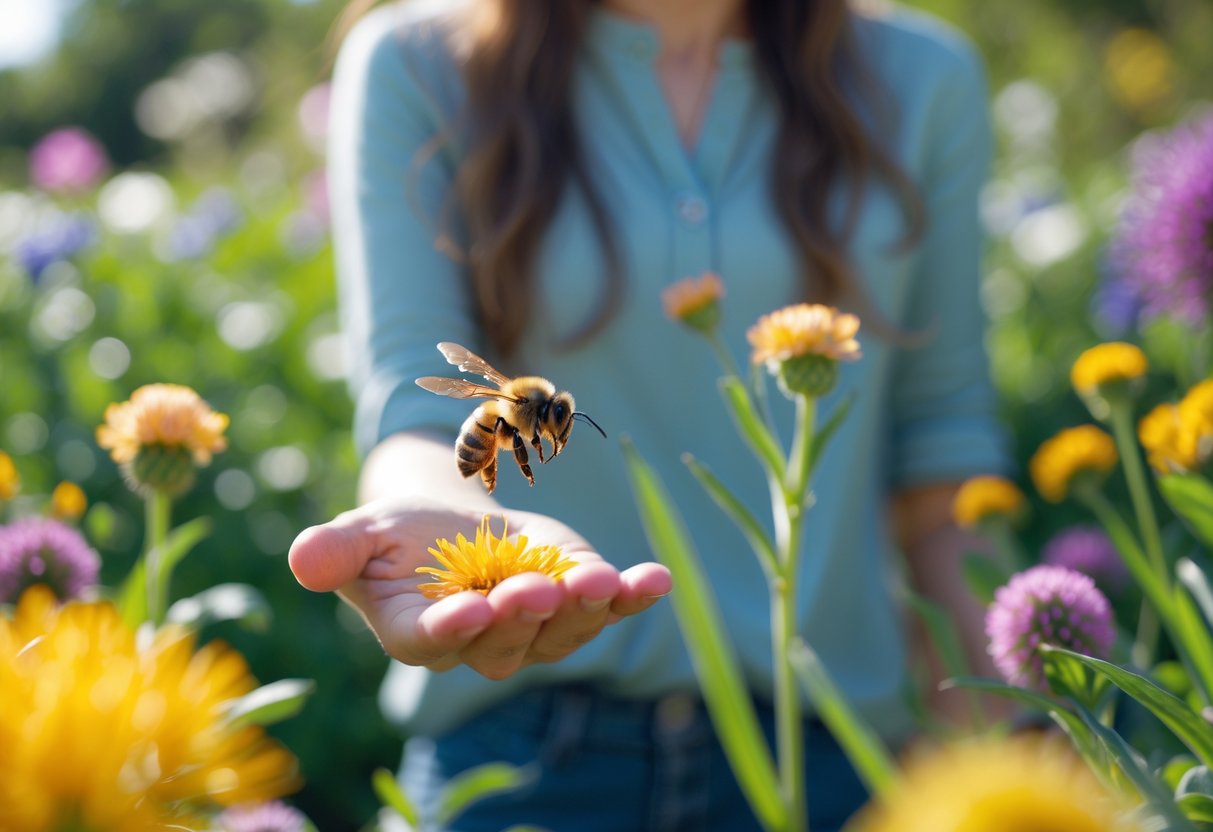
Bees notice quick movements and see them as threats. Swatting or running? That just makes them more likely to sting.
If you stay still, you’re basically telling them you’re not dangerous. Most bees will just move along and leave you alone.
Sure, if you wander too close to a hive or accidentally bump a bee, it might defend itself. But in normal, everyday situations, standing still gives you the best shot at avoiding a sting.
Will a Bee Sting Me If I Stand Still?

When a bee gets close, staying calm and knowing how bees react can really lower your chances of getting stung.
How you move makes a big difference. If a bee lands on you, what you do next matters a lot.
Impact of Movement on Bee Reactions
Bees don’t want to sting you. They’ll only do it if they feel threatened.
If you make fast or jerky moves, the bee might think you’re dangerous. Standing still makes you seem less scary.
Try to avoid swatting at bees. That usually just makes them defensive and more likely to sting.
Getting too close to a hive is a different story. Even if you stand still, a bee might sting to protect its home.
So, moving slowly and calmly helps bees feel safe around you.
Here’s what you can do to avoid bugging a bee:
- Stay calm
- Skip the fast movements
- Don’t swat or chase
- If you need to leave, do it slowly
Standing still really does help show bees you’re not a threat.
What to Do If a Bee Lands on You
If a bee lands on you, don’t panic. Quick movements or trying to flick it off could scare it into stinging.
Try gently blowing on the bee to encourage it to leave. Most of the time, bees just want a quick rest or are curious.
If you have to move the bee, do it slowly and carefully. Grabbing or swatting? Not a good idea.
Most stings happen when the bee thinks it’s in danger.
Here’s a quick step-by-step if you find a bee on you:
1. Stay still and breathe.
2. Let the bee wander off by itself.
3. If you have to, give it a gentle blow.
4. Walk away slowly once it’s gone.
Understanding these steps can help you keep your cool around bees. It also shows a bit of respect for their space.
If you want more tips for calming your nerves and staying safe, check out bee sting behavior.
Factors That Affect Bee Stinging Behavior
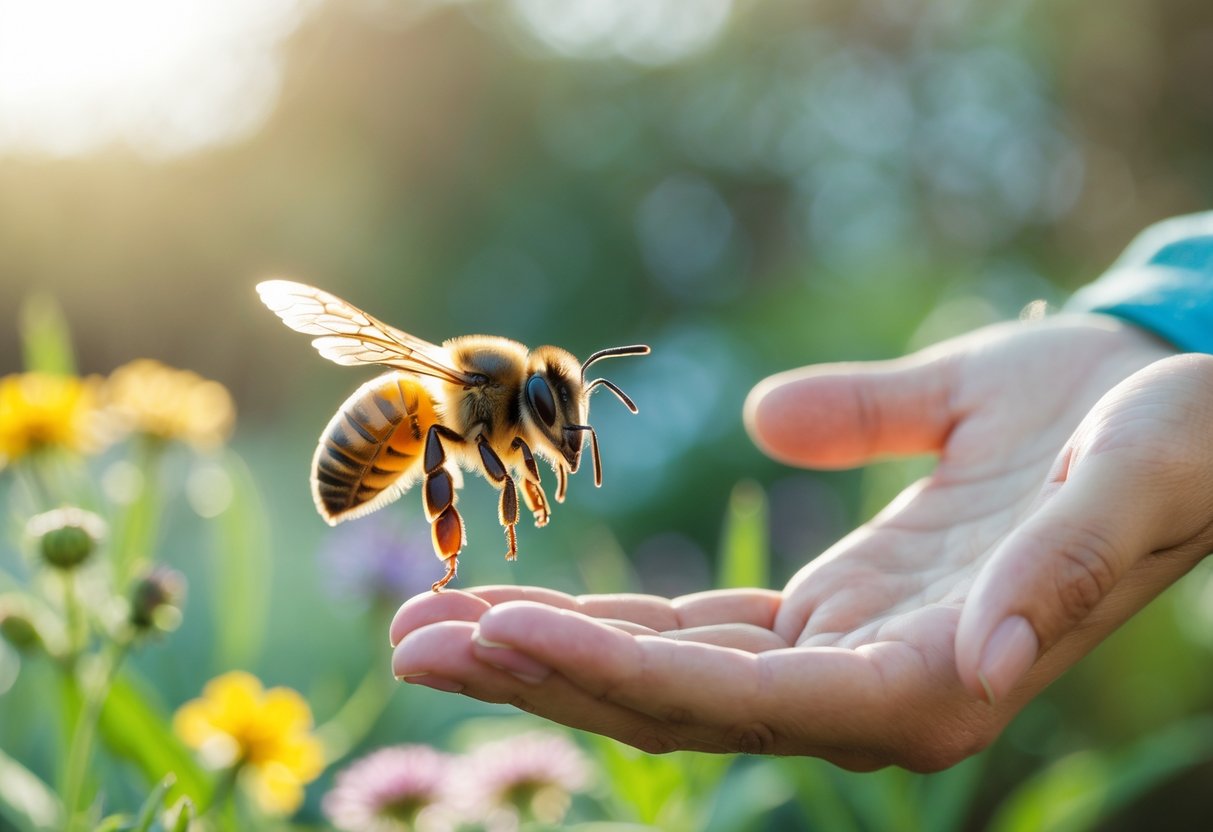
Bees and wasps react to what’s happening around them. Your smell, your clothes, and even the kind of bee nearby all play a part.
How you act during a run-in matters too.
How Scent and Color Attract Bees
Bees love certain smells and colors. Floral scents, perfumes, or sweet lotions can pull them in because they think you’re a flower.
Wearing bright colors—yellow, blue, purple—makes you stand out to bees.
If you stick to dark or plain colors, bees probably won’t notice you as much. Skipping strong fragrances also helps.
Bees are just looking for nectar, so anything sweet-smelling could get their attention.
Differences Among Bee Types: Honeybees, Carpenter Bees, and Wasps
Honeybees usually stay calm and only sting if they feel their hive is in danger. After stinging, a honeybee dies because its stinger gets stuck.
Carpenter bees look a lot like honeybees but don’t make hives. They rarely sting, unless you handle them roughly.
Wasps act more aggressively and can sting over and over. Their sting feels sharper and more painful than a honeybee’s. Wasps get defensive if you mess with their nests.
| Bee Type | Sting Behavior | Stinger Use | Aggressiveness |
|---|---|---|---|
| Honeybee | Stings if threatened | Single sting, dies | Low unless provoked |
| Carpenter Bee | Rarely stings, defensive | Single sting | Low |
| Wasp | Stings multiple times | Reusable stinger | More aggressive |
Managing Bee Encounters and Reducing Stings
If a bee comes near, try to stay still. Quick movements usually make it feel threatened.
Swatting at bees just makes things worse, and they might sting you to defend themselves. If a wasp or bee lands on you, gently brush it off—don’t slap at it.
Try not to stand right in front of hive entrances. Bees work hard to guard their home, and if you block their path, they’ll probably sting.
If you’re allergic to bee stings, you should carry an epipen just in case. It really helps to know how to handle a sting and spot symptoms early, since that can prevent bigger problems.


