
So, you spot a bee circling nearby. That uneasy feeling? Totally normal. But honestly, your best move is to take it easy and skip any sudden gestures.
If you move slowly and give the bee some space, you help it feel safe—and you’re way less likely to get stung.
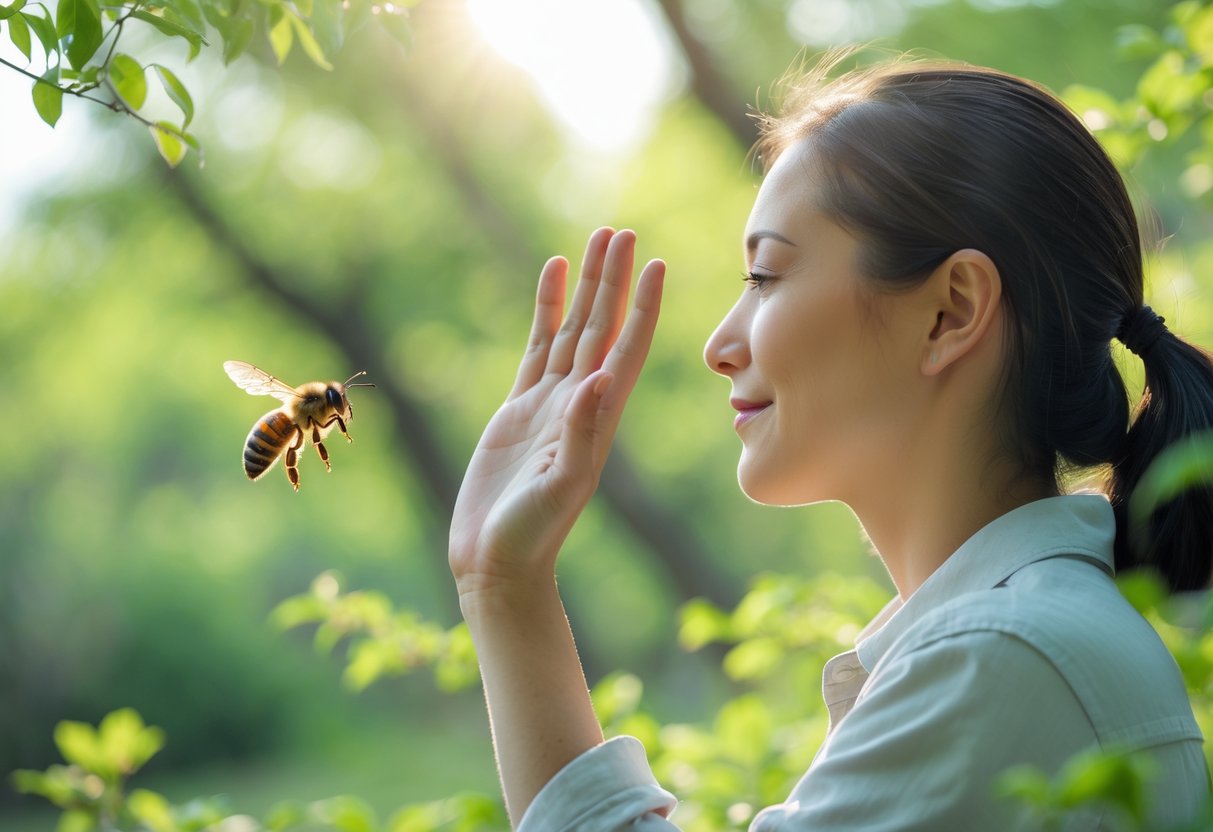
Most bees just want to check things out, not pick a fight. If you get a sense of how they act, you can avoid trouble and maybe even start to appreciate them a little more.
A few simple tricks can make your next bee encounter a lot less nerve-wracking.
Whether a bee is hovering or lands right on you, knowing how to react calmly can make all the difference.
Let’s look at some practical ways to handle it if a bee decides to fly around you.
Immediate Steps to Take When a Bee Is Flying Around You

When a bee buzzes close, how you act really matters. Try to keep your cool and avoid quick movements, so the bee doesn’t get spooked.
If you don’t swat or panic, you protect yourself and the bee.
Stay Calm and Still
First things first: take a breath and try to stay calm. Bees usually leave if you don’t freak out.
Fast breathing or jerky moves might just make them more interested—or defensive.
Keep your body relaxed and skip the frantic arm waving. If you stay still, you’re showing the bee you mean no harm.
Sometimes, the bee just loses interest and flies away once it figures out you’re not a threat.
Avoid Sudden Movements
Quick moves can freak out a bee and make stings more likely. Keep your hands and body steady.
If you need to move, do it slowly—no sudden dashes.
Bees pick up on fast changes around them. If you swat or bolt, the bee might think you’re attacking.
That just makes everything more stressful for both of you.
Slowly and Smoothly Move Away
If the bee won’t leave, just walk away gently and smoothly. Move at a calm pace to keep things chill.
Don’t take big, sudden steps or jerk your body.
Put a little distance between you and the bee, but don’t make it feel trapped.
Usually, bees are just curious or looking for flowers. If you move away calmly, they’ll probably lose interest.
Do Not Swat or Agitate the Bee
Swatting at a bee almost always backfires. Bees defend themselves if they feel threatened, so aggressive moves just raise the risk.
If a bee lands on you, try gently blowing on it or just wait it out. Don’t hit or squeeze it.
Bees would rather not sting unless they have to, so staying calm is your best bet.
For more ideas, check out what to do if a bee is flying around you.
Why Bees Are Attracted to You and How to Prevent It
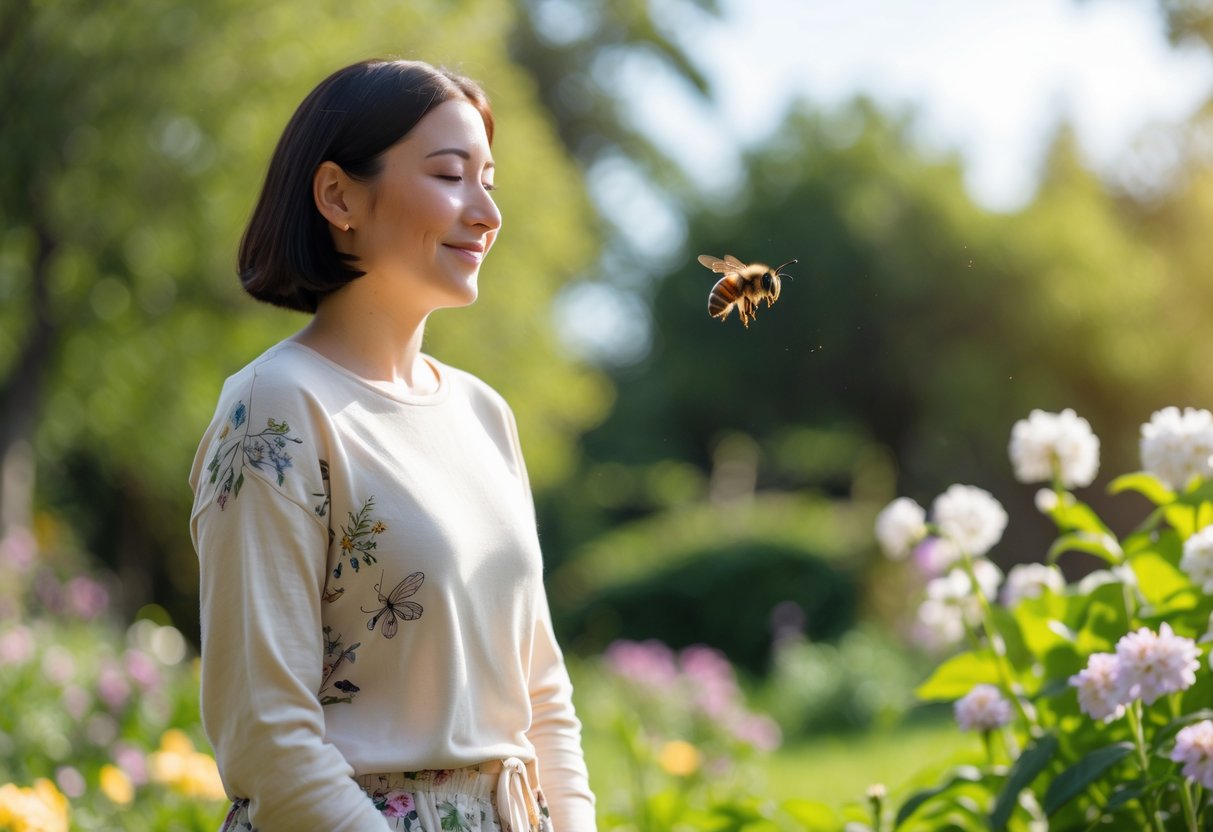
Bees get drawn to certain things on and around people. Sometimes it’s because you remind them of flowers or food.
If you know what attracts bees, you can dodge a few unwanted visits.
Attraction to Scents and Sweat
Bees have a crazy sense of smell. Floral scents from shampoo, lotion, or perfume can trick them into thinking you’re a giant flower.
If you wear strong or sweet-smelling stuff, you might notice more bees buzzing around.
Sweat can also lure in certain types, like sweat bees, since they look for salt and moisture.
Try to stay dry with antiperspirant and wear breathable clothes if you’re outside on a warm day.
Draw of Bright Colors and Patterns
Bright colors and flowery patterns grab a bee’s attention. Some bees use color to find flowers, so your shirt might look like a bloom to them.
If you want to blend in, stick with neutral or dark colors like white, grey, or brown.
Skip the floral prints if you’re hoping to avoid bees. That one simple change can make a big difference.
Food and Drinks That Lure Bees
Bees absolutely love nectar and anything sweet. If you’re snacking on sugary foods or sipping a soda outside, don’t be surprised when a bee or two shows up.
Soda, fruit juice, and sweet snacks seem to pull them in almost instantly. Honestly, it can get a little annoying.
Try to keep your food covered while you’re eating outdoors. If you spill something or drop crumbs, clean it up right away so bees don’t swarm your spot.
Using a sealed bottle or cup might spare you some unwanted attention from curious bees.
Want more tips on dodging bee attraction? Check out why bees go for certain scents, sweat, bright colors, and food at biologyinsights.com.


