
Getting stung by a bee hurts—and honestly, it can catch you off guard. If you know what to do right away, you can make things a lot less miserable.
The most important thing? Get that stinger out as fast as you can. That keeps more venom from getting into your skin.
After that, there are some easy steps you can try to calm the pain and swelling.
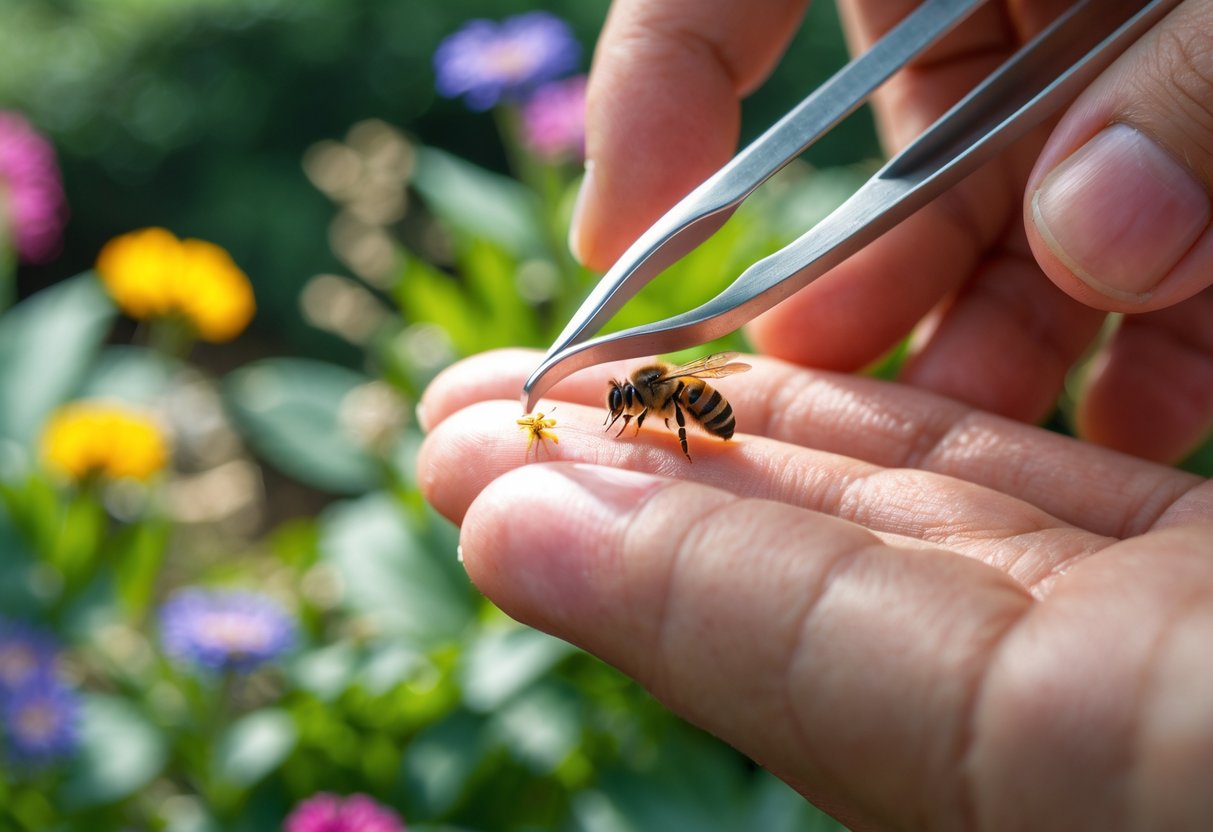
Most people only get a little sore or itchy, but you should always keep an eye out for signs of a serious allergic reaction. Acting fast makes you feel better and avoids bigger problems.
Let’s get into how you can treat a bee sting safely and without much fuss.
Immediate Steps After a Bee Sting

When a bee stings you, don’t wait around—move quickly to help with pain, swelling, and to avoid anything worse. A few simple steps can make a big difference.
Remove the Stinger Quickly
Check your skin right after the sting. Sometimes you can still see the stinger stuck there.
Bees leave their stinger behind, and it keeps pumping venom for about a minute.
Grab a credit card or something flat and gently scrape the stinger out. Try not to use tweezers, since squeezing the stinger can actually push more venom in.
If you get the stinger out fast, you’ll probably have less pain and swelling.
Clean and Soothe the Affected Area
Once the stinger’s gone, wash the spot with soap and water. That helps keep germs out.
If it hurts or itches, try a cold, damp cloth. You can also use over-the-counter creams like hydrocortisone or calamine lotion.
These help with irritation and itching.
Try not to scratch, even if it’s tempting. Scratching can make swelling worse or even cause infection.
Keep the area clean and dry while it heals.
Apply Ice to Reduce Swelling
Ice is your friend here. It can help with swelling and pain from the venom.
Wrap some ice or a cold pack in a thin cloth—don’t put it straight on your skin.
Hold it on the sting for about 10 to 15 minutes. If you need to, you can do this every hour or so.
The cold slows down inflammation and helps you feel better faster.
Skip putting ice directly on bare skin, though. That can actually hurt you.
If you want even more details, check out What Should You Do If You Get Stung By a Bee? Simple Steps To Find Relief.
How to Handle Reactions and Treat Symptoms

Bee stings can surprise you with how your body reacts. Sometimes it’s just a little pain, but other times, you need to watch for something more serious.
Pay attention to how you feel and what your body is doing. That way, you’ll know when you need stronger medicine or just some home care.
Recognize Symptoms of Anaphylaxis
Anaphylaxis is a really dangerous allergic reaction, and it can happen after a bee sting.
You might suddenly feel your throat getting tight or notice it’s hard to breathe. Wheezing is a big red flag.
Other warning signs? Dizziness, fainting, or even blacking out. Sometimes your face or lips swell up, or your skin breaks out in hives.
You could also feel sick to your stomach—nausea, vomiting, or diarrhea can all show up.
If you spot these symptoms, don’t wait around. You need emergency help right away.
When to Use an EpiPen
An EpiPen is an auto-injector that gives you a shot of epinephrine. It can stop anaphylaxis fast.
If you start having serious symptoms like a swollen throat, trouble breathing, or you feel faint, use your EpiPen immediately.
Don’t hesitate—just use it if you carry one.
After using your EpiPen, call for emergency help. You might need more care even after the shot.
If things get worse, don’t wait it out.
Over-the-Counter Medications for Relief
Most stings just cause pain or swelling, and you can usually handle these at home.
Try ibuprofen (Advil) or acetaminophen (Tylenol) for pain and swelling. Antihistamines like Benadryl or cetirizine can help with itching or mild allergic reactions.
Always follow the directions on the package.
These meds can make you feel better without a doctor, unless you notice any serious symptoms.
Home Remedies and Topical Treatments
You can try a few home remedies if you’re dealing with mild pain or swelling.
- Take out the stinger as soon as you can. That way, the venom won’t spread as much.
- Grab a cold pack and press it on the area to bring down swelling.
- Dab on calamine lotion or hydrocortisone cream if the itching or redness gets annoying.
- Keep the sting clean. You definitely don’t want an infection on top of everything else.
These steps usually make your skin feel better in the first few days after a sting.


