
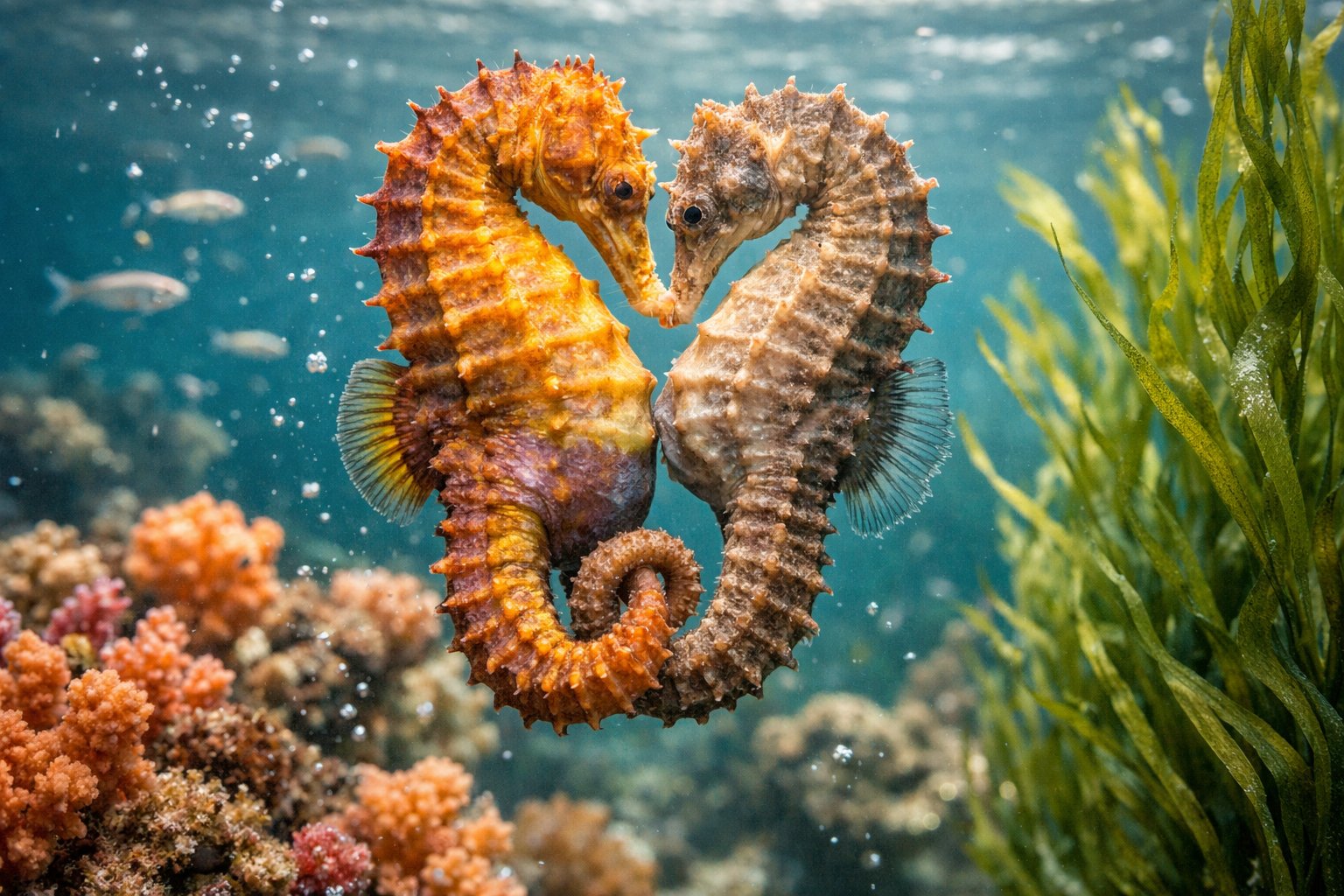
You might spot two seahorses curling together and feel like you’ve stumbled onto a secret moment beneath the waves. Seahorse mating is a careful dance—color changes, synchronized swimming, and finally, the female passes her eggs into the male’s brood pouch, where he carries and protects their young. Let’s dig into how this dance unfolds and why it matters.
We’ll walk through the step-by-step courtship, the male’s pretty wild role as egg carrier, and what scientists worry about as habitats change. Curious about the full sequence, how males give birth, and what people are doing to help these fragile fish? You’re in the right place.
The Seahorse Mating Ritual: Stages and Behaviors

You’ll notice a series of actions: partners signal they’re ready, match each other’s movements and colors, form a bond, and then the female passes her eggs into the male’s pouch.
Courtship Dance and Synchronization
You might catch two seahorses circling each other, moving in slow, tight spirals. They rise and fall together, swimming side-by-side, often entwining their tails.
These movements help both seahorses coordinate the timing for egg release and pouch readiness. Sometimes the dance lasts just a few minutes, but in some species, it can go on for days.
Daily greeting dances keep the bond strong and partners in sync during long breeding seasons. It’s almost uncanny how closely they mirror each other’s moves—maybe it’s nature’s way of lowering stress and boosting their chances.
Color Changes and Visual Displays
Seahorses flash quick color changes and flick their tiny skin flaps to communicate during courtship. You might see them brighten up, darken, or show patches and spots, especially when they’re excited or ready to mate.
The color displays can differ a lot between species and even from one seahorse to another. Sometimes, they highlight the head or tail—right where the action happens.
These visual signals work alongside the dance to make sure both seahorses are ready for the next step.
Pair Bonding and Monogamy
A lot of seahorse pairs stick together for a whole breeding season. Lined seahorses, for instance, perform daily rituals and seem to form pretty strong bonds.
Bonding saves them the hassle of starting courtship from scratch every time they mate. Monogamy happens often, but it’s not a rule—stress or a shortage of mates can change things up.
Bonded pairs often greet each other each morning with a swim. This routine keeps them on the same page for egg transfer and sometimes continues even when the male’s already pregnant.
Egg Transfer: Ovipositor and Brood Pouch
When she’s ready, the female uses her ovipositor to slide eggs right into the male’s brood pouch. You’ll see them line up so her ovipositor meets his pouch opening.
The actual transfer might take just a few seconds, but the whole dance sets the stage for that moment. Inside the pouch, the male fertilizes the eggs and starts incubating them.
His pouch provides oxygen, nutrients, and manages salinity while the embryos grow. Male pregnancy can last days or even weeks, and ends when he pushes out fully formed young.
Male Pregnancy, Birth, and Conservation

The male seahorse carries eggs in his pouch, where embryos develop, and eventually gives birth to live, tiny seahorses. Let’s look at how the pouch works, what birth looks like, and the main threats to seahorse reproduction.
Gestation and Development in the Brood Pouch
The female puts eggs directly into the male’s pouch. He fertilizes them right there and controls things like oxygen, salinity, and nutrients to help the embryos grow.
A network of capillaries in the pouch delivers oxygen and a placental-like fluid feeds the embryos. Development time depends on the species and water temperature—sometimes just 10 days, sometimes up to six weeks.
Big-bellied seahorses, for example, can carry more and larger young because their pouches hold more eggs. The male’s diet matters too; if he doesn’t get the right food, embryo growth can slow down.
Pair bonds and those daily greeting dances help boost mating success and keep timing on track.
Birth Process and Life of the Fry
When the male goes into labor, he contracts his pouch and squirts out the fry into the water. Labor might last a few minutes or stretch into hours.
A single birth can produce anywhere from a few dozen to several thousand fry, depending on the species. Newborn seahorses are tiny—about 8–10 mm—and completely formed.
They’re on their own right away, drifting as plankton at first. How well they survive depends on food like tiny copepods and on shelter, such as seagrass beds.
Some fry settle quickly near seagrass, while others float around as plankton for a bit longer. Most won’t make it—the first few days are tough, so plenty of plankton and good habitat really matter for keeping populations going.
Threats to Seahorse Reproduction
Habitat loss strips away the places males and fry need. When seagrass beds or coral get destroyed, or coastal development takes over, breeding sites and shelter vanish.
Fishing can be a double whammy: bycatch kills adults, and trawling tears up seagrass. Overharvesting for traditional medicine or the pet trade cuts down adult numbers and breaks up pairs.
Pollution and climate change mess with water temperature and plankton, which affects gestation and fry food. When adult seahorse numbers drop, you’ll see fewer successful matings and smaller broods.
If habitats aren’t protected and adults aren’t safe, local populations can crash pretty fast.
Efforts to Protect Seahorses and Their Habitats
Conservation groups and scientists are rolling up their sleeves to protect breeding seahorses and the places they call home. Project Seahorse, along with researchers like Amanda Vincent, dives deep into seahorse biology and pushes for protected areas and stronger trade rules.
Some actions that really make a difference? Setting up marine protected areas. Restoring seagrass beds. People also work on promoting sustainable fisheries so we see less bycatch.
Aquaculture programs now breed seahorse species for the pet trade, which takes some pressure off wild populations. Community outreach helps fishers learn how to avoid catching seahorses by accident.
If you want to help, consider supporting local marine reserves. Try to steer clear of products that damage seagrass habitats. Maybe take some time to learn about species like the big-bellied seahorse—honestly, they’re fascinating.
If you’re curious or want more info, check out what Project Seahorse is doing. The Institute for Seahorse Conservation also offers some solid guidance.


