
You probably picture tiny armored horses drifting in seagrass and wonder if one could ever bite you.
Seahorses don’t have teeth like other fish, so they can’t bite in a way that hurts you — their mouths work like tiny suction tubes for catching plankton and small crustaceans.
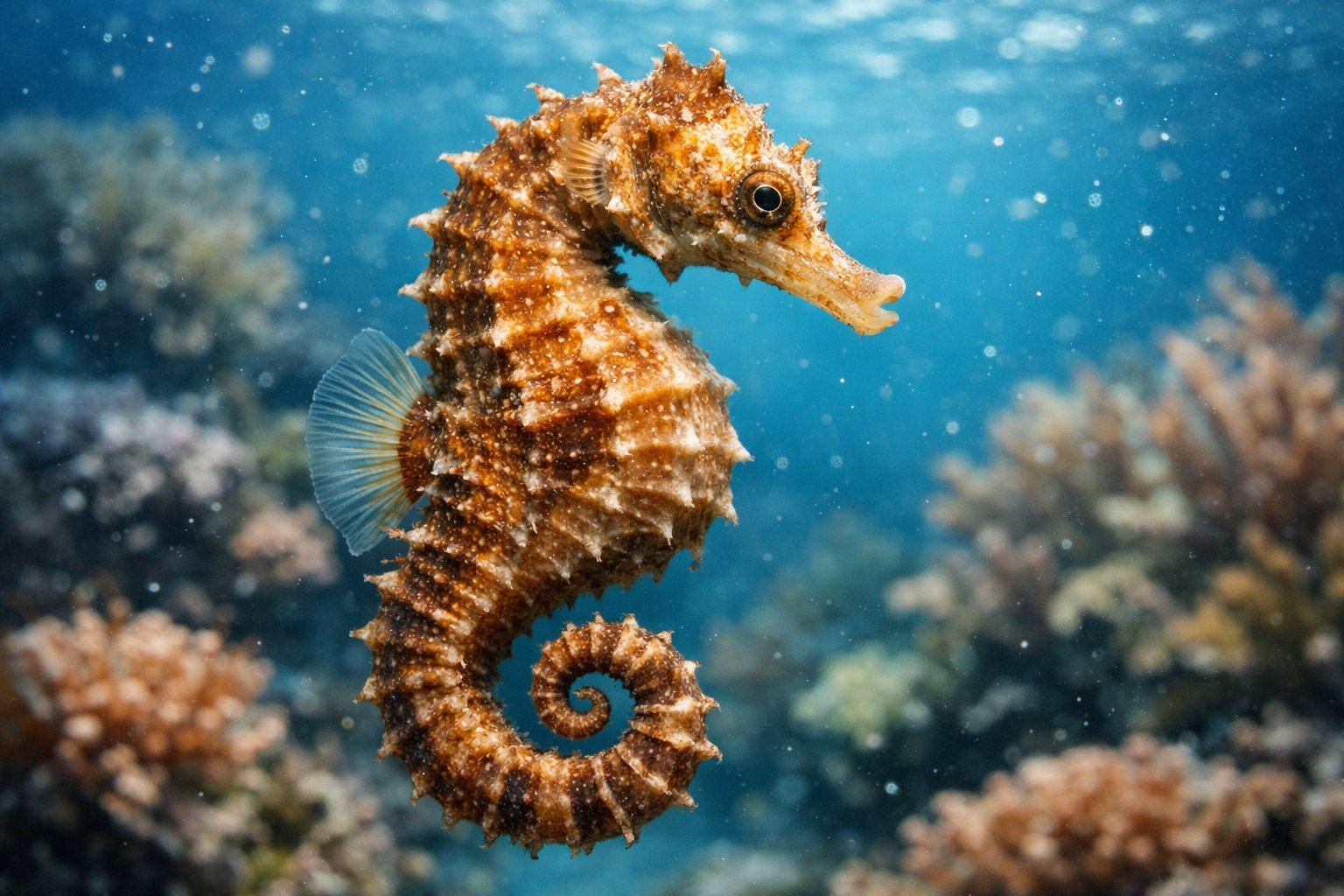
Let’s talk about how their snouts and feeding style help them grab food. “Bite” is kind of a weird word for what they do, honestly.
Their behavior and body shape create a gentle, harmless way of feeding. If you’re curious, stick around to check out the simple anatomy and habits that make seahorses unique and, well, pretty much harmless up close.
Do Seahorses Bite?

Seahorses catch tiny prey with quick mouths. They almost never use biting.
Let’s look at how their mouth works, why they use suction instead of teeth, and whether they could actually harm you.
Seahorse Feeding Mechanism
Seahorses have a long, tube-like snout with a small mouth at the tip. They wait motionless and aim their snout at copepods, amphipods, or tiny shrimp that drift close.
When prey comes near, the seahorse snaps its head forward and opens the snout to make a vacuum. This pulls water and prey right into the mouth.
They swallow food whole since they don’t have chewing teeth and their gut is pretty simple. Seahorses feed often—some species eat dozens of times a day—because their digestion works fast and they need steady, small meals.
Their body shape and camouflage let them hide while they hunt.
Suction Feeding vs. Biting
Suction feeding takes the place of biting for seahorses. They don’t have external, sharp teeth like many other fish.
Inside their mouth, you’ll find tiny bony plates that help grip prey, but they don’t cut or tear. Suction works best for tiny, soft-bodied animals.
It lets seahorses eat without chasing prey or fighting. When food is abundant, a seahorse might eat 30–50 times a day.
Sometimes you might read about a seahorse nibbling or nipping in aquarium stories, but that’s usually just gripping, not real biting. Their mouth mechanics and the size of their prey make biting unnecessary and, honestly, not very useful for them.
Are Seahorses Dangerous to Humans?
Seahorses aren’t dangerous to people. They don’t have strong jaws or venom.
If a seahorse grabs your finger, it’s just trying to hold on with its mouth or tail, not to attack you. Handling stresses seahorses and can hurt them, so it’s best not to touch.
In aquariums, people use careful nets and minimal handling to keep both you and the fish safe.
Seahorse Behavior and Adaptations

Seahorses rely on camouflage, holdfast tails, and a slow ambush style to feed and avoid danger. They use color change, grip strength, and body posture to protect themselves and interact with mates or rivals.
Defensive Strategies in Seahorses
You’ll notice seahorses depend on camouflage more than speed. Chromatophores in their skin let them shift color to match seagrass, coral, or sponges.
This color change happens over minutes to hours and makes it less likely a predator will spot them. Seahorses use their prehensile tails to cling to vegetation or reef structures.
That grip keeps them stable in currents and hides them among branches or blades of seagrass. When threatened, they might gape their snout and tilt their head to look awkward and hard to swallow.
Many seahorses freeze or drift: they stay still, then slowly sway with the water to mimic plant motion. This, plus small body spines and bony plates, helps keep predators away without a fight.
Territorial and Social Interactions
Seahorse social behavior changes by species and habitat. Some form long-term monogamous pairs and perform daily courtship dances that reinforce pair bonds.
These dances include color flashes, synchronized swimming, and gentle snout touches. Territorial displays are usually pretty mild.
Males often guard small patches of habitat where they feed and brood. When neighbors get too close, you might see posturing, brief chases, or tail-twining instead of real fighting.
These signals settle disputes quickly and keep energy use low. In crowded aquariums or poor habitats, stress goes up and social tensions rise.
It’s better not to mix very different species or aggressive tankmates to avoid injury and stress-related illness.
Biting Among Different Seahorse Species
You really don’t need to worry about seahorses biting—they just don’t have proper teeth. Most of the Syngnathidae family use their long, tube-like snouts for suction feeding instead of chewing.
So, if a seahorse “bites” you, it’s more like a soft nip or maybe just a clumsy grab. It’s not going to hurt.
Some species have a few extra dental ridges or hard plates inside their mouths. These help them hold onto tiny crustaceans.
Bigger seahorses can tackle larger prey, but they still just gulp it down whole. They don’t chew.
When people talk about seahorses grabbing fingers, it’s usually just the animal being curious or maybe a little defensive if you’re handling them. It’s not aggression.
If you plan to keep seahorses, look into what each species needs. Some act more territorial or have unique courtship habits, but biting isn’t really part of their social toolkit.
If you want to dig deeper, check out this general overview of seahorse behavior and feeding.


