
If you get stung by a bee, you might wonder if your reaction is normal. Most people see redness, swelling, pain, and itching near the sting, and these symptoms usually fade in a few days. That’s just your body handling the venom in its own way.
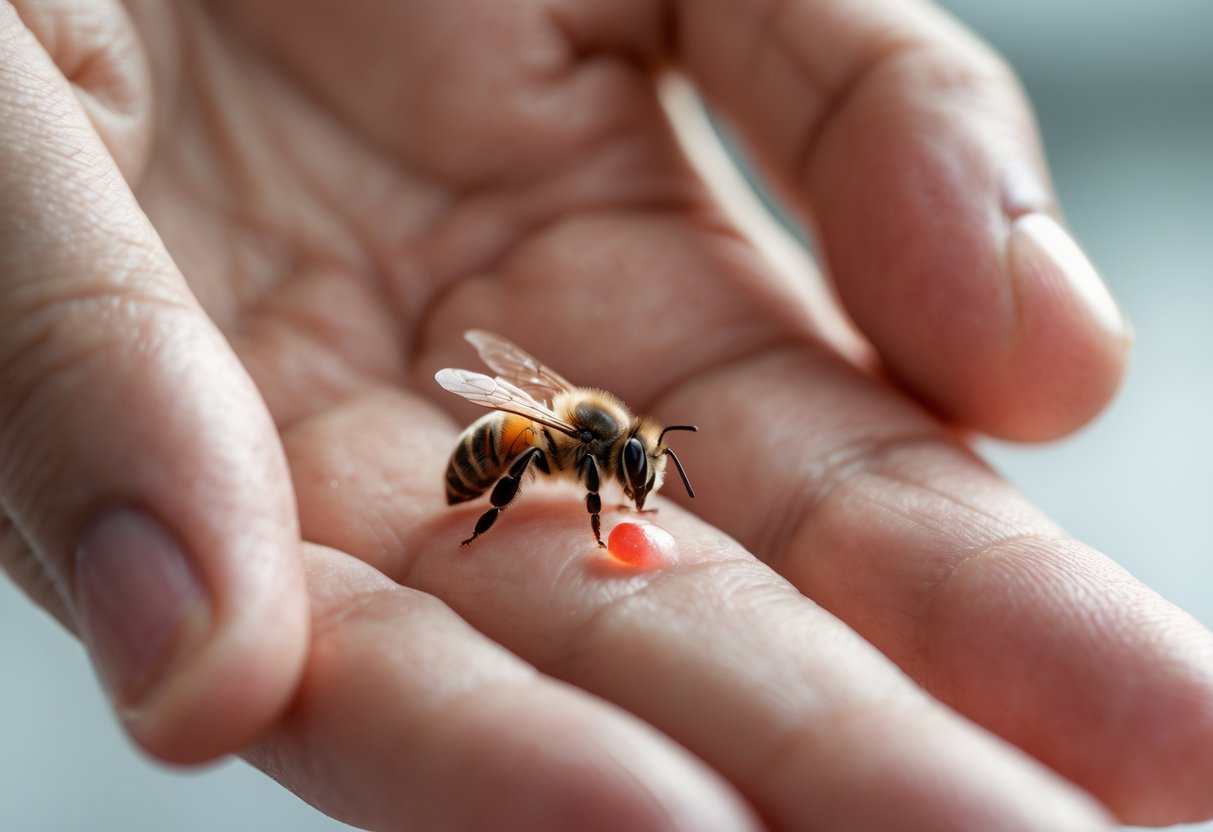
Sometimes, the swelling gets bigger than you’d expect. A sting on your finger might make your whole hand or even your arm swell up.
That looks dramatic, but it’s still within the range of a normal reaction. Knowing what’s typical can help you keep calm and figure out what to do next.
It’s smart to know the difference between a normal sting and something more serious. When you understand the usual symptoms, you’ll know when to just treat it at home and when it’s time to see a doctor.
Typical Reactions to a Bee Sting

If a bee or another stinging insect gets you, your body reacts in a few common ways. You’ll probably feel pain and see some swelling right where you got stung.
You might also notice some itching or red bumps popping up around the sting.
Local Symptoms: Pain, Redness, and Swelling
Right after a bee sting, a sharp pain usually hits the spot where the stinger went in. That pain can stick around for a few minutes, sometimes a bit longer.
The skin nearby might turn red and feel warm. Swelling usually shows up, too, and it tends to stay close to where you were stung.
For most folks, the swelling is about an inch or less. Your body is just reacting to the bee’s venom.
Itching and Hives at the Sting Site
After the first pain and swelling, itching often starts around the sting. It’s annoying, but it’s a normal sign your body’s working to get rid of the venom.
Sometimes, you’ll see little raised bumps called hives. They’re red or skin-colored and can be pretty itchy.
Most of the time, hives stay close to the sting. They show your immune system is on the job, but they don’t mean you’re having a dangerous allergy.
Variation in Swelling and Individual Responses
Swelling after a bee sting can be all over the map. Some people just get a tiny bump, while others see swelling spread up a limb—like a finger sting making the whole arm puffy.
That can catch you off guard, but it’s not unusual. Your reaction depends on how sensitive you are to bee venom, and which insect stung you.
Honeybees, yellow jackets, wasps, and hornets all pack different punches. If swelling gets huge or really painful, keep an eye on it or check in with your doctor.
Differentiating Normal and Allergic Reactions

It’s important to know the difference between a normal reaction and an allergic one. Some symptoms are mild and clear up on their own. Others can be more serious and need a doctor’s help.
Signs of Mild Allergic Reaction
A mild allergic reaction often brings on itching, redness, and swelling that spreads past the sting. You might see a rash or hives show up elsewhere on your skin.
Sometimes you’ll feel warmth or tightness near the sting, but you should still breathe normally. These symptoms usually show up within an hour.
You can use oral antihistamines to help with itching and swelling. A cold compress might also feel good.
Mild reactions aren’t life-threatening, but it’s best to keep an eye on them so they don’t get worse.
Warning Signs of Severe Allergic Response
Severe allergic reactions, or anaphylaxis, can come on fast and are dangerous. Watch for shortness of breath, wheezing, or a tight feeling in your throat or chest.
You might get dizzy or feel faint. Sometimes people throw up or have diarrhea.
If your face, lips, or tongue start to swell, that’s a big warning sign. If you have an epinephrine auto-injector like an EpiPen or Auvi-Q, use it right away.
Call for emergency help immediately if you notice any of these signs after a bee sting.
Treatment for Normal vs. Allergic Reactions and When to Seek Care
For a normal bee sting, grab a cold compress and take an over-the-counter pain reliever like ibuprofen. Clean the area to help prevent infection.
If your symptoms stay mild and local, you can usually care for it at home.
Allergic reactions need a different approach. Use antihistamines for mild symptoms, but if things get severe, you’ll need epinephrine.
Go to the ER if you have trouble breathing, a rash all over, or get dizzy. If you faint, throw up a lot, or swelling spreads really quickly, don’t wait—get medical help right away.
Testing and Diagnosis of Sting Allergy
Allergy testing helps you find out if you’ve got a bee sting allergy. During a skin prick test, the doctor scratches a tiny bit of venom onto your skin and watches for any reaction.
Sometimes, they use intradermal testing instead. Here, they inject a small dose of venom just under your skin—it’s usually more accurate.
An allergist usually handles these tests. They use the results to figure out the best treatment plan.
You might hear about allergy shots, or immunotherapy. These can help prevent dangerous reactions by slowly building up your tolerance.
If you already know you’re allergic, always keep an epinephrine auto-injector with you. It might also be a good idea to talk to an exterminator if you want to keep stinging insects away from your home.


