
You might think bees only care about flowers, but honestly, these little insects have a surprising knack for recognizing faces. Bees can remember and recognize human faces by picking up on patterns and features—even with their tiny brains. Somehow, they use this skill to navigate their world and interact with people in ways you probably wouldn’t expect.

When you spot a bee flying around, there’s a good chance it can tell one person from another. Their brains are much smaller than ours, but they use clever visual tricks to notice details.
This isn’t just about faces—they remember patterns that help them find food or avoid danger. Learning how bees do this might just change the way you look at these busy insects buzzing nearby.
If you’re curious about how bees pull off this impressive trick and why it matters, stick around. The science behind their face memory is pretty fascinating, and it might surprise you just how smart these tiny pollinators really are. For more details, you can check out how bees remember faces.
How Bees Recognize and Remember Human Faces
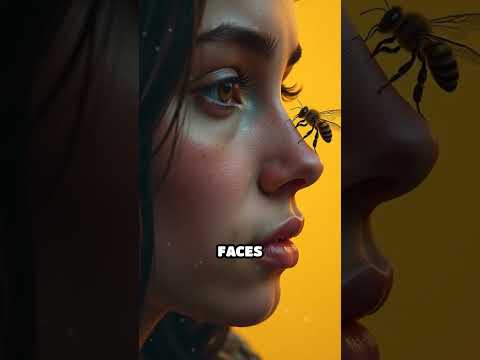
It might sound wild, but bees use their small brains to spot and remember human faces by focusing on patterns. Their way of seeing and recognizing is pretty unique, and honestly, it’s not quite like what you’d expect from other insects.
Scientific Studies on Bee Facial Recognition
Researchers have shown that honeybees can learn to recognize and recall human faces with surprising accuracy. In one well-known study from Cambridge in 2004, scientists trained bees to associate certain faces with a sugar reward.
Bees managed to tell these faces apart from others, not just simple shapes or colors. They don’t see faces exactly like we do, but they use patterns and features to remember people over several visits.
Some studies even found bees can recall faces with more than 80% accuracy. That’s honestly impressive for such tiny creatures. These findings reveal bees have more complex memory skills than most people ever guess.
Visual Processing in Bees
Bees see the world in their own way. Their compound eyes have lots of tiny lenses, which helps them detect patterns and shapes instead of fine details like the curve of your nose or the exact color of your eyes.
When bees recognize faces, they break down what they see into simple features—like the position of eyes and mouth. Your brain uses an area called the fusiform gyrus to process faces, but bees don’t have that.
Instead, they rely on their visual system to spot unique face features each time they see you. This helps them get around and interact with familiar humans, even if it’s just in a garden or at a hive.
Differences Between Bees and Wasps in Facial Recognition
Both honeybees and paper wasps can recognize faces, but they take different approaches. Wasps tend to rely more on facial patterns to identify each other in their colonies.
Bees focus on simple, repeatable patterns for memory. Wasps can tell members of their own species apart, while bees can recognize humans but usually with less detail and more through learned associations, like rewards.
These differences show how facial recognition changes based on each insect’s social needs. It’s kind of amazing how nature finds a way to make it work for everyone.
If you want to dig deeper, check out this scientific study on bee facial recognition and learn more about how bees process visual information.
Real-World Implications and Insights from Beekeeping

Bees’ ability to recognize faces actually shapes how they interact with their environment and with people. When you understand this, it helps beekeepers manage hives better and even sparks new ideas for technology.
Beekeepers’ Observations and Experiences
If you keep bees or hang around them much, you might notice they seem to tell familiar faces apart. Lots of beekeepers say their bees act differently around them than with strangers.
This ability lets bees identify their beekeeper, making hive maintenance smoother and less stressful. When bees recognize you, they often stay calmer and cooperate more during inspections.
By paying attention to your interactions, you can help strengthen this recognition. Things like wearing the same clothes or moving gently help bees remember you.
This comes straight from real beekeeping experience and just goes to show how clever these little pollinators really are.
AI and Biomimicry Inspired by Bee Cognition
Ever wondered how bees manage to recognize faces? If you’re into artificial intelligence, you might find it surprising that bees, with their tiny brains, can process visual information in such clever ways.
Researchers dig into bee cognition to help build better AI, especially for facial recognition.
Bee vision proves that even simple neural networks can tackle tough problems. I mean, nature just keeps showing us up, right? This kind of thinking has pushed engineers to design faster, more energy-efficient AI models.
These systems can spot faces or objects with a fraction of the computing power you’d expect. That means more people can use this tech without needing supercomputers.
Studying how bees learn and remember also sparks ideas in areas like security and robotics. Their knack for solving problems inspires biomimicry designs that copy nature’s smart, budget-friendly tricks.
Honestly, it’s wild how much beekeeping and AI have in common. Nature and technology really do make a pretty good team sometimes.


