
Ever watched bees buzzing around and wondered if there’s more to them than just being busy little insects? Across so many cultures and spiritual traditions, people have seen bees as messengers, almost like they’re carrying secret notes between worlds or from something higher up. A lot of folks believe bees symbolize communication, connection, and the flow of meaningful information.

If you think about it, bees really work together in amazing ways, showing off unity and purpose. Their teamwork and place in nature have inspired people to see them as signs of harmony or even spiritual messengers.
From the ancient Egyptians, who tied bees to their gods, to the belief that bees carry messages between life and the spirit world—these tiny creatures carry a lot more meaning than you might expect.
Curious about why bees have earned this reputation? There’s a long, fascinating history behind bees as messengers, and their presence might mean more than you think. If you want to dig deeper, here’s a great article on bees as messengers.
Bees as Messengers: Symbolism and Spiritual Significance
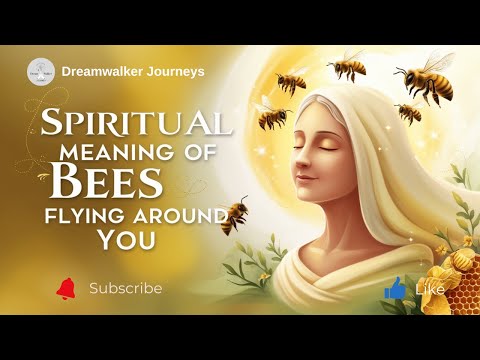
People have seen bees as special creatures that link the natural world with the spiritual one for a long time. Bees carry messages about community, order, and transformation.
They do more than just make honey. Bees have woven themselves into stories, beliefs, and rituals that highlight their deep spiritual meaning.
Divine Messengers in Ancient Civilizations
In ancient Egypt, bees had a connection to the sun god Ra. Egyptians believed bees came from Ra’s tears, which made them symbols of creation and divine order.
Bees stood for royalty and played a part in religious ceremonies. People used their honey and beeswax in sacred rituals, like making candles for temples. Bee symbolism reflected harmony between nature and the gods.
Greek mythology tied bees to gods like Zeus, Artemis, and Apollo. At Delphi, priestesses received guidance through bee-inspired dreams, making bees a symbol of divine messages.
Honey and mead, considered gifts from the gods, strengthened the idea of bees as sacred carriers of sweetness and wisdom.
The Role of Bees in Mythology and Folklore
You’ll find bees acting as messengers of the divine in many mythologies. In Norse legends, bees connect to Odin and guide people with spiritual insight and wisdom.
Celtic stories see bees as symbols of the divine feminine and community, representing nature’s balance. Native American traditions view bees as signs of communication and teamwork.
Folklore like “telling the bees” shows how people believed bees carried news between the spirit world and ours. In Maya culture, bees were sacred creatures that linked people with gods and spirits.
Spiritual Meaning of Bees in Contemporary Traditions
Even now, bees still stand for connection to the divine and spiritual growth. Many spiritual paths see bees as messengers that bring guidance, encourage hard work, and inspire loyalty.
Bees also symbolize transformation and renewal. They remind you to welcome new beginnings and seek spiritual enlightenment.
In Hinduism, bees connect to Vishnu and stand for protection and preservation. Buddhism views the bee as a sign of mindfulness and the sweetness in spiritual practice.
People still use honey and beeswax candles in ceremonies, representing light and divine presence. Bees can help you feel closer to nature and the sacred order around you.
You can read more about the divine messengers and sacred wisdom of bees.
Lessons from Bees: Community, Transformation, and Abundance

Bees have a lot to teach about working together, growing through change, and living in balance with the world. Their lives show that effort, teamwork, and nature’s rhythms all fit together to help you thrive.
Community, Cooperation, and Collective Effort
Bees live in organized communities where everyone has a job. Watching their teamwork and cooperation, you can pick up a thing or two.
Each bee works hard, whether it’s gathering nectar, caring for young, or guarding the hive. All that effort supports the whole group’s success.
A beehive feels like a model for human cooperation. Bees prove that joining forces and sharing tasks makes even tough jobs easier.
This teamwork builds a strong sense of community and helps them make honey—the sweet reward for their hard work.
If you embrace cooperation and understand your role, you can help create harmony in your own circles. Bees remind you to value every contribution and find strength in unity.
Learn more about the value of community and cooperation.
Personal Growth and Metamorphosis
Bees go through real transformation in their life cycle. You start as a larva, then change into a worker bee—a clear symbol of growth and awakening.
Just like bees take on new roles, you can grow by letting go of old habits and becoming a better version of yourself.
Their lives show that hard work and dedication can lead to real transformation. This personal growth matches a spiritual journey, where you learn to balance effort with reflection.
Like bees turning nectar into honey, you can turn your experiences into wisdom and abundance. Their example nudges you to see change as a natural, valuable part of growing.
If you’re curious about this, you might want to explore more about personal transformation.
Bees as Symbols of Abundance and Harmony with Nature
Bees make honey by transforming nectar into something sweet and nourishing. It’s kind of amazing how their effort, mixed with nature’s gifts, leads to real abundance.
They don’t just feed their hive—they help entire ecosystems thrive through pollination. When you look at bees, you might see symbols of prosperity and balance.
Their constant activity supports plants that feed both people and animals. That creates a natural balance, where everyone wins and the environment stays healthy.
Living in sync with bees nudges you to respect the world around you and your own place in it. Bees remind us to care, work together, and stay patient if we want to keep our ecosystems balanced.
Honestly, you can pick up a lot about abundance and prosperity just by watching how bees interact with their environment. Curious? Check out more about bees and abundance.


