
If you spot a red line spreading from your bee sting, don’t ignore it. A red line usually means your body’s fighting an infection or inflammation in the lymphatic vessels near the sting. Bacteria can sneak in through the sting site, and sometimes you’ll need medical care to stop things from getting worse.
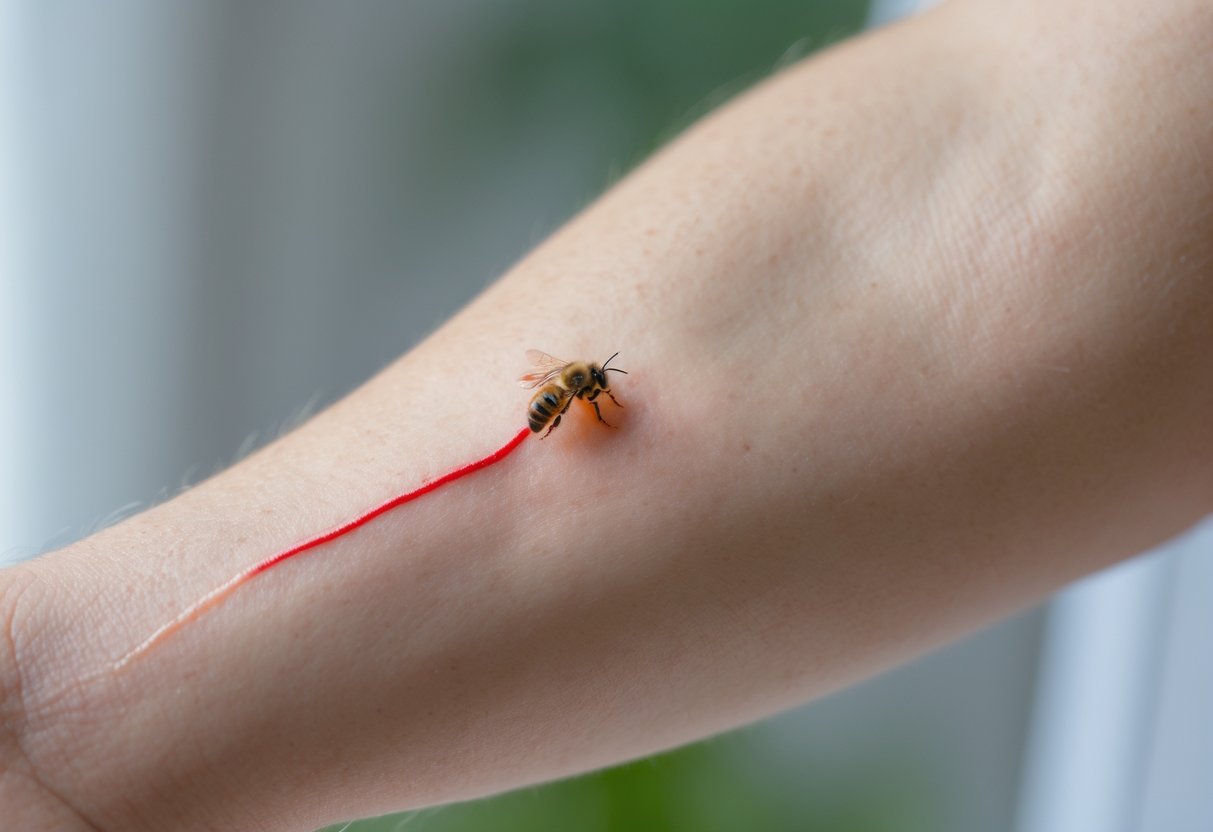
Sometimes, a red line might show up because you’re having a strong allergic reaction—which needs fast attention. It helps to know what to look out for so you can decide if you need a doctor. That way, you can keep a simple sting from turning into something more serious.
Understanding the Red Line After a Bee Sting

When you notice a red line stretching out from a bee sting, your body’s reacting in a specific way. That reaction could be normal healing, or it might signal an infection.
Knowing the difference makes it easier to figure out if you should get checked out.
What a Red Line From a Bee Sting Means
A red line running from the sting site usually shows inflammation inside your lymphatic vessels. These vessels drain fluids and help fight infections.
You’ll often see the line moving along your arm or leg, away from where you got stung.
Your immune system jumps into action to handle the injury, or sometimes bacteria slip in through the skin. If bacteria are involved, you’ll probably notice swelling, pain, or even a fever.
If you just see a small red line and you’re not feeling worse, it could be your body’s normal way of dealing with the venom.
How and Why a Red Line Forms
Bee venom’s got stuff in it that irritates your skin and tissues. When the venom gets in, your body sends white blood cells to fight it off.
You’ll get swelling, redness, and sometimes a red streak up your arm or leg.
That red line shows your lymphatic system is responding to the sting. Lymph vessels carry infection-fighting cells to the spot.
If bacteria are there, they can inflame those vessels, and the red line shows up under your skin.
Identifying Infection Versus Normal Inflammation
You’ll want to keep an eye out for other signs that tell you if it’s just inflammation or an actual infection. Here’s a quick rundown:
| Signs of Infection | Signs of Normal Inflammation |
|---|---|
| Redness and swelling that get worse | Mild, stable redness near sting site |
| Red line moving up your arm or leg | No spreading or enlargement of red line |
| Pain that keeps getting worse | Pain that slowly eases up |
| Fever or chills | No fever or body-wide symptoms |
| Warmth and tenderness around line | Slight warmth or tenderness is normal |
If you notice the red line spreading fast or you get a fever, it’s time to see a doctor. They might give you antibiotics to handle the infection before it gets serious.
A red line by itself isn’t always an emergency, but it’s smart to watch it closely. If you want more details on infection signs, check this guide on bee sting infection symptoms.
When to Worry and What to Do Next
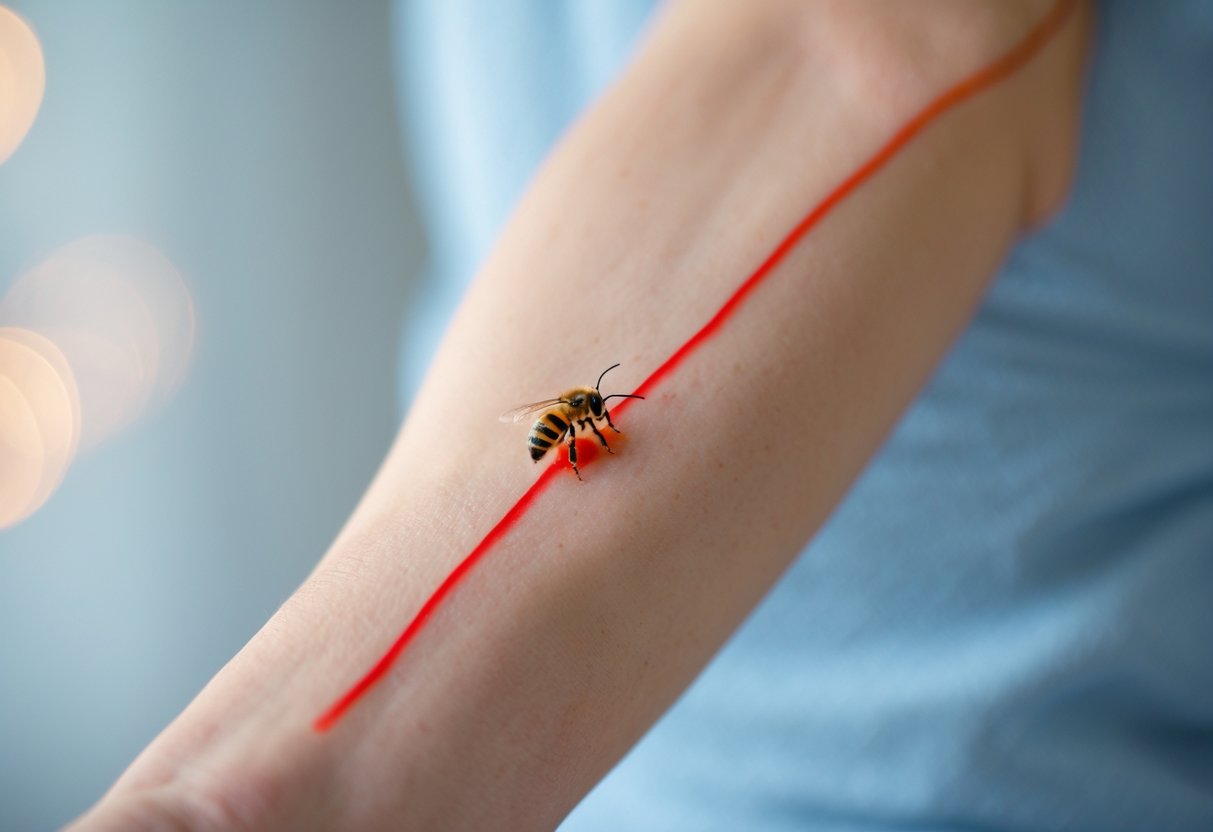
A red line near a bee sting might mean infection, or it could be an allergic reaction. Figuring out when to act fast—and how to treat the sting—can keep you out of trouble.
Signs to Seek Medical Attention
If you see a red line spreading from the sting, infection might be moving through your skin. Other warning signs: pain that ramps up, more warmth, swelling, or pus.
A fever or chills? That’s a sign to get to a doctor right away.
Watch for any signs of a severe allergic reaction (anaphylaxis). If you have trouble breathing, swelling in your face or throat, dizziness, or a racing heartbeat, that’s serious.
Use an epinephrine auto-injector (EpiPen) if you have one, and get to the ER—don’t wait.
Treatment for Infection or Severe Reactions
For mild infections, your doctor can prescribe antibiotics to stop it from spreading. Keep the sting clean—just wash it gently with soap and water.
A cold pack helps with swelling and pain.
If you’re allergic to bee stings, always carry your epinephrine injector. Use it at the first sign of anaphylaxis, then call 911 or get to the hospital.
Stings from hornets, wasps, or Africanized bees can trigger severe reactions pretty quickly.
Differences Between Stinging Insects
Not all stings work the same way. Bees usually leave a sting barb in your skin, so you’ll want to remove that carefully.
Wasps, hornets, and Africanized bees don’t always leave a sting, and they can sting you more than once.
Africanized bees? They’re more aggressive, and their stings can cause tougher reactions. If you get stung multiple times or by different insects, take it seriously and get medical help if things get worse.
Preventing Complications From Bee Stings
Try not to scratch or rub the sting area—it’s just asking for trouble with infection.
When you’re outside, throw on some closed shoes and stick with lighter colors. Bees seem to love dark clothes for some reason.
If you know you’re allergic, wear a medical alert bracelet. Always keep an EpiPen close by, just in case.
Seal up your doors and windows at home to keep insects out. Get rid of food or trash that might attract bees and wasps.
These habits really do help lower your risk of serious problems from a bee sting or that annoying red line that sometimes shows up.


