
Ever wondered if a bird could weigh as much as a small car? Well, you’re not alone. The 500-pound extinct bird you’re thinking of is the elephant bird. It once roamed Madagascar and was easily one of the largest birds to ever exist. These massive, flightless giants stood over 10 feet tall. They even laid the biggest eggs any vertebrate has ever produced.
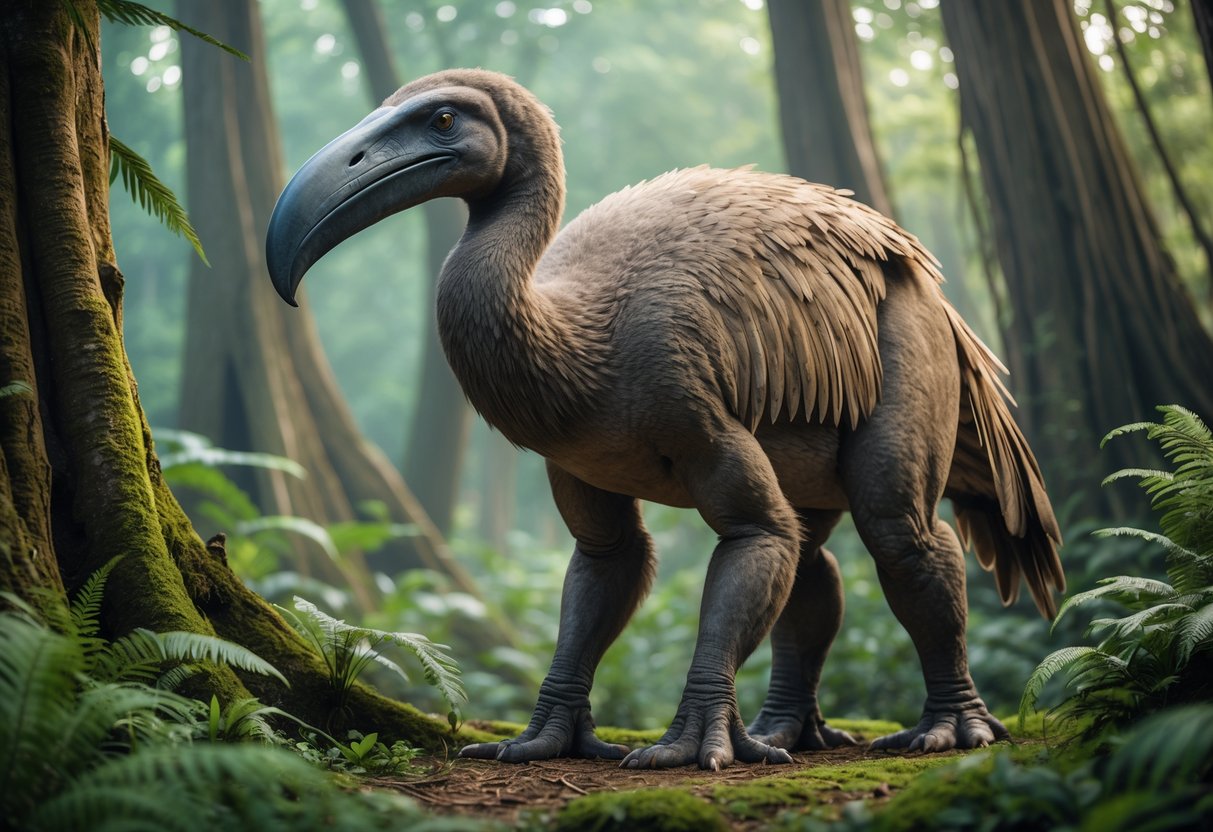
It’s pretty wild, but the elephant bird vanished only a few hundred years ago. Most experts blame human hunting and changes to their natural habitat.
These birds lived alongside early people, leaving behind huge eggshells and bones. Their remains give us amazing glimpses into a lost world.
The Genyornis newtoni: Australia’s 500-Pound Prehistoric Bird

Let’s talk about another prehistoric heavyweight: Genyornis newtoni. This bird once roamed Australia. It looked a bit like a giant goose, but even bigger and stranger.
You’ll find out how it lived, what it ate, and how it connects to today’s flightless birds—especially those like emus.
Physical Characteristics and Size
Genyornis newtoni stood about 6.5 feet tall. It tipped the scales at around 500 pounds.
Its body was strong and stocky, with thick legs meant to hold up all that weight. The wings? Tiny and useless for flying.
Researchers discovered a skull that showed off a broad, goose-like beak. This beak worked great for biting and tearing, unlike the long necks and small heads you see on emus.
Its body shape was a bit of a mix. From the neck down, you might mistake it for other big flightless birds, but the head was something else. The skull suggests it had fine control over its beak, probably helping it eat in watery places.
Habitat and Diet
Genyornis newtoni stuck close to lakes and rivers. Its skull had special features that kept water out of its ears, so it clearly spent a lot of time around water.
This bird ate mostly aquatic plants. It used its strong beak to tear leaves and fruit from plants at the water’s edge.
Picture it feeding like a massive goose, yanking up food from wetlands and shallow ponds.
The area around Lake Callabonna, where many fossils turned up, was once lush and green. But about 45,000 years ago, the climate dried out, making life tough for a bird that needed water.
Relationship to Modern Flightless Birds
You might guess Genyornis newtoni was just a super-sized emu. Not quite.
Scientists found that Genyornis is actually closer to ducks and geese than to emus or ostriches. Its skull and beak link it to the bird group called Anseriformes, which includes ducks, swans, and screamers.
So, Genyornis went its own evolutionary way, separate from emus. While emus roam dry plains and snack on plants, Genyornis liked wetlands and had a different family tree.
If you want to dig deeper, check out 500-pound prehistoric bird was a giga-goose.
Evidence, Extinction, and Human Impact

You’ll find most of what we know about these giant birds comes from fossils, eggshells, and clues about how people affected them. Scientists use all sorts of tools to date bones and shells.
Early humans probably played a big role in their extinction, mostly by hunting and stealing eggs.
Fossil Discoveries and Skull Analysis
Fossils of the elephant bird and Genyornis newtoni show us just how huge and odd these birds were. Some skulls found in Australia reveal details about their diet and lifestyle.
For instance, the skull of the so-called “thunder bird” in Australia showed off some serious jaw strength. When scientists compare these fossils to living birds like ostriches, they spot big differences in neck length and body structure.
These bones also tell us these birds couldn’t fly—they were built for running.
Gifford Miller and others have used radiocarbon dating to figure out when these birds lived and died out. That’s helped link their extinction to the arrival of humans.
Eggshell Studies and Dating Techniques
These birds laid eggs the size of cantaloupes—no exaggeration. Researchers study eggshell fragments to learn about nesting habits and when the birds disappeared.
Radiocarbon dating on eggshells lets scientists pinpoint when people started eating these eggs. The thick shells meant the birds needed serious protection for their chicks.
Burnt eggshells at ancient campsites show that early humans collected and cooked these eggs. This evidence suggests hunting for eggs put a lot of pressure on the bird populations and pushed them toward extinction.
Role of Early Humans in Extinction
Early humans showed up in places like Madagascar and Australia somewhere between 2,000 and 50,000 years ago. Once they arrived, the giant birds suddenly had to deal with new threats—hunting and habitat loss jumped to the top of the list.
People hunted these birds for meat. They also raided nests pretty often, grabbing those massive eggs whenever they could.
Humans brought along animals like dogs, cats, and pigs. These new predators went after bird eggs, making it even harder for chicks to survive.
This combination of hunting and extra competition for food really knocked down the bird populations.
Curious about how humans changed things for these birds? Take a look at studies on ancient diets and tools that link directly to the disappearance of giants like Genyornis newtoni and the elephant bird.
If you want more details, check out the ancient extinction of giant Australian birds and these burnt eggshell studies.


