
So, what’s the main idea of The Birds? It really digs into the tension between humans and nature. People suddenly face violent attacks from birds, and that shakes up the illusion that humans can always control the natural world.
It’s a story that challenges the belief that we’re always in charge.
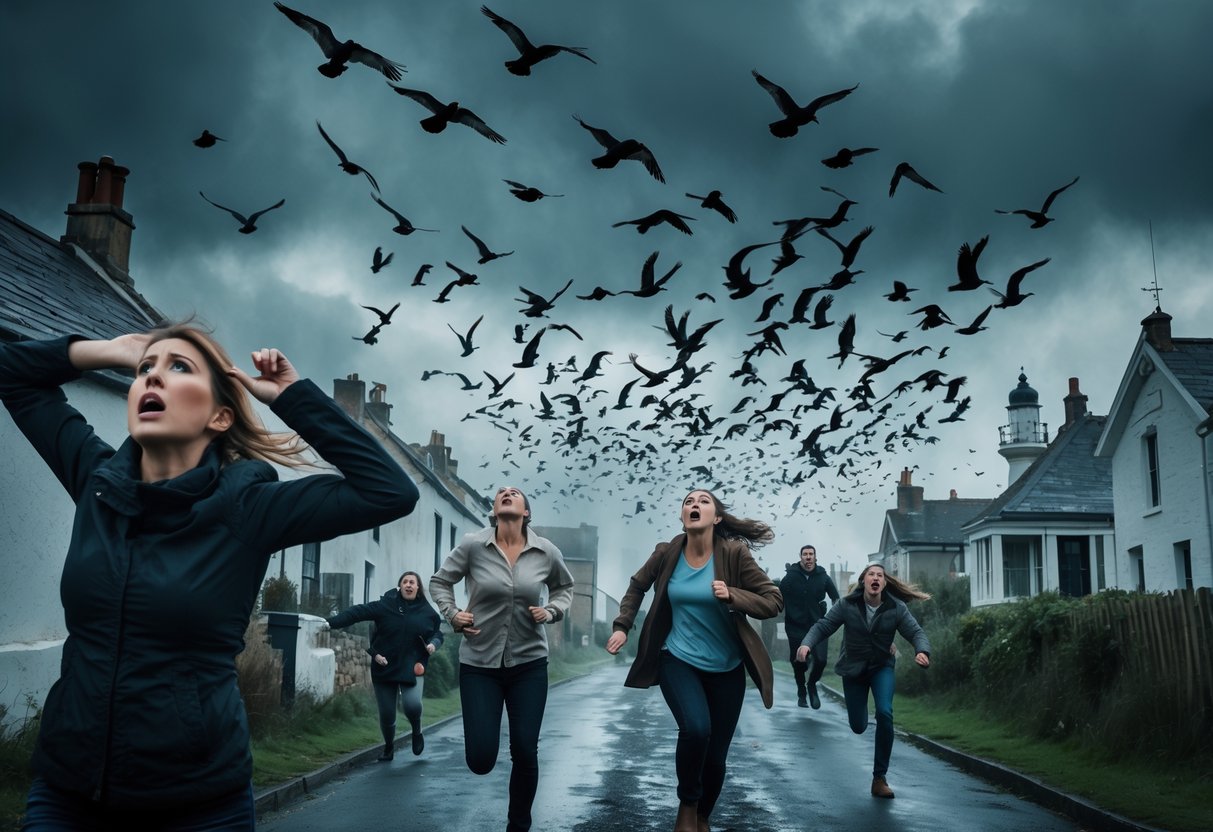
You’ll notice the story explores fear, survival, and just how limited human power can be. A simple family’s struggle puts a spotlight on how unpredictable and powerful nature becomes when it’s pushed too far.
The Birds isn’t just a scary story—it reminds us how vulnerable we really are.
These ideas connect to bigger issues like war, chaos, and human pride. Getting the main idea helps you see why this story still feels important, even now. If you want to dig deeper, check out this explanation of the man versus nature conflict in The Birds.
Core Message and Satirical Critique
The play uses humor and fantasy to poke at problems in Athenian society, the dream of a perfect world, and how power can change people. Even the best plans fall apart when human flaws show up.
Satire of Athenian Society
Aristophanes uses the birds and their city, Cloudcuckooland, to mock Athenian society during the Peloponnesian War. Citizens like Pisthetairos want out of the chaos and corruption in Athens.
He exaggerates the problems with Athenian democracy, showing how war and bad leadership drag the city down. You see how leaders promise change but often let people down.
The birds stand for both freedom and the mess that comes with it. Through this witty story, Aristophanes gets you thinking about how people and politics mix in Athens.
Absurdity of Utopian Ideals
Building a perfect city in the sky—Cloudcuckooland—sounds great, but the play shows how impossible that really is. The birds start out hopeful but soon fall into selfishness and greed.
Human nature gets in the way of any true utopia. The play laughs at the idea of running away from reality to live somewhere perfect.
Trying to build a flawless society just leads to new problems. Aristophanes nudges you to wonder if perfect places can exist without corruption finding its way in.
Political Power and Corruption
When Pisthetairos takes control of the birds, he starts acting like the leaders he once criticized. Power changes people fast, even in a world meant to be nothing like Athens.
The play warns you to be careful with leaders who use charm and tricks to get ahead. Aristophanes points out how hard it is to break the cycle of power and corruption.
He asks you to consider how democracy suffers when leaders forget their original goals. You can see echoes of this in the Peloponnesian War, where politics and war caused so much pain and confusion.
Characters, Authority, and Lasting Implications
The main characters’ actions reveal a lot about power and control. Authority in the story feels fragile, sometimes almost fake.
You’ll notice the story looks at how people relate to their gods and society, showing the tension between belief and what’s real.
Role of Pisthetairos and Euelpides
Pisthetairos and Euelpides lead the way. Pisthetairos stands out as clever and bold, always pushing the plan to build Cloudcuckooland among the birds.
He tries to outsmart the gods by tricking and bargaining with them. Euelpides, on the other hand, plays it safer and sometimes questions Pisthetairos’s wild ideas.
Their partnership highlights two different ways to chase power: one charges ahead with wit, while the other hangs back and thinks things through.
Together, they drive the story’s message about challenging old authority and dreaming up new systems of power.
Illusion of Authority and Power
The story shows that authority often rests on shaky ground. Pisthetairos acts powerful, but he relies on tricks and persuasion, not real strength.
His control only lasts as long as others believe in it. When the gods and birds lose their usual roles, the idea of power gets tested.
What looks like control turns out to be weak when unexpected forces show up. Relying too much on supposed authority can blind you to real dangers.
Even the gods or Pisthetairos don’t really have full control over nature or life. Funny how that works, isn’t it?
Relationship With the Gods and Society
The story really digs into how people connect with gods—and with society itself. Here, the gods stumble, sometimes losing their grip on both birds and humans. They aren’t always respected, or even in control.
Cloudcuckooland stands for a place that sits outside the usual rules and expectations. It pokes at what we think we know about authority, turning the normal order on its head.
You can feel the tension between gods, society, and individual characters. These characters keep trying to carve out new roles for themselves. Honestly, it’s not hard to see echoes of our own struggles to figure out who’s in charge and why. If you’re curious about how other stories tackle questions of authority, check out themes in works by du Maurier here.


