
So, you’ve just spotted a frog hopping around your living room. That’s definitely a surprise—and maybe a little weird—but it’s usually nothing to panic about.
Try to stay calm, close off the room to keep the frog from escaping, and gently guide it outside or scoop it up in a container if you can. This makes things easier for you and keeps the frog safe, too.
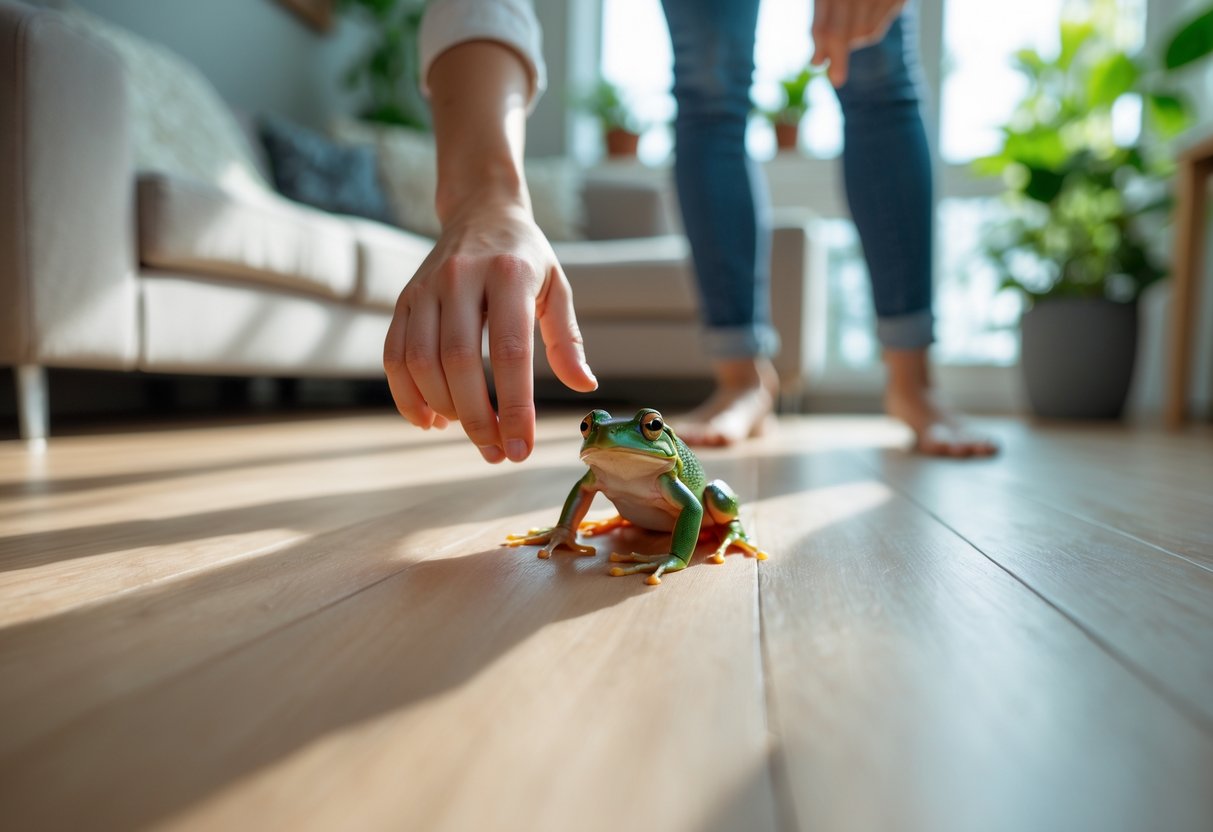
You’re probably asking yourself how it even got inside, right? Most of the time, frogs sneak in looking for moisture or chasing after bugs.
Knowing what to do next can save you a headache and make sure your pets and the frog stay unharmed.
If you feel nervous about catching it, don’t worry. There are some simple tricks that make the whole process less stressful for everyone.
Let’s walk through what actually works when you find a frog indoors.
What To Do If You Find a Frog in Your House
It’s always a bit startling to see a frog hopping across your floor. But if you handle it carefully, you’ll protect your pets and get the frog back outside without much fuss.
Safe and Humane Removal Methods
You want to get the frog out without hurting it. Start by closing doors to keep it in one area.
Move your pets out of that room, just to be safe.
If you’re feeling brave, open a door near the frog and gently encourage it to hop outside. Use a broom or stick to nudge it along—but don’t rush it. Frogs can be slow movers.
If that sounds like too much, try trapping the frog in a plastic container with air holes. Place the container over the frog, then carefully slide a piece of cardboard underneath.
Carry the container outside and let the frog go near some plants or water. That’s usually the quickest, least stressful way for both of you.
Minimizing Health Risks and Pet Safety
Frogs sometimes carry bacteria, so it’s a good idea to wash your hands after you touch one or anything it’s been on.
Keep your pets out of the room until the frog is gone. Some pets get curious and might try to play with—or even eat—the frog, which isn’t great for either of them.
Before you let the frog outside, double-check that your pets are still separated. Also, move any traps or chemicals out of the way so the frog doesn’t get hurt on its way out.
How To Tell If a Frog Is Still in the House
After you think you’ve removed the frog, you might still wonder if it’s really gone. Listen for croaking or look for movement in damp spots like bathrooms or basements—frogs love those places.
Check for entry points like gaps under doors, loose window screens, or cracks around pipes. Sealing these up keeps more frogs from sneaking in.
If you keep spotting frogs indoors, take a closer look around your house for any openings. Fixing those makes it much harder for frogs to get inside again.
For extra help, you can check out tips on finding a hidden frog in your house.
Why Frogs Enter Homes and How To Keep Them Out

Frogs wander inside when they’re searching for food, moisture, or a cool place to hang out. They squeeze through tiny openings or follow insects that gather around your house.
Figuring out where they’re getting in—and what’s attracting them—helps you keep them out in the future.
Common Entry Points for Frogs
Frogs can fit through surprisingly small spaces—sometimes less than half an inch wide. Take a look around your doors and windows for any gaps or cracks.
Check vents, holes around plumbing pipes, and spots where the foundation or walls aren’t sealed tight.
Basements and crawl spaces are especially easy for frogs to enter since they’re damp and cool. Leaving doors or screens open gives frogs an easy way in, too.
If you pay attention to these areas, you can block most of their favorite entry points.
Environmental Factors That Attract Frogs
Frogs love moisture, so puddles or damp soil near your house attract them. Nighttime lights bring in bugs, and that means hungry frogs aren’t far behind.
Your landscaping plays a role, too. Thick bushes, piles of leaves, and water features create shelter and keep things humid.
If you have lots of insects around, frogs are more likely to stick around since there’s plenty to eat.
Prevention and Long-term Solutions
First off, seal up any holes and gaps where frogs might sneak in. Add weather stripping to your doors, and if you spot a torn window screen, just fix it.
If you have basement windows, keep them closed. Make sure vents have fine mesh covers—frogs love small entry points.
Try to cut down on moisture around your home. Fix any leaky pipes or spigots, and do what you can to improve drainage. Get rid of standing water, whether it’s from bird baths or clogged gutters.
Tall grass or overgrown bushes? Trim them back. Frogs look for shady, damp places to hide, so don’t give them too many options.
If you control insects, you’ll probably see fewer frogs. Spritz some vinegar along the edges of your yard; it’s a natural repellent that won’t harm anyone. Skip sticky traps or harsh chemicals—they can hurt frogs and pets, and honestly, who wants that?
If you want more ideas, check out how frogs get in houses and how to prevent it.


