
So, a bee touches you. Honestly, it’s usually just curious or maybe needs a quick break. Most of the time, the bee isn’t aiming to sting—you just happen to be in its way, and if you stay chill, it’ll fly off soon enough. Bees don’t really want to sting; it’s risky for them too.
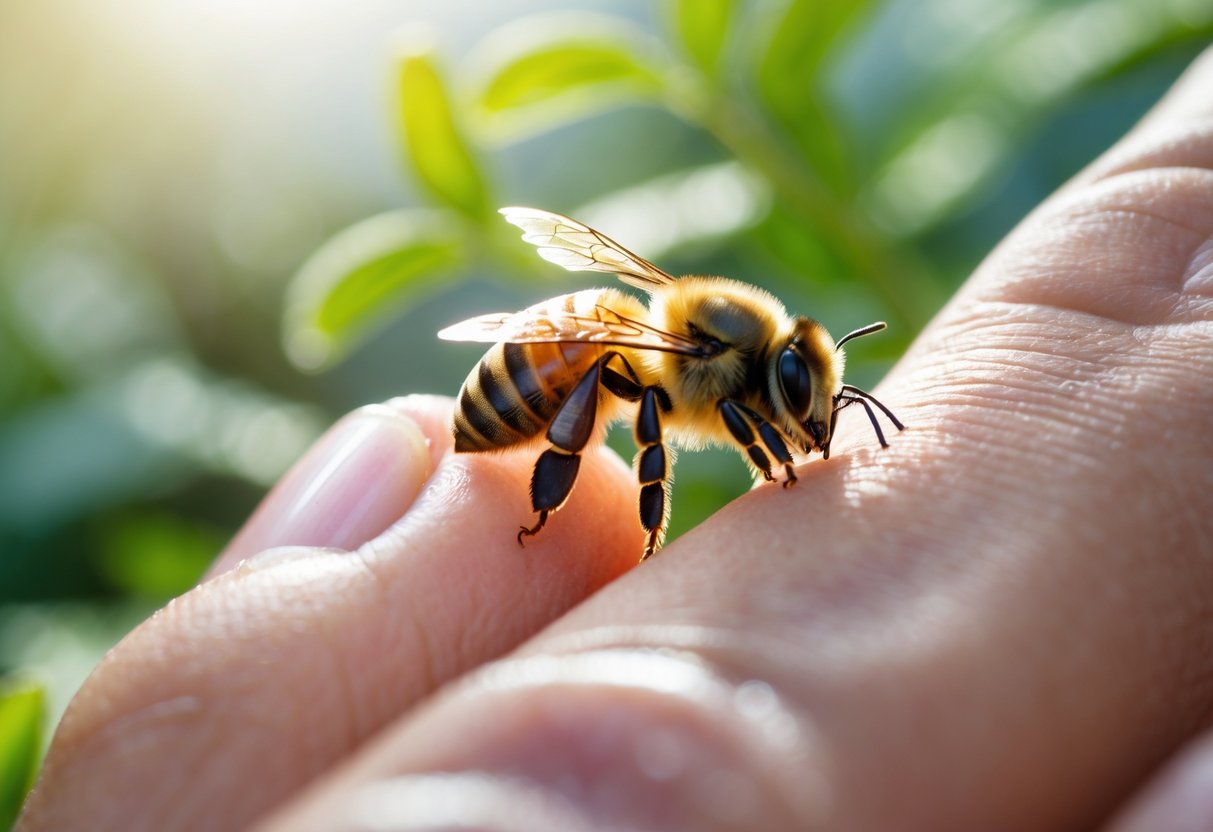
If a bee lands on your hand or shirt, it can catch you off guard. But honestly, panicking doesn’t help anyone—least of all you.
Staying calm actually helps you dodge a sting and keeps things safe for the bee, too. If you just relax, that little visitor will probably buzz off in no time.
What Happens When a Bee Touches You?

A bee touching you feels surprisingly gentle, almost curious. It’s worth knowing why bees do this and how you can keep your cool.
Bee Behavior and Reasons for Landing
Bees sometimes land on people just to check things out or sniff around for sweat or interesting scents. They poke around with their legs and antennae, just exploring.
Usually, they’re not looking for trouble. They just want to see what’s up.
Bright colors, sweet drinks, and perfumes can draw bees to you. If you’re holding a soda or wearing a floral shirt, don’t be shocked if you get a visit.
Most bees just want food or water. They aren’t out to get you.
A bee’s main goal? Gather stuff for the hive. They don’t sting unless they absolutely have to.
Immediate Reactions: Sting or No Sting
When a bee lands on you, it almost never means you’ll get stung. Bees sting if they feel cornered or scared.
If you stay calm and don’t make sudden moves, the bee will probably leave on its own. Swatting or jerking away can make it panic and sting.
If a sting does happen, you’ll feel a sharp pain, then redness and swelling. But unless you’re allergic, it’s usually not a big deal.
You can brush a bee off gently if you need to—just don’t squeeze it.
How to React Safely When Touched by a Bee
If a bee lands on you, your best move is to freeze and breathe. Swatting or jumping might freak it out and lead to a sting.
Try blowing gently on the bee or just wait it out. If you really need to move it, use a slow, soft motion—maybe with a piece of paper.
Wearing less perfume and avoiding super-bright clothes can help keep bees away. Cover your sugary drinks when you’re outside.
Learning to handle these moments calmly keeps you safe and lets the bee get back to its own business. There’s a handy guide on reacting when a bee lands on you if you want more tips.
Bee Stings: Physical and Immune Responses

If a bee stings you, it injects venom through its stinger. Your body reacts in a few different ways, from a quick sting of pain to, in rare cases, a serious allergy.
How a Bee Sting Works: Barbed Stinger and Venom
A bee’s stinger has barbs that hook right into your skin. When the bee stings, those barbs get stuck and the stinger usually stays behind after the bee leaves.
That stinger keeps pumping venom for a bit, so it’s smart to get it out fast.
The venom contains proteins that mess with your skin and immune system. You’ll feel pain, and your body gets the signal that something’s wrong.
If you remove the stinger quickly, you can limit how much venom gets in.
Body’s Response: Histamine, Pain, and Swelling
Once the venom’s in, your immune system jumps into action. It releases histamine, which makes the sting area red, swollen, and itchy.
You’ll probably feel a sharp pain since the venom irritates your nerves.
Your body sends extra blood and repair cells to the spot to help heal it. That’s why you see swelling and feel warmth there.
These are all just normal signs your body’s working to fix things.
Allergic Reactions and Anaphylaxis
Some people react more strongly to bee venom than others. Their immune systems can go into overdrive, causing symptoms that are much worse than just pain or swelling.
You might notice trouble breathing, swelling in your face or throat, or maybe your heart starts racing. That’s when things get serious.
Doctors call this severe reaction anaphylaxis. It’s a real emergency and needs fast treatment.
If you suddenly can’t catch your breath, feel dizzy, or your chest feels tight after a sting, don’t wait—get medical help immediately. Anaphylaxis can be life-threatening.
Want to know more about what happens after a sting and how your body responds? Check out What Happens When a Bee Touches You? Understanding the Buzz and Safety.


