
When you spot bees swarming around your house, they’re probably searching for a new home. Bees swarm naturally when their old hive gets too crowded or the colony wants to split up and grow.
This is just part of their life cycle. Swarming usually happens in warmer months, especially when flowers are everywhere.
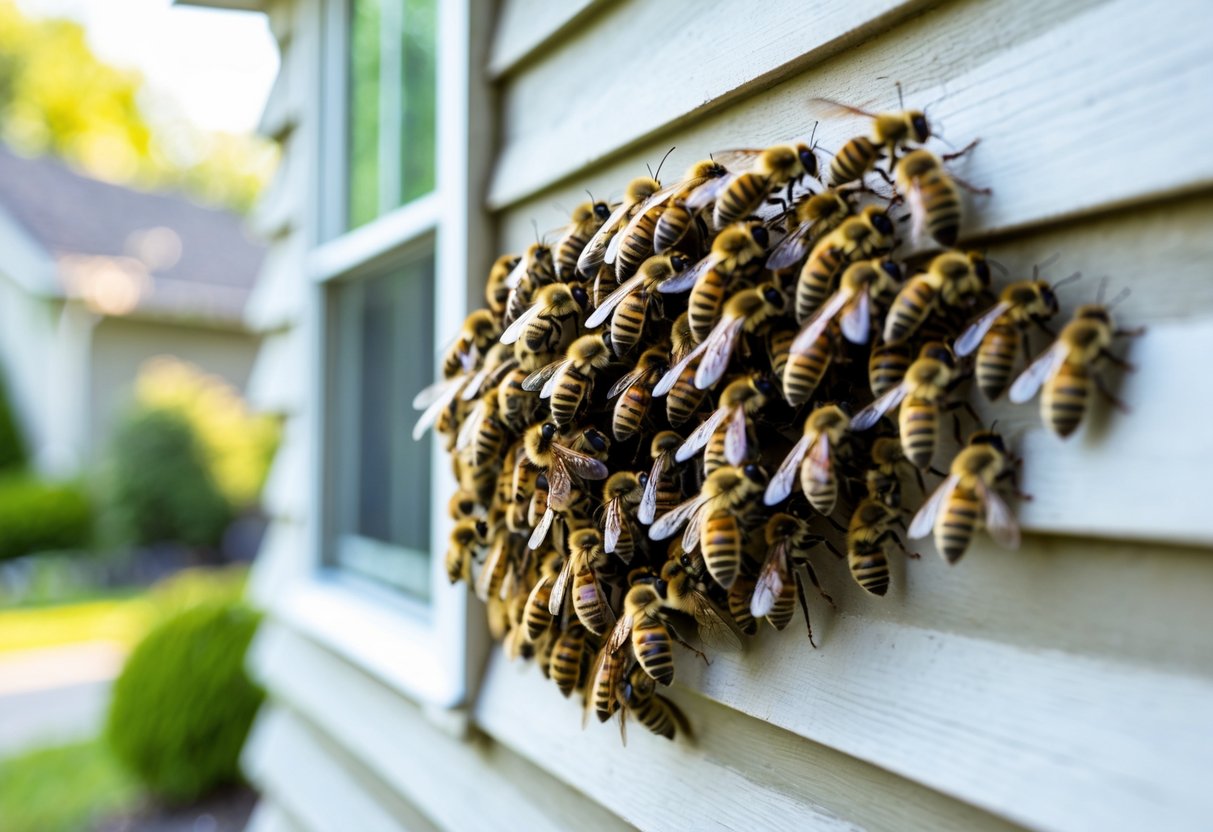
You might see a big cluster of bees flying together or taking a break on a branch or even your wall. The group includes the queen and a bunch of worker bees, all looking for a safe place to settle.
Honestly, it can look a little intimidating, but swarming bees usually don’t act aggressive. They’re focused on moving, not fighting.
If you know why bees swarm, you’ll probably feel less anxious and more prepared. Whether you want to keep them away or help them, it’s smart to understand the basics before you do anything.
For more info on bee swarming and what you can do, check out helpful tips on why bees swarm and how they find new homes.
Why Bees Swarm Around Houses

Bees swarm as part of their natural life cycle. They do this to grow and find new homes.
When you see this near your house, the bees are probably looking for a safe spot to settle.
Understanding Bee Swarming Behavior
A bee swarm happens when a big group of bees, including the queen, leaves their hive. The group clusters together for protection while searching for a new spot.
The queen hangs out in the center, and worker bees surround her. This keeps her safe.
This behavior actually helps bee colonies survive. It lets them spread out and avoid overcrowding.
When you see a swarm, the bees are usually just resting before they move on.
Common Triggers for Bee Swarms Near Your Home
Overcrowding in a hive usually triggers bees to swarm. When the hive runs out of space for honey or raising young bees, some of the colony leaves with the queen.
Sometimes pests or hive damage push them to leave. Other times, sweet smells or openings like vents attract bees to your house.
If you see bees gathering around, they’re probably searching for a new home or just taking a break.
Typical Times of Year for Bee Swarms
You’ll notice bee swarms mostly in spring and early summer. That’s when flowers bloom and food is everywhere.
Swarming happens a lot in spring because hives get crowded after winter. But if the weather’s right, swarms can show up at other times too.
If you know when swarms happen, you can stay calm and figure out if you need a beekeeper to help.
For more details on how bees look for new homes, check out this bee swarming behavior guide.
What to Do When You See Bees Swarming Around Your House

If bees swarm near your house, try to stay calm and act carefully. Keep your distance, and think about when to call for help.
Experts like beekeepers know how to handle swarms safely. Don’t try to remove the bees yourself—it’s just not worth the risk.
How to Stay Safe Around a Bee Swarm
If you spot a bee swarm, stay at least 10 feet away. Don’t touch or disturb them.
Try not to make sudden moves or loud noises, since that can make bees defensive. Wear light colors and skip strong scents like perfume or sweat, which can attract or annoy bees.
Keep kids and pets indoors until the swarm leaves or someone removes it. Swarms usually move on in a few hours or days, so patience is key.
If you get stung, clean the spot and watch for allergic reactions. If you have trouble breathing or notice swelling, get medical help right away.
When to Contact Professional Beekeepers
If a swarm hangs around your home or settles nearby, contact a professional beekeeper. They know how to remove swarms safely and won’t hurt the bees.
Beekeepers can move the swarm to a safe hive. Many do this for free or at a low cost, especially if the bees are healthy.
If you think there’s a big colony inside your walls or chimney, call a beekeeper as soon as possible to avoid damage.
How Beekeepers and Associations Help
Beekeepers and their associations play a huge role in safely handling local swarms. They use the right tools and gear to move bees without harming them.
These groups can also teach you how to prevent future swarms around your place. Sometimes they’ll share tips about diseases like the varroa mite, which can hurt bee colonies.
Getting help from local beekeepers not only keeps you safe but also supports healthy bee populations nearby.
Risks of DIY Bee Removal
If you try to remove a bee swarm by yourself, you might end up with painful stings or even damage parts of your house. Most people don’t have the right gear or enough know-how, so they usually just make the bees angrier.
When folks attempt DIY removal, they often hurt the bees or scatter the swarm. That usually just makes things harder to handle later.
Some sprays or pesticides that claim to kill bees? They’re actually illegal, and honestly, they do more harm to the environment than you might think.


