
Ever wondered if it’s okay to touch a bee? You’re definitely not alone there. Bees are honestly fascinating to watch, but a lot of us worry about getting stung or accidentally hurting them.
Honestly, it’s usually not a great idea to touch bees, since it can make them feel threatened and, well, you might get stung.
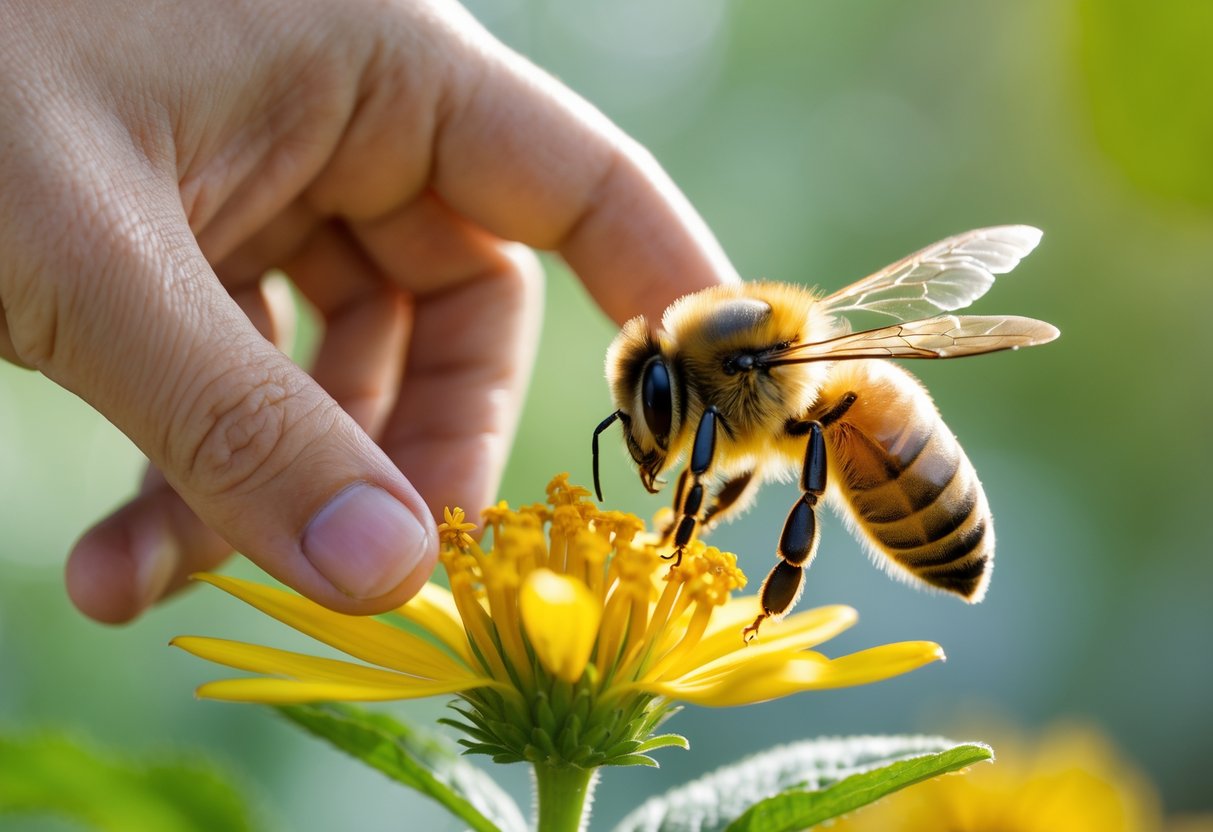
Still, sometimes you might need to handle a bee—maybe to help it out or move it. In those cases, using gentle tools or knowing which bees can’t sting really helps.
If you learn how to interact with bees calmly, you’ll probably avoid getting stung and the bee will be safer too.
This post shares some tips on when it’s okay to touch a bee and how to do it safely if you really have to. Understanding bees better might even make you feel less nervous and more curious about these awesome pollinators.
Is It Safe to Touch a Bee?

Touching a bee can be risky. Bees use their stings to protect themselves.
Some people react really badly to bee stings, so you need to be careful. If you know why bees sting and what could happen, you can avoid a lot of trouble.
Risks of Touching Bees
Bees don’t go out looking for trouble, but they will sting if they feel threatened. If you squeeze or trap a bee, it’s going to sting you to defend itself.
That sting hurts and can cause swelling or even an infection.
If you touch a bee, you might also hurt it. Bees are delicate, and rough handling can damage their tiny bodies.
This can make it tough for them to survive.
Wear light-colored clothing and move calmly when you’re around bees. Sudden movements or strong scents can upset them and raise your chances of getting stung.
If you need to move a bee, try using a piece of paper or another gentle tool.
Why Bees Might Sting
Bees sting to protect their hive or themselves from danger. If you step on a bee or grab it, the bee feels scared and will sting.
Most stings happen when a bee thinks you’re a threat. Loud noises, quick movements, or bright colors can set them off.
Bees also sting if they get trapped and can’t get away.
Only female bees can sting. Male bees, called drones, don’t have stingers.
Some bees, like drones, are harmless to touch, but you should still treat them gently.
If you respect a bee’s space, you’ll avoid most stings.
Allergic Reactions and Precautions
Some people are allergic to bee stings. Their bodies might react strongly, with swelling or trouble breathing.
This can get dangerous fast and needs quick medical help.
If you’ve never been stung before, watch for redness, swelling, or hives after a sting. More serious reactions might cause dizziness or make your throat feel tight.
To stay safe:
- Don’t touch bees if you know you’re allergic
- Keep allergy medicine handy if you spend time outside
- Get help right away if you feel weak or can’t breathe after a sting
Being careful around bees really matters, especially if you know you’re at risk.
How to Approach Bees and Avoid Getting Stung

If you want to get close to bees, staying calm and careful is key. Knowing when to touch them, how to move, and which bees are safer can make a big difference.
Bees usually leave you alone unless they feel scared.
Best Situations for Safe Contact
It’s safest to touch bees when they’re calm and not guarding a hive. Bees slow down during cool, cloudy weather or in the early morning.
Don’t mess with bees near a hive—they’ll defend their home.
Try to interact with bees while they’re feeding on flowers. They’re focused on nectar then and less likely to sting.
Skip dark clothes or perfume, since those can make bees more nervous.
Gentle Handling Tips
Move slowly and smoothly around bees. Quick or jerky actions can startle them.
If you need to guide a bee, use a soft brush or a piece of paper instead of your fingers.
Only touch bees gently on their backs. Don’t grab or pinch.
Keep your fingers relaxed, and if a bee gets close, don’t swat at it. Just stay calm—bees can pick up on fear or aggression.
Recognizing Bee Species That Are Safer to Touch
Not every bee reacts the same way if you touch it. Bumblebees? They’re usually less aggressive than honey bees.
You might notice that bumblebees tolerate gentle handling a bit better. Solitary bees, like carpenter bees, don’t live in big groups and usually sting less.
Still, it’s smart to stay careful—any bee could sting if it feels threatened. I wouldn’t recommend getting too comfortable around them.
Skip handling ants or other insects when you’re around bees. Ants sometimes attack bee nests and make bees defensive.
If you stick to just bees, you’ll probably reduce your risk.
For more tips, check out how to handle bees safely at how to handle bees without getting stung.


