
Ever wondered if a queen bumblebee leaves her nest? Well, she does. The queen bumblebee heads out to mate and then searches for a new spot to start her own colony.
This part of the bumblebee lifecycle keeps their populations healthy, which is great news for pollinators and, honestly, for your garden too.
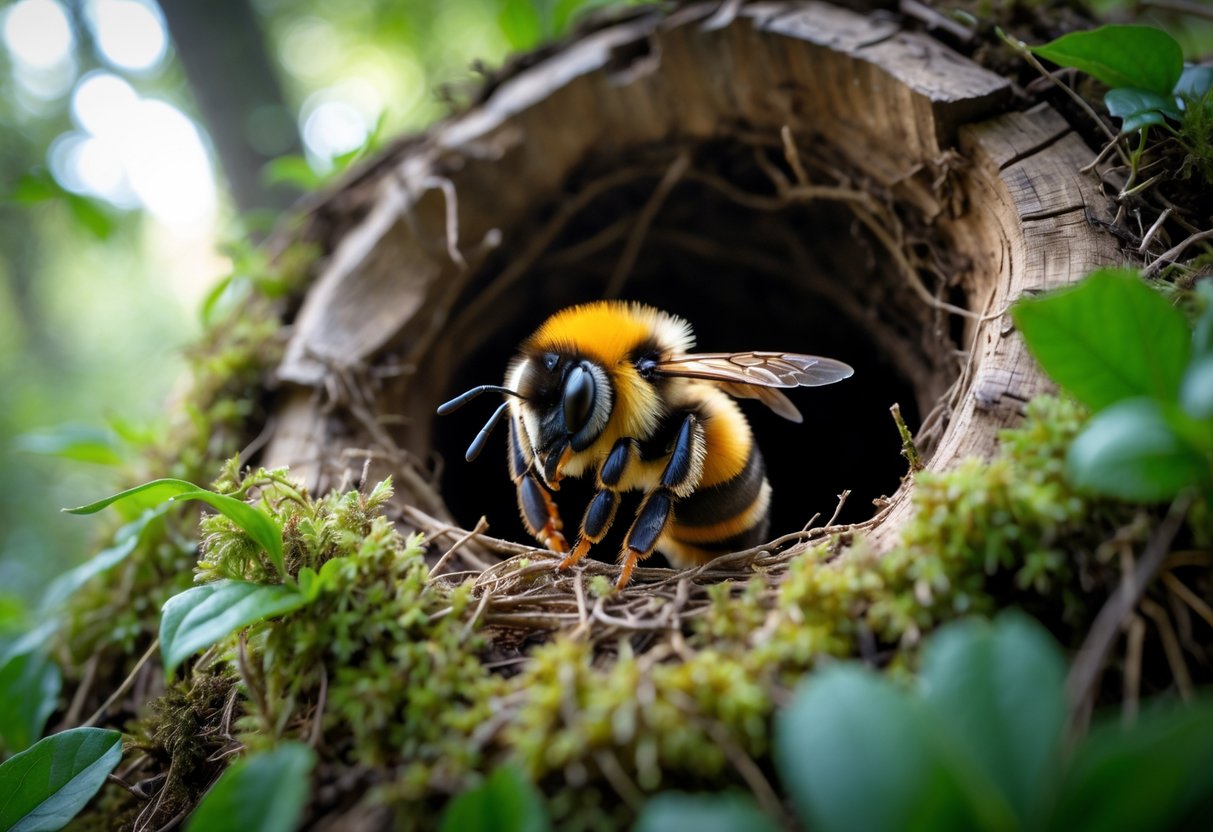
After hatching, young queen bumblebees take off, looking for safe places like old rodent burrows or tucked-away spots under leaves.
Once she finds the right place, she starts building a new nest and raises her colony with help from worker bumblebees.
Your backyard or the local park might actually be full of these busy insects, working nonstop to pollinate flowers and plants.
Trying to figure out why and when the queen leaves? It’ll give you a better look into bumblebee life and their role as pollinators.
If you’re curious about their journey outside the nest and how they start new colonies, just keep reading!
Queen Bumblebee Behavior: Leaving the Nest

Queen bumblebees leave their nests for a few specific reasons tied to their life cycle.
They fly out to mate, look for new nesting spots, and get ready for hibernation.
Each step matters for the survival of the colony and the species.
When and Why a Queen Bumblebee Leaves the Nest
A queen bumblebee usually leaves her nest in early spring or right after winter hibernation.
When she wakes up, she heads out to find a safe spot to build a new nest.
She often chooses places underground, like old rodent burrows, or hides under leaves and garden sheds.
Every year, bumblebees make a new home.
The queen’s job is to start a fresh colony by laying eggs and keeping them warm.
Leaving her old nest lets her look for places with plenty of food nearby, like flowers full of nectar.
The Mating and Departure of New Queens
After the colony grows through summer, new queens and males leave the nest to mate.
Males don’t live long; they mostly focus on mating with queens.
Once they’ve mated, young queens get ready to leave the nest and find a place for their own colony.
New queens fly off to find safe places for winter hibernation.
This process helps ensure that new queens start fresh colonies next year.
It’s a pretty crucial part of the bumblebee life cycle.
Life After Leaving: Hibernation and Survival
Once a queen mates, she spends the cold months hibernating alone.
Depending on her species and the weather, hibernation can last anywhere from six to nine months.
Queens usually hide underground to stay safe and warm.
During this time, no other bumblebees from her colony survive.
When spring comes, she leaves hibernation and looks for a new nest site to start the cycle again.
Surviving hibernation is vital for her species to continue.
For more details about queen bumblebee behavior and nesting, check Does a Queen Bumblebee Leave the Nest? What You Need to Know.
Lifecycle and Roles Inside the Bumblebee Nest

Inside the bumblebee nest, the queen and her workers stick to clear roles.
The queen lays eggs, while worker bees handle food gathering and nest duties.
These roles shift a bit as the colony grows and faces new challenges.
Colony Founding By the Queen
When winter ends, the bumblebee queen wakes up from hibernation.
She searches for a cozy spot to start a new nest.
This could be an old rodent hole or a patch of thick grass.
Once she settles in, she lays her first eggs.
The queen feeds the baby larvae until they get strong enough.
These first eggs turn into female workers, who soon take over foraging and caring for the young.
After that, the queen mostly focuses on laying eggs and rarely leaves the nest again.
She relies on her daughters to bring nectar and pollen to feed everyone.
Transition to Worker and Male Bees
The first female workers start collecting nectar and pollen.
They defend the nest and care for the young larvae and pupae.
Over time, they build a busy, working colony around the queen.
Later in the season, the queen lays eggs that become male bees and new queens.
Males mostly mate with new queens before dying.
The worker bees keep the nest safe and fed through the summer.
The queen’s egg-laying keeps the colony growing until it reaches full size.
Environmental Challenges to Nest Success
Your bumblebee nest runs into some serious trouble when habitat disappears or the climate shifts. If flowers get scarce, workers just can’t collect enough nectar and pollen.
Larvae end up missing out on what they need to grow. Weather swings also mess with when queen bumblebees hibernate or wake up.
If the timing’s off, the whole colony can suffer. It’s not unusual for colonies to fail under these kinds of stress.
If you’re curious, check out this article on the bumblebee lifecycle.


