
Ever noticed a bee hovering close and wondered what’s up with that? When a bee hovers around you, it’s usually just curious, searching for nectar or water, or maybe just exploring what’s nearby. Bees don’t really see people all that clearly, so sometimes they’ll check out patterns or scents that remind them of flowers.
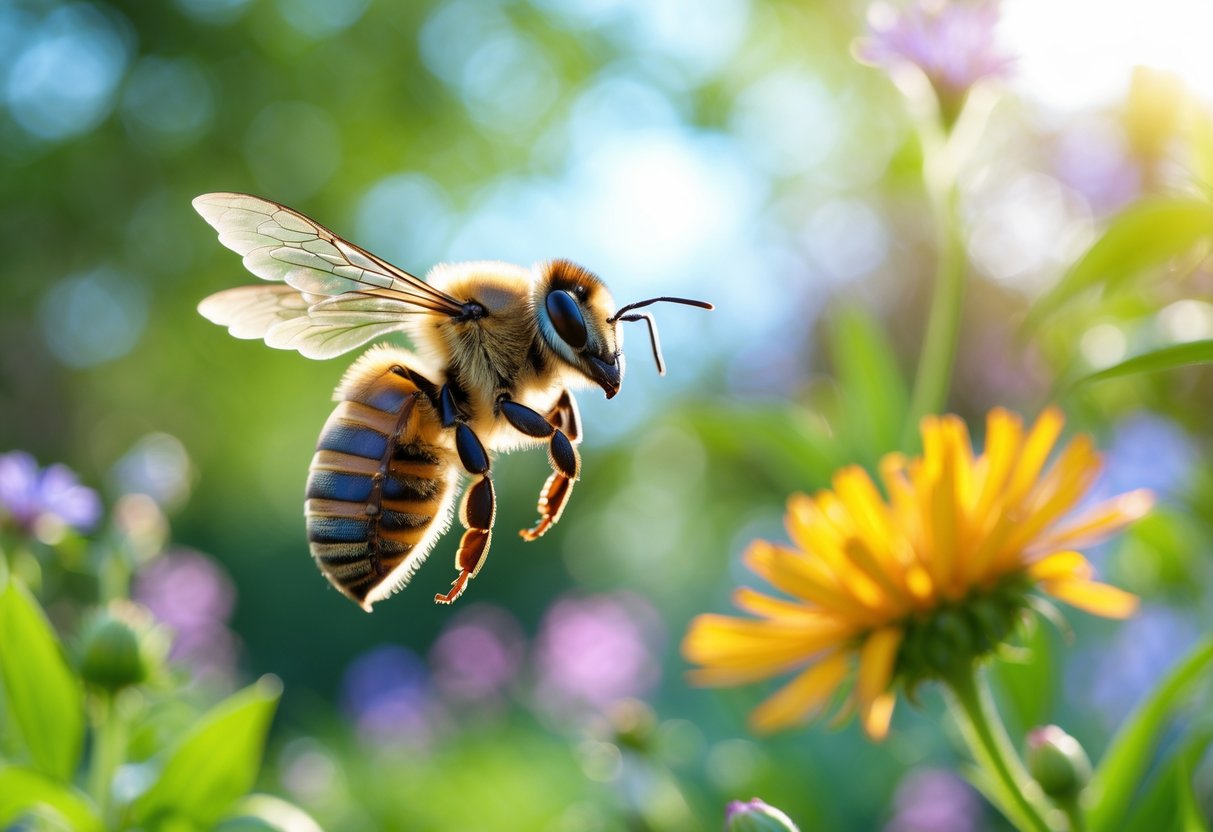
Bees symbolize hard work and focus for a lot of folks. If a bee hangs out near you, maybe take it as a gentle nudge to stick with your goals or stay open to new things.
Understanding why bees hover can help you chill out and maybe even appreciate them a little more.
Curious about what these little flyers actually want or what it means when they linger? Let’s dig into some reasons behind this peaceful, common behavior.
You’ll pick up a few easy tips for staying safe and maybe see how this buzzing can add something positive to your day.
Why Bees Hover: Common Behaviors and Meanings
Bees hover near you or in one spot for a reason. Usually, they’re checking out their environment, drawn by smells, protecting their space, or just taking a quick break.
Knowing these reasons can help you stay calm and maybe even see bees differently.
Identifying and Investigating Surroundings
Bees use hovering to explore their surroundings. Their vision can spot flowers, colors, and scents pretty well, but they don’t see big objects like humans very clearly.
When a bee hovers near you, it’s probably trying to figure out if you’re a threat or if there’s something useful nearby.
Honeybees, bumblebees, and carpenter bees all do this. They hover to gather details before landing or moving on.
Hovering helps them find food or resources and avoid trouble.
Attraction to Scents and Sweat
Your natural body odor, sweat, and even the colors you wear can attract bees. Sweat bees especially love the salty moisture on your skin.
Bees might hover to sniff you or check if you’ve got any sugary scents, like food or floral lotion.
Bright colors—especially yellows and blues—draw bees’ attention way more than dull colors.
If you’re outside a lot or love gardening, it’s totally normal for bees to come check you out.
Defensive and Territorial Hovering
If a bee feels threatened, it’ll hover defensively nearby. This usually happens if you get too close to their hive or mess with them.
Honeybees and hornets will do this to protect their home or queen.
Defensive buzzing and hovering act as a warning. Try to stay still and calm.
Don’t wave your arms around—sudden moves can provoke a sting.
Most bees only get defensive if they think you’re dangerous.
Distinguishing Hovering Bees from Wasps and Hornets
Wasps, hornets, and some flies look a lot like bees, but their hovering means something different.
Wasps and hornets typically hover when they’re ready to attack or hunt.
You can spot the difference by looking at their shape and how they act.
Bees have fuzzy bodies and move gently. Wasps and hornets look smooth, thinner, and can hover in a more aggressive way.
Here’s a quick guide:
| Insect | Body Type | Hovering Purpose | Behavior Near People |
|---|---|---|---|
| Honeybees/Bumblebees | Fuzzy | Exploring or collecting nectar | Calm unless threatened |
| Wasps/Hornets | Smooth | Hunting or defending territory | Aggressive |
| Hover Flies | Similar to bees | Searching food | Harmless |
Spotting these differences helps you stay safe and not freak out over normal bee hovering.
Want to know more? Check out biologyinsights.com’s Why Do Bees Hover Around Me? What It Means & What to Do.
Species-Specific Hovering Habits

Different bees hover for their own reasons, depending on what they need or what’s happening around them.
Knowing these differences can help you figure out what a hovering bee is really up to—whether it’s guarding its home, gathering food, or just being nosy.
Carpenter Bee Guarding and Nesting Behavior
Carpenter bees love hovering around wood. Male carpenter bees often hover near nesting spots to guard their territory and attract females.
These guys don’t sting, but they can look pretty intimidating as they zip back and forth.
Female carpenter bees don’t hover as much, but you’ll see them checking out wood, looking for safe spots to dig tunnels and lay eggs.
If you spot a carpenter bee hovering near wood beams or siding, it’s probably protecting its turf or getting ready to make a nest.
Females can sting if they feel threatened, so it’s smarter to just watch them from a distance.
Beekeepers say carpenter bees help the ecosystem, but they can mess up wooden structures if you let them nest unchecked.
Bumblebee and Honeybee Hover Patterns
Bumblebees usually hover near flowers while collecting nectar and pollen. They use hovering to move just right from spot to spot as they pollinate.
Honeybees hover too, mostly near hive entrances or places packed with flowers.
Both types use rapid wing beats to stay in one spot. That lets them land exactly where they want and grab food easily.
You might also see honeybees hovering as they chat with other bees or keep intruders away from the hive.
If you see bees hovering calmly, they’re probably just busy finding food or checking on their hive.
If they look defensive, give them space—nobody likes an angry bee.
Sweat Bees and Their Attraction to Humans
Sweat bees are pretty small, and you’ll often spot them hovering near people. They just can’t resist the salt and moisture on your skin.
Honestly, it feels a bit annoying, but sweat bees don’t usually sting unless you really bother them. They’re not out to get you—they just want the minerals in your sweat.
Their hovering almost seems curious, doesn’t it? But in reality, they’re just collecting what they need.
If you stay calm and don’t make any sudden moves, you’ll probably notice that sweat bees lose interest and fly off.
It helps to know how sweat bees behave, especially if you love being outside. These bees actually help with pollination, and compared to other bees, they’re less aggressive.
Sometimes, wearing light-colored clothing or using a gentle repellent can keep their hovering to a minimum.
For more on bee behavior, check out why bees hover around you and what you can do about it.


